
Contents:
- The Pre-Flower World: What Earth Looked Like Before Angiosperms
- Darwin’s Abominable Mystery: The Sudden Rise of Flowering Plants in Evolutionary History
- Why Did Angiosperms Spread So Fast?
- Flowers and Insects: The Greatest Co-Evolutionary Partnership
- The Astonishing Specificity of Flower-Pollinator Relationships
- How Flower Color, Scent, and Shape Evolved as Signals
- Color Vision and Flower Pigmentation
- Scent as an Evolutionary Strategy
- The Seasonal Flowering Calendar: Bloom Times as Evolutionary Adaptations
- Fruit, Seeds, and the Flower’s Endgame: Dispersal Strategies
- Angiosperms vs. Gymnosperms: A Comparison That Clarifies Everything
- Flowers and Human Civilization: 10,000 Years of Intentional Cultivation
- The Modern Cut Flower Industry: Evolution at Industrial Scale
- Practical Tips for Gardeners Inspired by Evolutionary History
- Plant Native Species to Support Co-Evolved Pollinators
- Use Evolutionary Bloom Time Logic to Design Your Garden
- Understand Flower Structure Before You Arrange
- Choose Heirloom Varieties for Fragrance and Pollinator Value
- Let Some Plants Go to Seed
- Frequently Asked Questions About Flowers’ Evolutionary History
- What was the first flower that ever evolved?
- How did flowers evolve from non-flowering plants?
- Why are there so many more flowering plant species than non-flowering plant species?
- Do all flowering plants need pollinators?
- How does climate change affect the evolutionary history of flowers now?
- The Ongoing Story: Flowers Are Still Evolving
Flowering plants appeared roughly 130 million years ago — and within a geological eyeblink, they took over the planet. The flowers evolutionary history is one of the most dramatic stories in all of natural science: a group of plants so successful, so adaptable, and so deeply intertwined with animal life that they now make up nearly 90% of all plant species on Earth. We grow them in our gardens, arrange them on our tables, and give them at every milestone of human life. But flowers are far more than decoration. They are evolutionary masterpieces that rewrote the rules of life on land.
For DIY gardeners and flower enthusiasts, understanding where flowers come from — truly come from — transforms the way you see every bloom you plant, propagate, or arrange. Why does a rose have thorns? Why does a sunflower track the sun? Why do some flowers open only at night? The answers live deep in evolutionary time, and they’re absolutely worth knowing.
The Pre-Flower World: What Earth Looked Like Before Angiosperms
Picture the Jurassic period, roughly 200 to 145 million years ago. Dinosaurs dominate the landscape, but the plant world looks strikingly alien to modern eyes. There are no wildflower meadows, no apple orchards, no rose hedges. Instead, the ground is carpeted with ferns, mosses, and cycads. Towering conifers — ancestors of today’s pines and spruces — form dense forests. These are the gymnosperms, plants that produce naked seeds exposed directly on cone scales rather than enclosed in a fruit.
Gymnosperms reproduce via wind pollination, a strategy that works but is wildly inefficient. A single pine tree releases billions of pollen grains each spring, and only a tiny fraction ever reaches another pine cone. The process is essentially a numbers game — spray pollen everywhere and hope some lands in the right place. It’s the evolutionary equivalent of buying a lottery ticket.
Ferns reproduce even more primitively, using spores rather than seeds. Spores are single cells that must land in exactly the right conditions — moist, shaded soil — to germinate. The fern life cycle requires a separate, vulnerable intermediate organism called a gametophyte to produce eggs and sperm. It’s a two-step process that leaves plants highly dependent on specific environmental conditions.
This was the world into which the first flowering plants — angiosperms — erupted. And erupt is exactly the right word.
Darwin’s Abominable Mystery: The Sudden Rise of Flowering Plants in Evolutionary History
Charles Darwin called the rapid appearance of flowering plants in the fossil record an “abominable mystery.” He wrote about it in an 1879 letter to botanist Joseph Hooker, frustrated that angiosperms seemed to appear suddenly and in great diversity without a clear gradual record. For 19th-century naturalists committed to slow, incremental change, the flower explosion looked suspiciously fast.
Modern fossil evidence has softened but not entirely solved the mystery. The earliest confirmed angiosperm fossils date to about 130 million years ago, during the Early Cretaceous period. These early flowers were small, simple, and not particularly showy — nothing like the complex blooms we associate with flowering plants today. Archaefructus sinensis, discovered in China’s Liaoning Province, is among the oldest known flowering plant fossils. It had tiny flowers, no petals, and lived in or near water — more like a pond weed than a rose.
But within 30 to 40 million years, angiosperms had diversified into thousands of forms and were spreading across every continent. By the Late Cretaceous, roughly 90 million years ago, flowering plants dominated many ecosystems. That’s geological speed — roughly equivalent, in human terms, to going from a sketch to a finished cathedral in an afternoon.
Why Did Angiosperms Spread So Fast?
Several evolutionary innovations gave angiosperms a decisive advantage over their gymnosperm competitors:
- Enclosed seeds: The defining feature of angiosperms is that their seeds are enclosed within a fruit (the word “angiosperm” means “enclosed seed” in Greek). This protects seeds from desiccation, increases dispersal range, and recruits animals as seed carriers.
- Flowers as pollination technology: Rather than relying on wind, flowers evolved to attract specific animal pollinators — insects, birds, bats — dramatically increasing the precision and efficiency of pollen transfer.
- Double fertilization: Angiosperms evolved a unique reproductive trick called double fertilization. One sperm cell fertilizes the egg to form the embryo; a second fertilizes another cell to form the endosperm, a nutrient-rich tissue that feeds the developing seed. This gives angiosperm seeds a built-in food supply, giving seedlings a stronger start.
- Faster growth and shorter generation times: Many angiosperms complete their life cycles in weeks or months, compared to years for most conifers. Faster generations mean faster evolution.
- Broad leaf photosynthesis: Angiosperm leaves, with their networked vein systems, are more efficient photosynthesizers than conifer needles, allowing faster growth in a wider range of conditions.
Flowers and Insects: The Greatest Co-Evolutionary Partnership
The relationship between flowering plants and insect pollinators is arguably the most consequential partnership in the history of terrestrial life. It’s a classic story of co-evolution: two groups of organisms shaping each other’s evolution across millions of years in a mutual feedback loop of adaptation.
Insects had been around long before flowers — the earliest insect fossils date to about 385 million years ago, nearly 250 million years before the first angiosperms. Early insects fed on fern spores, gymnosperm pollen, and plant tissues. When early flowering plants appeared, they offered insects a concentrated new food source: nectar, a sugary liquid with no equivalent in the gymnosperm world. Insects that visited flowers for nectar inadvertently picked up pollen and transferred it to other flowers of the same species. Suddenly, pollen transfer became targeted rather than random.
The evolutionary pressure this created was enormous. Plants that produced more nectar, or that had flowers better designed to direct insects toward their pollen-bearing structures, reproduced more successfully. Insects that were better at finding and extracting nectar from certain flower shapes had more energy and reproduced more successfully. Over millions of years, flowers and their pollinators evolved together in increasingly specific partnerships.
The Astonishing Specificity of Flower-Pollinator Relationships
Today, the specificity of these relationships is breathtaking. Consider a few examples:
- Bee orchids (Ophrys apifera) produce flowers that mimic the appearance and scent of female bees so precisely that male bees attempt to mate with them, picking up pollen in the process — all without offering any nectar reward.
- Darwin’s orchid (Angraecum sesquipedale) has a nectar spur 12 inches long. When Darwin described it in 1862, he predicted that somewhere in Madagascar there must exist a moth with a 12-inch proboscis to pollinate it. Scientists laughed. Twenty-one years after Darwin’s death, the moth — Xanthopan morgani praedicta — was discovered. It had exactly a 12-inch tongue.
- Red tubular flowers like trumpet vine and cardinal flower are specifically shaped for hummingbird pollination. Bees, which cannot see red, largely ignore them. Hummingbirds, which see red well and have bills that fit the tube, are their primary pollinators.
This specificity matters enormously for gardeners. When you plant native wildflowers in your yard — say, purple coneflower (Echinacea purpurea) or bee balm (Monarda didyma) — you’re not just adding color. You’re restoring specific ecological relationships that native bee species evolved to depend on over millions of years. Non-native ornamentals, while beautiful, often don’t participate in these ancient partnerships.
How Flower Color, Scent, and Shape Evolved as Signals
Every characteristic of a flower — its color, its scent, its shape, its bloom time — evolved as a communication signal aimed at specific pollinators. Understanding this transforms how you think about flower design, both in nature and in your own garden arrangements.
Color Vision and Flower Pigmentation
Flower colors evolved to match the visual systems of their target pollinators. Bees see ultraviolet light that is invisible to humans; many flowers have UV “nectar guides” — patterns visible only to bees that point toward the nectar source like a landing strip at an airport. Photographed under UV light, a plain yellow buttercup reveals complex dark patterns invisible to the human eye.
Bees favor blue, violet, and yellow flowers — and these are among the most common colors in bee-pollinated species. Red is largely invisible to bees, which is why red flowers are almost always pollinated by birds or butterflies, both of which see red clearly. White flowers are often night-blooming and pollinated by moths, which navigate by contrast under low light. The match between flower color and pollinator visual system is remarkably precise, refined over tens of millions of years of co-evolution.
Scent as an Evolutionary Strategy
Floral scent is produced by volatile organic compounds — hundreds of different chemicals that evaporate and diffuse through the air to attract pollinators from distances of up to a mile. The specific blend of compounds is as distinctive as a fingerprint. Roses produce a mix dominated by geraniol and citronellol. Jasmine is rich in benzyl acetate. Carrion flowers like Amorphophallus titanum (the corpse flower) produce compounds that mimic rotting flesh to attract blowflies and beetles.
For gardeners, this has practical implications. Highly hybridized modern roses — bred for larger blooms and longer vase life — have often lost much of their scent, because commercial breeders prioritized visual characteristics over aromatic ones. If you want fragrance in your garden, seek out old garden rose varieties like Damask roses (‘Madame Hardy’), Gallicas (‘Cardinal de Richelieu’), or modern fragrant cultivars specifically bred to retain scent, such as ‘Gertrude Jekyll’ (David Austin).
The Seasonal Flowering Calendar: Bloom Times as Evolutionary Adaptations
One of the most practically useful ways to understand the flowers evolutionary history is through the lens of bloom timing. When a flower blooms is not random — it’s the product of millions of years of selection pressure aligning flowering time with pollinator availability, climate conditions, and competition from other plants.
In the Northern Hemisphere, the flowering calendar unfolds roughly as follows:
- Late Winter / Early Spring (February–March, Zones 5–8): Snowdrops (Galanthus), winter aconite, and hellebores bloom when few competitors are flowering and early bumblebee queens are emerging from dormancy. These flowers evolved to take advantage of a nearly empty pollinator market.
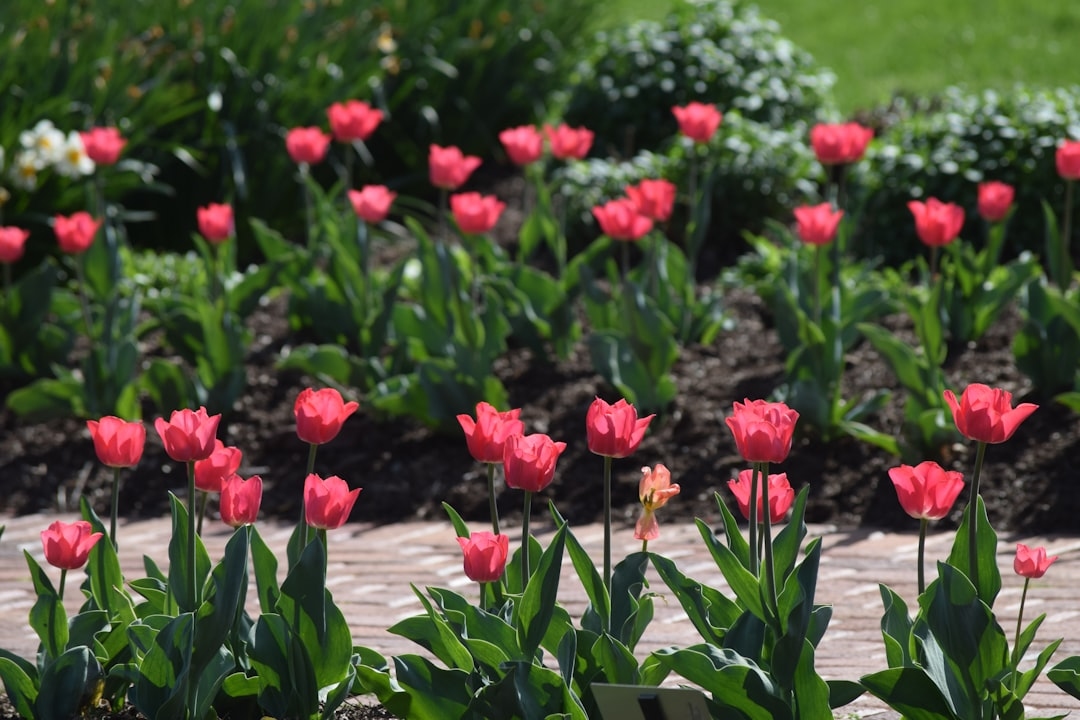
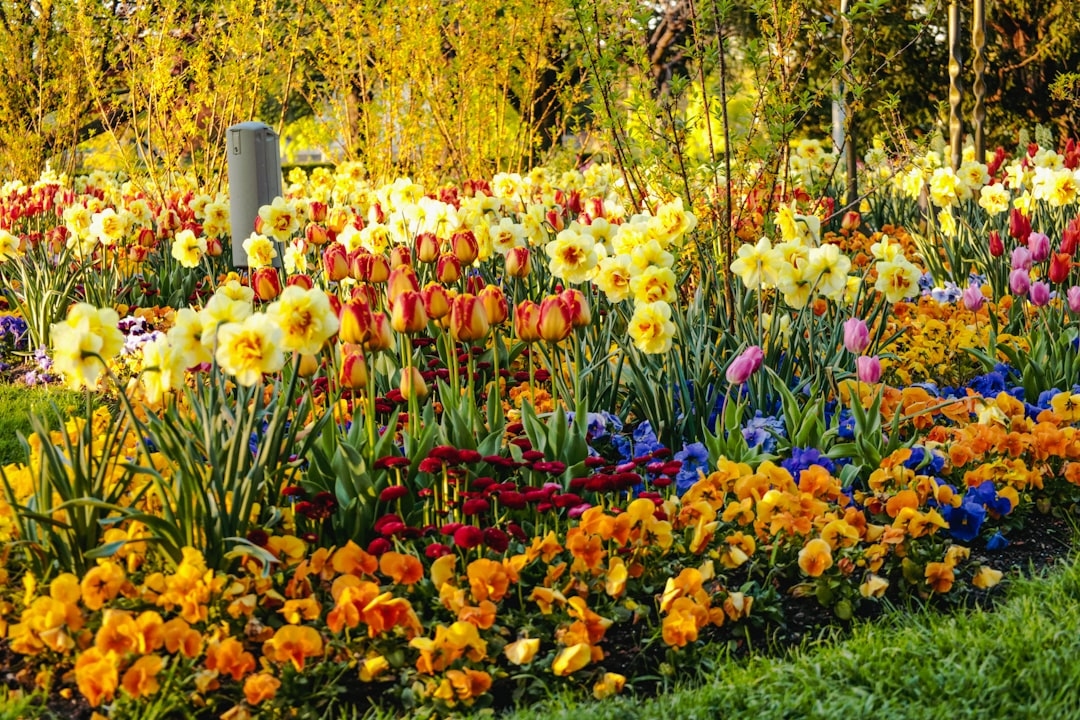
- Mid-Spring (April–May): Tulips, daffodils, and ornamental cherries bloom as bee populations build. The explosion of spring color is a competitive scramble — each species racing to attract pollinators before the next wave of flowers arrives.
- Late Spring / Early Summer (May–June): Roses, peonies, and irises reach peak bloom. This is the height of bee activity in most of the US, and these flowers are among the most bee-friendly in temperate gardens.
- Midsummer (July–August): Coneflowers, black-eyed Susans, and lavender sustain pollinators through the hottest months. Many are daisy-family composites — a highly evolved flower form that packs hundreds of tiny individual flowers into one efficient landing pad.
- Late Summer / Fall (August–October): Goldenrod, asters, and sedums provide critical fuel for migrating monarch butterflies and bees preparing for winter. These late bloomers evolved to fill a gap when other flowers have finished.
- Winter (November–January): In Zones 8–10, camellias and witch hazel bloom, serviced by early-season flies and occasionally overwintering bumblebees. In colder zones, this is the evolutionary “off season” — a time of dormancy and seed dispersal rather than pollination.
For DIY gardeners, designing with this seasonal framework in mind isn’t just aesthetically rewarding — it’s ecologically meaningful. A garden that blooms from February through October in USDA Zone 6, for example, can support native bee populations across their entire active season. Aim for a minimum of three flowering species per season to maintain continuous pollinator support.
Fruit, Seeds, and the Flower’s Endgame: Dispersal Strategies
The flower is not the end of the angiosperm story — it’s the middle. After pollination, the flower’s ovary develops into a fruit, which is the vehicle for seed dispersal. The diversity of fruit forms is as astonishing as the diversity of flowers, and each form is an evolutionary solution to the problem of getting seeds away from the parent plant.
Fleshy fruits — berries, drupes, pomes — evolved to be eaten by animals. The fruit rewards the animal with nutrition; the animal carries the seed away and deposits it (often with a convenient package of fertilizer) far from the parent plant. This is why so many berries are red or purple when ripe — colors that signal “ready to eat” to birds. Unripe fruits are often green (camouflaged) and bitter (toxic), discouraging premature consumption before seeds are mature.
Dry fruits evolved different strategies. Maple samaras spin like helicopters to catch the wind. Dandelion achenes carry parachutes of silky bristles. Cockleburs and burdock evolved hooked bristles that catch in fur or clothing — a strategy so effective that Swiss engineer George de Mestral studied cockleburs under a microscope in 1941 and invented Velcro. Explosive fruits like witch hazel and squirting cucumber build up internal pressure and literally fling their seeds up to 40 feet.
Each of these strategies represents millions of years of evolutionary refinement — and each creates different practical realities for gardeners. Self-seeding plants like foxglove (Digitalis purpurea) and California poppy (Eschscholzia californica) scatter seeds prolifically, filling bare soil with minimal effort. Understanding their dispersal strategy helps you predict where volunteers will appear each spring.
Angiosperms vs. Gymnosperms: A Comparison That Clarifies Everything
One of the most commonly confused distinctions in plant biology is the difference between angiosperms (flowering plants) and gymnosperms (cone-bearing plants like pines, spruces, and cycads). This confusion is understandable — both are seed-producing plants, and both have been around for hundreds of millions of years. But the differences between them illuminate exactly what made flowers so revolutionary.
| Feature | Angiosperms (Flowering Plants) | Gymnosperms (Conifers, Cycads) |
|---|---|---|
| Seed enclosure | Seeds enclosed in fruit | Seeds naked on cone scales |
| Pollination method | Primarily animal-mediated | Primarily wind-mediated |
| Fertilization | Double fertilization | Single fertilization |
| Number of species | ~300,000 known species | ~1,000 known species |
| Leaves | Broad, networked veins | Needle-like or scale-like |
| Habitat dominance | Most terrestrial habitats | Cold, high-altitude, boreal |
| Garden examples | Roses, tulips, sunflowers | Pine, spruce, juniper |
The key insight: gymnosperms are not inferior or “failed” angiosperms. They are highly successful plants that have dominated cold, arid, and high-altitude environments for hundreds of millions of years. Conifers still cover about 30% of Earth’s forested land area. But in terms of species diversity and ecological breadth, angiosperms won the evolutionary arms race decisively — and the flower is why.
Flowers and Human Civilization: 10,000 Years of Intentional Cultivation
Humans didn’t just discover flowers — we became one of the most powerful evolutionary forces shaping them. For at least 10,000 years, we have been selecting, crossing, and propagating flowering plants for our own purposes, creating a parallel evolutionary track that runs alongside natural selection.
The results are extraordinary. The wild ancestor of today’s cultivated rose, Rosa canina, has five simple pink petals and a brief bloom season. Through centuries of selection and hybridization — much of it conducted by French breeders in the 18th and 19th centuries — we now have roses with hundreds of petals, fragrance in dozens of distinct profiles, and bloom seasons that last from May through November. The ‘Knock Out’ rose, introduced in 2000, was specifically bred to resist black spot disease and rebloom continuously — traits that would be meaningless in the wild but are enormously valuable in American suburban gardens.
The tulip offers another remarkable example. Wild tulip species native to Central Asia have simple, cup-shaped flowers in basic colors. By the 17th century, Dutch breeders had created ‘broken’ tulips — flowers with dramatic streaks and flames of contrasting color that sparked the famous Tulip Mania of 1636–1637, during which a single tulip bulb could sell for more than a Dutch worker’s annual salary. We now know those striking patterns were caused by a mosaic virus — the tulips were sick, not superior. But the episode illustrates how powerfully humans have been drawn to floral novelty.
The Modern Cut Flower Industry: Evolution at Industrial Scale
Today, the US cut flower industry generates approximately $4.1 billion annually, and the vast majority of cut flowers sold in American markets are grown in Colombia, Ecuador, and the Netherlands — countries with ideal climates or advanced greenhouse infrastructure. The roses, carnations, and lilies you buy at a grocery store for $12–$25 per bouquet have been selected for vase life, color consistency, stem length, and shipping durability above almost all other traits. They represent the endpoint of artificial selection pressure as intense as any in natural history — just driven by consumer preference rather than pollinator behavior.
This is why many commercially grown cut flowers have reduced scent. Scent production is metabolically expensive, and plants bred for maximum biomass and extended vase life often trade fragrance for other commercially valuable traits. If scent matters to you — and for many flower lovers, it’s the whole point — local farm-grown or garden-grown flowers are almost always more fragrant than commercial imports.
Practical Tips for Gardeners Inspired by Evolutionary History
Understanding flowers’ evolutionary origins isn’t just intellectually satisfying — it directly informs better gardening practice. Here are concrete strategies drawn from the evolutionary principles covered above:
Plant Native Species to Support Co-Evolved Pollinators
Research consistently shows that native bee species are significantly more efficient at pollinating native plant species than non-native bees. A 2015 study published in Science found that locally native wild bees were responsible for an average of 50% more crop pollination than managed honeybees in many agricultural settings. In your home garden, adding even 5–10 native flowering species — goldenrod, wild bergamot, native asters — can dramatically increase native bee populations within a single season.
Use Evolutionary Bloom Time Logic to Design Your Garden
Design your planting plan around the seasonal flowering calendar above. In USDA Zones 5–7, a garden that includes snowdrops (February), tulips (April), coneflowers (July), and asters (September) provides nearly nine months of continuous bloom and covers the active season of most native bee species. This isn’t just good for pollinators — it means you always have something interesting to look at and cut for arrangements.
Understand Flower Structure Before You Arrange
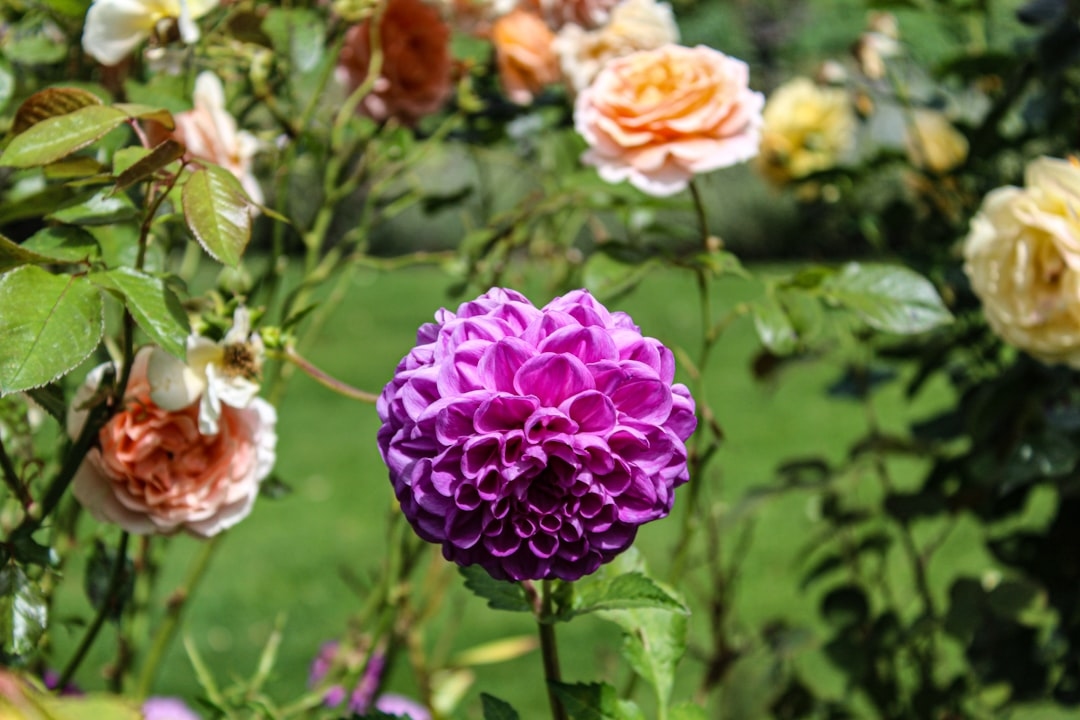
The evolutionary function of different flower parts affects how they behave in arrangements. Flowers with multiple small florets (like yarrow, Queen Anne’s lace, and statice) last longer in arrangements because they have many redundant nectar sources — if a few florets wilt, the others carry the display. Single large flowers with a single nectary (like dahlias) often have shorter vase lives because the entire pollinator signal depends on the whole flower remaining intact.
Choose Heirloom Varieties for Fragrance and Pollinator Value
Highly hybridized modern varieties often sacrifice scent and pollen availability for visual impact. Heirloom and open-pollinated varieties — particularly of roses, dahlias, and sweet peas — tend to produce more accessible pollen and more complex fragrance profiles. Look for the RHS Award of Garden Merit (AGM) designation or specifically fragrance-noted varieties when purchasing. For roses, David Austin’s English Rose collection offers the best balance of modern disease resistance with old-rose fragrance complexity, with prices ranging from $18–$45 per bare-root plant.
Let Some Plants Go to Seed
Deadheading spent flowers promotes repeat blooming in many species — but letting some flowers set seed serves both ecological and practical purposes. Seed heads of coneflowers, black-eyed Susans, and ornamental grasses provide winter food for birds like goldfinches and chickadees. Allowing self-seeding annuals like larkspur, nigella, and California poppy to scatter seed reduces the amount of replanting you need to do each spring. And watching the full flower-to-fruit-to-seed cycle play out in your garden deepens your intuitive understanding of the evolutionary story covered in every section above.
Frequently Asked Questions About Flowers’ Evolutionary History
What was the first flower that ever evolved?
No single “first flower” has been definitively identified, but among the oldest confirmed angiosperm fossils are Archaefructus sinensis and Montsechia vidalii, both dating to approximately 125–130 million years ago. These were small, simple, aquatic or semi-aquatic plants with no petals — nothing like modern showy flowers. The common ancestor of all angiosperms likely lived even earlier, possibly 140–150 million years ago, though fossil evidence from that period is sparse.
How did flowers evolve from non-flowering plants?
The evolutionary transition from gymnosperms to angiosperms involved several key innovations over millions of years: the development of a closed carpel (which encloses and protects seeds), the evolution of petals from modified leaves, the development of nectaries to attract animal pollinators, and the emergence of double fertilization. The exact sequence and timing of these transitions is still an active area of research, with molecular clock studies and new fossil discoveries regularly refining the picture.
Why are there so many more flowering plant species than non-flowering plant species?
Angiosperms have approximately 300,000 known species, compared to around 1,000 gymnosperm species and roughly 12,000 fern species. The primary driver of this diversity is the flower itself: by creating specific partnerships with animal pollinators, angiosperms evolved reproductive isolation between closely related species much faster than wind-pollinated plants could. When a flower evolves a unique shape or scent that attracts only one pollinator species, it becomes reproductively isolated from its relatives — a fast track to speciation. This pollinator-driven speciation is one of the main reasons flowering plants diversified so explosively.
Do all flowering plants need pollinators?
No. While insect and animal pollination is the dominant strategy among angiosperms, many flowering plants are wind-pollinated (grasses, oaks, birches, corn) and some are self-pollinating (tomatoes, peas, most wheat varieties). Self-pollination is evolutionarily considered a “last resort” strategy — it works but reduces genetic diversity. Wind pollination is actually a secondary re-evolution in some angiosperm lineages, not a retention of the ancestral gymnosperm strategy. Grasses, for example, descended from insect-pollinated ancestors but evolved wind pollination as they spread into open, treeless environments where insects were less reliable.
How does climate change affect the evolutionary history of flowers now?
Climate change is disrupting the co-evolutionary timing relationships between flowers and their pollinators at unprecedented speed. Studies have documented cases of phenological mismatch — flowers blooming earlier due to warming temperatures while their specialist pollinators emerge on a schedule tied to different environmental cues, causing the two to miss each other. A 2020 study in Science Advances found that spring wildflower bloom times in the Rocky Mountains advanced by approximately 35 days over 17 years of warming temperatures, a rate far faster than pollinators can adapt to. For gardeners, this underscores the value of planting long-season bloomers and native species that evolved alongside local pollinator communities.
The Ongoing Story: Flowers Are Still Evolving
Evolution doesn’t stop. The flowers in your garden are not finished products — they are ongoing experiments, constantly subject to selection pressure from pollinators, pathogens, climate shifts, and human preference. The same processes that produced Darwin’s orchid and the corpse flower are still operating, just on timescales too slow for any one human life to fully witness.
But human cultivation has accelerated those timescales dramatically. When you select seeds from your most vigorous, most beautiful, most disease-resistant plants and save them for next year’s garden, you are doing exactly what natural selection does — choosing which traits get passed forward. Every gardener who has ever saved seed from a particularly stunning dahlia or self-sown larkspur has participated, in a small but real way, in the 130-million-year story of flowers changing the world.
The practical next step: start a seed-saving practice this season. Choose three open-pollinated annuals from your garden — zinnias, cosmos, and California poppies are ideal starters — and allow at least one plant of each to fully set seed. Harvest the seeds when dry, label them with the date and any notable traits, and store them in paper envelopes in a cool, dry location. By next spring, you’ll have seeds genetically shaped, in part, by your own garden’s conditions. That’s not just good gardening. That’s participating in one of the oldest and most transformative processes in the history of life on Earth.
+ There are no comments
Add yours