Contents:
- What Is Drip Irrigation and Why Flower Gardens Benefit Most
- Understanding the Core Components of a Drip System
- The Water Source and Backflow Preventer
- Pressure Regulator
- Filter
- Mainline Tubing
- Emitters and Micro-Tubing
- Timer or Controller
- Planning Your Drip Irrigation Layout for Flower Beds
- Mapping Plant Water Requirements
- Calculating Flow Rate and Run Time
- Sketching the Tubing Path
- Step-by-Step Installation for a Flower Garden Drip System
- Step 1: Connect the Head Assembly
- Step 2: Lay the Mainline
- Step 3: Install Emitters
- Step 4: Test and Adjust
- Step 5: Mulch Over the System
- Drip Irrigation Flowers Guide: Emitter Spacing by Flower Type
- Roses
- Dahlias
- Perennial Borders (Coneflowers, Rudbeckia, Salvia)
- Annuals (Zinnias, Marigolds, Impatiens)
- Bulbs (Tulips, Alliums, Dahlias Pre-Emergence)
- Sustainable Water Use: The Eco-Friendly Case for Drip Irrigation
- Seasonal Adjustments and System Maintenance
- Spring Startup
- Summer Monitoring
- Fall Transition
- Winter Winterization
- Common Mistakes to Avoid
- Troubleshooting Common Drip System Problems
- Low Flow or No Flow at Emitters
- Water Pooling Around One Plant
- Emitters Not Dripping Evenly
- Clogged Individual Emitters
- Upgrading to a Smart Drip System
- Drip Irrigation for Container Flower Gardens
- Cost Breakdown: What Does a Drip System Actually Cost?
- Frequently Asked Questions
- How often should I run drip irrigation for a flower garden?
- Can I use drip irrigation with raised flower beds?
- What is the best emitter flow rate for roses?
- Does drip irrigation prevent fungal disease in flowers?
- How do I winterize a drip irrigation system?
- Building Your System One Zone at a Time
You set the sprinkler timer before leaving for work, come home, and find half your flower bed soaked while the roses in the corner look parched. Sound familiar? Overwatering some plants and underwatering others is one of the most common frustrations in home gardening — and it’s almost always a delivery problem, not a care problem. A properly designed drip irrigation system solves this at the root level, literally. This drip irrigation flowers guide walks you through everything: system components, layout planning, emitter selection, installation, seasonal adjustments, and the eco-conscious reasons this method is reshaping how American gardeners think about water.
What Is Drip Irrigation and Why Flower Gardens Benefit Most
Drip irrigation delivers water slowly and directly to the root zone of individual plants through a network of tubing and small emitters. Unlike overhead sprinklers that broadcast water across a wide area, drip systems deposit moisture precisely where plant roots absorb it — at the soil surface or just below. The result is less evaporation, less runoff, and significantly reduced fungal disease, because foliage stays dry.
Flower gardens are ideal candidates for drip irrigation for a specific reason: they are rarely monocultures. A typical cottage garden might hold yarrow, coneflowers, dahlias, black-eyed Susans, and climbing roses side by side — each with different water requirements. Sprinklers treat them all the same. Drip systems let you customize output per plant.
Research from the University of California Cooperative Extension found that drip irrigation uses 30 to 50 percent less water than conventional sprinkler systems while maintaining equal or better plant health. For a gardener managing a 200-square-foot mixed flower bed in a drought-prone region, that difference can translate to thousands of gallons saved per growing season.
Understanding the Core Components of a Drip System
Before buying anything, it helps to understand how the pieces fit together. A drip irrigation system for a flower garden is not complicated, but each component has a specific job. Choosing the wrong part — or skipping one — is where most DIY installations go wrong.
The Water Source and Backflow Preventer
Most residential drip systems connect to a standard outdoor hose bib. The first device installed on the faucet should always be a backflow preventer (also called a vacuum breaker). This inexpensive brass or plastic fitting — typically $8 to $15 — stops water from being siphoned back into your home’s drinking water supply. In many US municipalities, a backflow preventer is legally required for any irrigation system connected to potable water. Check local codes before installation.
Pressure Regulator
Standard residential water pressure runs between 40 and 80 PSI. Drip systems operate optimally between 15 and 30 PSI. Without a pressure regulator, high pressure will blow apart emitter fittings, cause micro-tubing to pop off, and create uneven distribution. A quality inline pressure regulator costs $10 to $20 and threads directly onto the backflow preventer.
Filter
Even municipal water contains enough sediment to clog drip emitters over a single season. A 150-mesh Y-filter installed after the pressure regulator protects the entire system downstream. Look for filters rated at 150 mesh or finer — a 200-mesh filter offers even better protection in areas with older pipes or well water.
Mainline Tubing
The backbone of the system is ½-inch polyethylene mainline tubing, sometimes called header tubing. It runs from the water source along the perimeter or through the center of your flower bed. This tubing is flexible, UV-resistant, and available in 50-foot or 100-foot rolls for $15 to $35. It does not deliver water itself — it transports water to the emitters and micro-tubing.
Emitters and Micro-Tubing
Emitters are the heart of the system. They puncture into the mainline and release water at a controlled rate, measured in gallons per hour (GPH). Common options include:
- Button emitters (0.5 to 2 GPH): Small, round drippers pressed into the soil near a plant’s stem. Best for individual perennials, roses, and annuals.
- Micro-sprayers (up to 10 GPH): Fan-shaped spray heads on short stakes. Useful for densely planted areas like annual cutting gardens.
- Soaker dripline: Pre-perforated tubing that weeps water along its entire length. Excellent for rows of tulip or dahlia bulbs and hedge-style plantings.
- Adjustable drippers: Emitters with a twist-dial for flow control. Handy when you have nearby plants with very different water needs.
¼-inch micro-tubing connects individual emitters to the mainline when the plant is not sitting directly along the header line. Stakes keep emitters positioned at the base of each plant.
Timer or Controller
A hose-end timer automates the system and removes human error from the equation. Basic mechanical timers start at $25. Digital timers with multiple daily cycles and seasonal adjustment settings run $40 to $90. For larger gardens or multi-zone setups, a smart controller — compatible with apps like Rachio or Rain Bird — can cost $150 to $250 but integrates local weather data to automatically skip watering cycles after rain.
Planning Your Drip Irrigation Layout for Flower Beds
Grabbing a pencil and sketching your garden before touching a single piece of tubing saves hours of frustration. Layout planning determines how many emitters you need, what GPH rating makes sense per plant, and whether one zone handles the whole garden or you need two separate circuits.
Mapping Plant Water Requirements
Group your flowers by water need. A helpful mental framework uses three tiers:
- Low water (0.5 GPH emitters): Lavender, yarrow, coneflower (Echinacea), black-eyed Susan, ornamental grasses
- Moderate water (1 GPH emitters): Salvia, rudbeckia, daylilies, zinnias, marigolds
- High water (2 GPH emitters): Dahlias, roses, impatiens, tuberous begonias, annual cosmos in hot climates
If your flower bed mixes plants from multiple tiers — which most do — use adjustable emitters or place high-water plants together on a separate sub-loop. Dahlias, for example, may need watering three times a week in July in USDA Hardiness Zones 7 through 10, while lavender planted nearby might need water only once a week.
Calculating Flow Rate and Run Time
Once you know how many emitters you need and their GPH ratings, add up the total flow rate. A ½-inch mainline typically handles up to 200 GPH before pressure loss becomes a problem. If your total exceeds that threshold, split the system into two zones running on separate timers or on alternating cycles.
Run time is straightforward to calculate. If a dahlia needs 1 gallon of water per session and you are using a 2 GPH emitter, a 30-minute run delivers exactly 1 gallon. Most established flower garden perennials do well with 1 to 2 gallons per week in moderate temperatures, split across two or three sessions rather than one long soak.
Sketching the Tubing Path
Route the mainline along the back or one side of the bed, keeping it close to the soil surface. Use tubing stakes every 18 to 24 inches to hold the line in place. From the mainline, run ¼-inch micro-tubing laterally to each plant — keep these runs under 18 inches to maintain consistent pressure at the emitter. Longer micro-tubing runs lose pressure and deliver less water than the emitter rating suggests.
Step-by-Step Installation for a Flower Garden Drip System
With your sketch in hand and components assembled, installation moves quickly. A 100-square-foot flower bed typically takes two to three hours for a first-time installer working alone.
Step 1: Connect the Head Assembly
Thread the backflow preventer onto the hose bib. Follow with the filter, then the pressure regulator, and finally the hose-to-tubing adapter that accepts ½-inch poly mainline. Hand-tighten plus one quarter-turn with pliers — overtightening cracks plastic fittings. Turn on the water briefly to flush the filter before connecting the mainline.
Step 2: Lay the Mainline
Unroll the ½-inch tubing and run it through the bed according to your sketch. On warm days, the tubing is more flexible and easier to shape. In cool weather, submerge it in warm water for a few minutes to soften it before bending around corners. Cap the far end with a figure-8 end cap or a crimp-and-fold end cap — these cost under $1 each and are essential for pressurizing the system.
Step 3: Install Emitters
Use a punch tool (included in most drip kits, or available separately for $4 to $8) to make a clean hole in the mainline where each emitter or micro-tubing barb will connect. A sharp, clean punch prevents leaks better than a knife or nail. Press the barbed fitting firmly into the hole until the shoulder seats against the tubing. For plants directly adjacent to the mainline, insert an emitter right into the mainline. For plants offset from the line, push ¼-inch micro-tubing into the barb and run it to a stake-mounted emitter beside the plant.
Step 4: Test and Adjust
Turn on the system and walk the bed slowly. Look for spray from emitter connections — these indicate a poorly seated barb. Press firmly or remove and re-punch in a spot ½ inch away from the failed hole. Check that each emitter drips steadily. Adjust flow rates on adjustable emitters using a small flathead screwdriver. Let the system run for 15 minutes, then dig down 4 inches near a high-water plant. The soil should be visibly moist but not waterlogged. Adjust run time accordingly.
Step 5: Mulch Over the System
Apply 2 to 3 inches of organic mulch — shredded bark, wood chips, or straw — over the tubing and emitters. Mulch reduces soil evaporation by up to 70 percent, moderates soil temperature, and keeps the tubing protected from UV degradation. This single step dramatically extends the life of the system and amplifies its water-saving benefits. Keep mulch pulled back about 2 inches from plant stems to prevent rot.
Drip Irrigation Flowers Guide: Emitter Spacing by Flower Type
Emitter placement is not one-size-fits-all. Soil type and plant root spread both influence where and how many drippers each plant needs.
Roses
Established shrub roses need 1 to 3 gallons per week depending on size, climate, and season. Place two 1 GPH emitters per plant, positioned 6 inches from the base on opposite sides of the crown. Avoid placing emitters directly against the cane base — that invites crown rot. In USDA Zones 5 through 7, run 45 minutes three times per week in summer. Climbing roses trained on trellises benefit from drip tubing looped along the base fence post, with emitters every 12 inches.
Dahlias
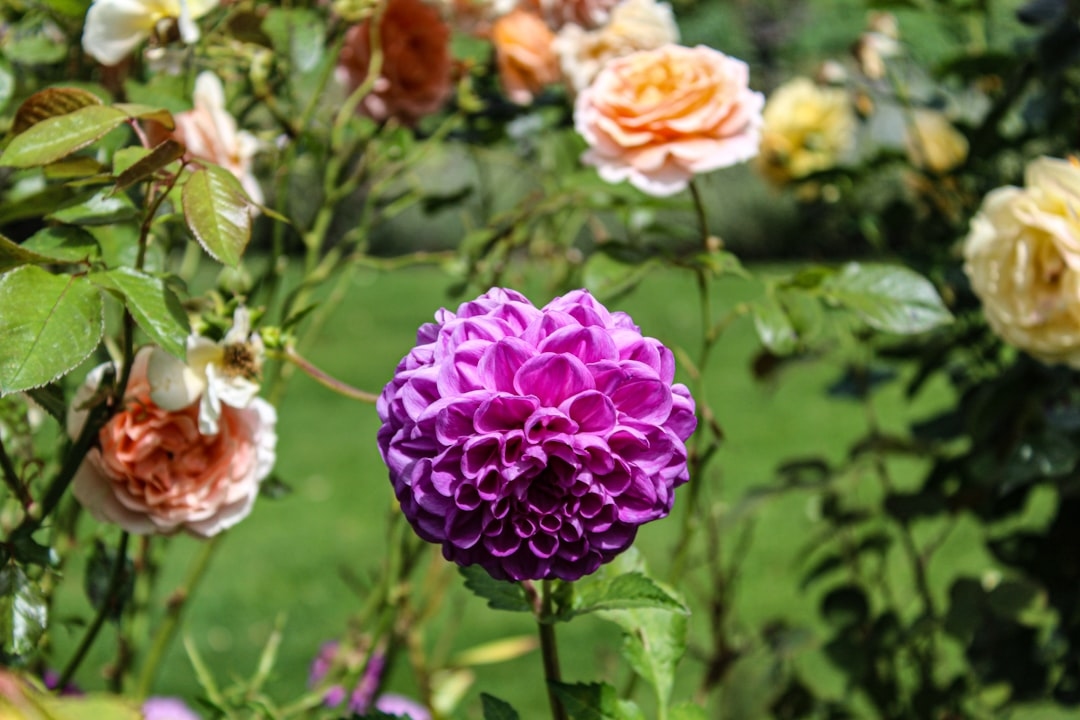
Dahlias are heavy feeders and drinkers. A mature dinner-plate dahlia can absorb 2 gallons per watering session in peak summer heat. Use a 2 GPH emitter placed 4 to 6 inches from the tuber, and run the system for 60 minutes three times per week in Zones 7 through 10 during July and August. Dahlias in containers connected to the drip system may need a dedicated adjustable emitter set to 1 GPH with more frequent cycles.
Perennial Borders (Coneflowers, Rudbeckia, Salvia)
Once established — typically after 12 to 18 months in the ground — most native perennials are surprisingly drought-tolerant. A single 0.5 GPH emitter per plant, running 30 minutes twice weekly in dry summers, sustains healthy blooming. In clay-heavy soils, reduce frequency but extend run time to allow water to penetrate slowly rather than pool.
Annuals (Zinnias, Marigolds, Impatiens)
Annual flower beds demand more consistent moisture because shallow root systems dry out faster. Space soaker dripline every 12 inches through annual beds, or use 1 GPH button emitters every 6 to 8 inches in rows. Run cycles daily in hot weather — a 20-minute morning cycle works well for most annuals in Zones 6 through 9 during summer.
Bulbs (Tulips, Alliums, Dahlias Pre-Emergence)
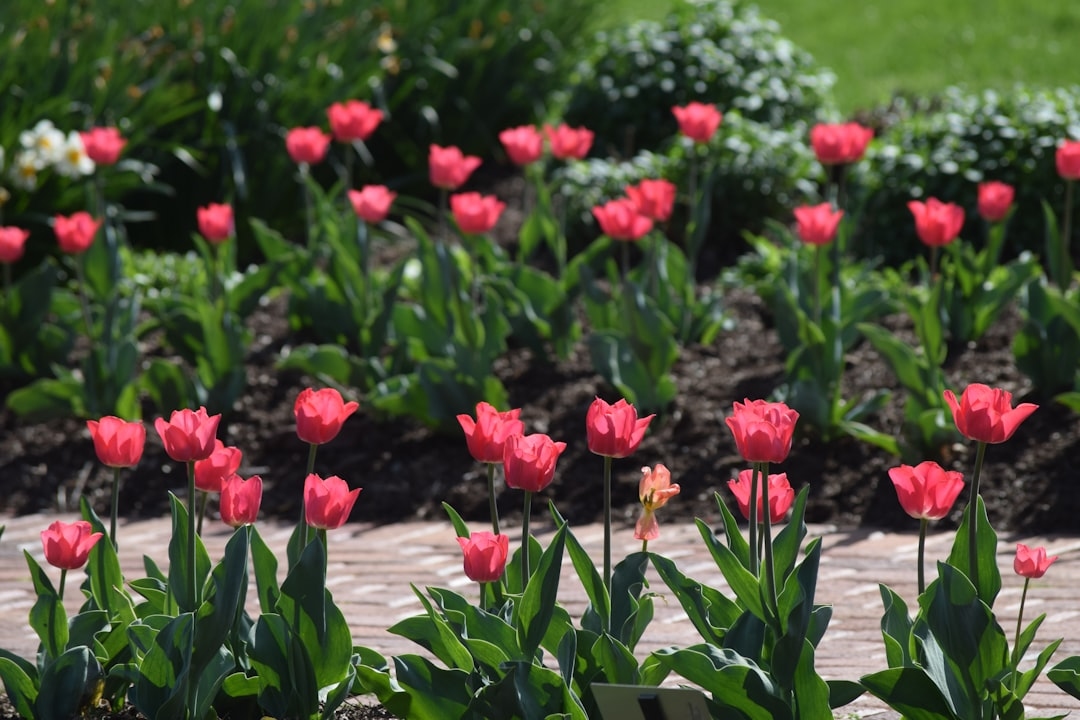
Spring bulbs like tulips need minimal irrigation while dormant but benefit from a light watering immediately after planting in fall. During active growth in spring, one 0.5 GPH emitter per cluster of 5 to 7 bulbs, running 20 minutes twice weekly, supports healthy flowering without encouraging bulb rot. Once foliage dies back, shut off the irrigation circuit to allow the bulb to dry and harden for summer dormancy.
Sustainable Water Use: The Eco-Friendly Case for Drip Irrigation
Water scarcity is not a distant concern. The US Drought Monitor reported that more than 40 percent of the continental United States experienced some form of drought conditions during the summer of 2026. Residential outdoor water use accounts for roughly 30 percent of total household consumption nationally, and in hot, arid regions, that figure can exceed 60 percent.
Drip irrigation addresses this directly. Because water is delivered at the root zone and covered by mulch, evaporation rates drop significantly — some studies cite reductions of up to 60 percent compared to sprinkler systems. Runoff nearly disappears because slow delivery rates (measured in gallons per hour, not gallons per minute) allow soil to absorb water as fast as it arrives.
There are additional environmental dividends. Dry foliage means fewer fungal diseases, which means less need for chemical fungicides. Targeted watering reduces fertilizer leaching into groundwater — nutrients stay in the root zone rather than washing away. Some municipalities in California, Arizona, Texas, and Colorado offer rebates of $50 to $200 for homeowners who convert from sprinkler to drip irrigation. Check with your local water utility before purchasing — your system components may be partially subsidized.
For the ecologically minded gardener, pairing a drip system with a rain barrel adds another layer of sustainability. A 50-gallon rain barrel connected to a downspout and plumbed to the drip system’s mainline can supply several full irrigation cycles at zero cost and zero municipal water draw. Look for barrels with a first-flush diverter to keep debris and roof contaminants out of the system.
Seasonal Adjustments and System Maintenance
A drip system is not a set-it-and-forget-it installation. Seasonal changes, plant growth, and normal wear require ongoing attention — but the maintenance is minimal compared to the time saved on hand-watering.
Spring Startup
Before the growing season begins, flush the mainline by removing end caps and running water at full pressure for 60 seconds to clear any debris or sediment that accumulated over winter. Inspect all emitters for clogging by checking for even dripping during a test cycle. Replace any emitters that no longer flow freely — they cost $0.20 to $1.00 each and are not worth trying to unclog when replacements are this inexpensive. Check all barbed fittings for cracks caused by freezing temperatures.
Summer Monitoring
Summer is peak demand season. Adjust timer settings as temperatures climb. A useful rule of thumb: for every 10°F increase in average daily temperature above 70°F, increase run time by 10 to 15 percent. In a heat wave above 95°F, many flower gardens benefit from a second short cycle in the early afternoon — even 10 minutes at the hottest part of the day can prevent wilting without promoting fungal problems, provided the foliage stays dry.
Check the filter screen monthly in summer. A clogged filter dramatically reduces flow to the entire system. Unscrew the filter housing, rinse the mesh screen under running water, and reinstall. Takes two minutes.
Fall Transition
As temperatures drop and day length shortens, reduce watering frequency by 30 to 40 percent in September and October. Most perennials begin drawing down for dormancy and need less water. Continue watering fall-planted bulbs lightly until the ground freezes.
Winter Winterization
In USDA Zones 1 through 6, winterizing is essential. Disconnect the system from the hose bib, drain all mainline tubing by uncapping the ends and tipping the lines downward, and store emitters, timers, and filters indoors. Poly mainline tubing can remain in the ground if buried or under mulch, but all fittings and components above grade should be removed to prevent freeze damage. In Zones 7 through 10, simply disconnect the timer and drain the filter housing.
Common Mistakes to Avoid
Even experienced gardeners hit these same obstacles when installing drip systems for the first time. Knowing them in advance saves both money and frustration.
- Skipping the pressure regulator: High pressure blows out barbed fittings and creates leaks that are hard to trace. Always install a regulator rated for your system’s operating pressure (typically 25 PSI for most residential drip systems).
- Running micro-tubing too long: Anything over 18 inches of ¼-inch tubing creates pressure drop. If a plant is far from the mainline, move the mainline closer or use a longer barbed stake emitter directly in the mainline.
- Using one emitter rate for all plants: A single 1 GPH emitter on every plant ignores the reality that a lavender and a dahlia have vastly different water budgets. Take 30 extra minutes to map your plants and select appropriate emitter rates — it pays dividends all season.
- Placing emitters against the stem: Constant moisture at the base of stems and crowns causes rot, particularly in roses, dahlias, and most bulbs. Position emitters 4 to 6 inches away from stems, angled toward the drip line of the plant (the outer edge of the canopy).
- Ignoring the filter: A blocked filter reduces system-wide flow to a trickle while looking perfectly normal from the outside. Check and rinse the filter at least once a month during the growing season.
- Not testing before mulching: Always run the system for 15 minutes and walk every inch of the bed before covering tubing with mulch. A leaking fitting under 3 inches of bark chips is genuinely unpleasant to diagnose.
- Watering at the wrong time: Drip systems are far less susceptible to time-of-day issues than sprinklers because foliage stays dry. Still, early morning watering (5:00 to 8:00 AM) maximizes efficiency by reducing soil evaporation before temperatures peak.
Troubleshooting Common Drip System Problems
Problems in drip systems fall into a predictable set of categories. Most are quick to diagnose if you work from the water source outward.
Low Flow or No Flow at Emitters
Start at the filter. A blocked filter screen is the cause in the majority of low-flow situations. If the filter is clean, check the pressure regulator — regulators fail after several seasons and can restrict flow below system minimums. Replace regulators every three to five years as preventive maintenance.
Water Pooling Around One Plant
A barbed fitting has likely separated from the mainline or a piece of micro-tubing has disconnected. Walk the line and look for wet spots on the tubing surface or soil that is dramatically wetter than adjacent areas. Re-seat the barb or replace the fitting.
Emitters Not Dripping Evenly
Uneven flow usually points to pressure variation along the mainline. This can result from running too many emitters on one zone (exceeding 200 GPH) or from micro-tubing runs of different lengths. Re-balance by moving some plants to a second zone, or upgrade the mainline to ¾-inch tubing, which handles up to 480 GPH before significant pressure loss.
Clogged Individual Emitters
Remove the clogged emitter and soak it in white vinegar for 30 minutes to dissolve mineral deposits. Rinse with clean water and reinstall. If clogging recurs quickly, upgrade to a finer filter mesh or consider pressure-compensating emitters, which self-flush with each cycle.
Upgrading to a Smart Drip System
For gardeners who want maximum efficiency with minimum monitoring, smart irrigation controllers represent a significant upgrade over basic timers. Controllers like the Rachio 3 ($150 to $230) and Rain Bird ST8I-WiFi ($180 to $250) connect to Wi-Fi and pull local weather data from the National Weather Service. They automatically skip scheduled cycles when rain is forecast and reduce run times during cooler periods.
Many smart controllers also support multiple zones, making them ideal for gardeners managing a drip zone for flowers, a separate zone for vegetables, and potentially a third for lawn irrigation. Each zone runs independently on its own schedule. The smartphone app provides real-time feedback on water usage — a feature that is increasingly valuable as more municipalities introduce tiered water pricing that penalizes high seasonal consumption.
Some municipalities in California and Arizona provide rebates specifically for smart controller installation, in addition to general drip conversion rebates. Check the EPA’s WaterSense rebate finder or your local water authority’s website for current programs — rebates range from $25 to $150 for smart controller upgrades in qualifying areas.
Drip Irrigation for Container Flower Gardens
Container gardens — hanging baskets, patio pots, window boxes — dry out two to three times faster than in-ground beds and are perfect candidates for drip irrigation. The setup is slightly different from in-ground systems because container volume limits root spread and drainage happens through pot holes rather than soil absorption.
Use adjustable drippers set to 0.5 to 1 GPH for pots under 10 inches in diameter. Larger containers — 14-inch and above — can support a 1 to 2 GPH emitter. Run shorter, more frequent cycles: 10 minutes twice daily in peak summer is often more effective than one 20-minute cycle, because it allows water to moisten the soil without overwhelming drainage capacity.
A ¼-inch distribution manifold threaded onto the mainline and feeding multiple micro-tubing runs is the most efficient way to supply a group of containers on a patio. These manifolds, priced at $10 to $25, accept four to twelve individual micro-tubing lines and allow flow adjustment at each port. One connection from the mainline supplies an entire patio arrangement.
Cost Breakdown: What Does a Drip System Actually Cost?
Sticker shock rarely happens with drip irrigation, but it helps to know the realistic numbers before planning.
- Small flower bed (up to 100 sq ft): A complete kit including mainline, emitters, filter, pressure regulator, and basic timer runs $40 to $80. Brands like Rain Bird, DIG, and Orbit offer well-reviewed starter kits in this range at most home improvement stores.
- Medium flower bed (100 to 300 sq ft): Expect to spend $80 to $160 for components, including additional mainline tubing, more emitters, and a digital multi-cycle timer.
- Large or multi-zone garden (300+ sq ft): Component costs climb to $150 to $400, depending on whether you use a smart controller and how many zones you build out.
- Professional installation: Hiring an irrigation contractor adds $200 to $600 in labor for a typical residential flower garden, depending on region. In high cost-of-living markets (California, New York, Washington), labor alone may run $500 to $800.
Water savings offset these costs meaningfully over time. At a national average water rate of approximately $0.005 per gallon, saving 5,000 gallons per season (a realistic figure for a 200 sq ft bed converted from sprinklers) translates to $25 in annual savings — not transformative on its own, but increasingly significant in municipalities adopting tiered pricing where peak-season consumption can cost three to five times the baseline rate.
Frequently Asked Questions
How often should I run drip irrigation for a flower garden?
Most established flower gardens benefit from two to three drip sessions per week during the growing season. In peak summer heat (above 90°F), increase to daily sessions of 15 to 25 minutes. Newly transplanted annuals and seedlings may need daily watering for the first two to three weeks regardless of season. Adjust based on rainfall — a smart timer with a rain sensor automates this adjustment automatically.
Can I use drip irrigation with raised flower beds?
Yes — raised beds are actually ideal for drip irrigation. The contained soil volume and typically improved drainage of raised beds pair well with slow, consistent drip delivery. Run mainline tubing along the inside perimeter of the bed and branch ¼-inch micro-tubing inward to each plant. Because raised beds often dry out faster than in-ground beds, you may need to run slightly longer cycles or add a second daily session in hot weather.
What is the best emitter flow rate for roses?
For established shrub roses, use two 1 GPH emitters per plant, positioned 6 inches from the base on opposite sides. Hybrid tea roses and climbing roses may need up to 2 GPH per emitter given their larger root systems. In USDA Zones 5 through 7, run the system 45 minutes three times per week from May through September. In Zones 8 through 10, increase to four or five sessions weekly during summer.
Does drip irrigation prevent fungal disease in flowers?
Significantly, yes. Diseases like powdery mildew, black spot (common on roses), and botrytis (gray mold, common on dahlias and petunias) spread most rapidly on wet foliage. Because drip systems deliver water only to the root zone without wetting leaves or petals, foliage stays dry and disease pressure drops substantially. Studies from the American Phytopathological Society have documented powdery mildew incidence reductions of 50 percent or more in drip-irrigated rose gardens compared to sprinkler-irrigated controls.
How do I winterize a drip irrigation system?
In Zones 1 through 6, disconnect the system from the water source and drain all tubing completely. Remove and store the timer, filter, backflow preventer, and pressure regulator indoors — freezing temperatures crack plastic housings. Poly mainline tubing can stay in the ground under mulch. In Zones 7 through 10, simply disconnect the timer, drain the filter housing, and leave the rest in place. Restart in spring by flushing the mainline before reconnecting emitters.
Building Your System One Zone at a Time
There is no requirement to overhaul your entire garden at once. Starting with a single 50-square-foot section — perhaps your rose bed or a dedicated dahlia patch — lets you learn the system’s behavior with low stakes before expanding. Once one zone is dialed in and running reliably, adding a second zone is straightforward: a second hose-bib connection, a Y-splitter with individual shutoffs, and a new timer handle an entire additional circuit for under $50 in most cases.
The gardeners who get the most from drip irrigation are the ones who treat it as a dynamic system rather than a finished installation. Each season brings new plantings, new microclimates as trees and shrubs mature, and new observations about which emitter placements actually match where the roots have grown. Adjust emitter positions each spring as part of your regular garden maintenance. Move them outward as plants mature — the active root zone of an established shrub rose extends 18 to 24 inches from the crown, well past where most beginning gardeners initially place their drippers.
Water is increasingly precious, and flower gardens deserve care that reflects that reality. A thoughtfully designed drip system gives every plant exactly what it needs, wastes almost nothing, and frees up the time you would have spent holding a hose to the more rewarding work of actually gardening.
+ There are no comments
Add yours