Contents:
- Why Grow Lights Matter for Starting Flower Seeds
- Understanding Light Spectrum for Flower Seedlings
- Blue Light (400–500 nm): The Seedling Spectrum
- Red Light (600–700 nm): Triggering Blooms
- Full-Spectrum LEDs: The Practical Choice
- Types of Grow Lights: Which One Should You Choose?
- T5 Fluorescent Fixtures
- LED Grow Lights (Recommended for Most Gardeners)
- HID Lights (Overkill for Seed Starting)
- Incandescent and Regular LED Bulbs (Don’t Bother)
- Grow Lights vs. Windowsills: A Direct Comparison
- Setting Up Your Seed-Starting Light System Step by Step
- Step 1: Choose Your Shelving
- Step 2: Mount Your Lights
- Step 3: Set Your Timer
- Step 4: Adjust Light Height
- Step 5: Monitor Temperature
- Light Distance: The Most Critical Variable Nobody Talks About
- Recommended Distances by Light Type
- Best Flowers to Start Under Grow Lights
- Start 10 to 12 Weeks Before Last Frost
- Start 6 to 8 Weeks Before Last Frost
- Start 4 to 6 Weeks Before Last Frost
- Solving Common Problems with Seedlings Under Grow Lights
- Leggy, Stretched Seedlings
- Yellowing Leaves
- Damping Off
- Uneven Growth Across the Tray
- Pale, Bleached Leaves
- Fertilizing Seedlings Under Grow Lights
- Hardening Off: Transitioning from Grow Lights to Sunlight
- Building a Budget-Friendly Seed-Starting Setup
- Practical Tips for Better Results This Season
- Frequently Asked Questions
- How many hours of grow light do flower seedlings need per day?
- How far should grow lights be from flower seedlings?
- Can I use regular LED bulbs to start flower seeds?
- What’s the best grow light for starting flower seeds on a budget?
- Why are my flower seedlings pale and leggy under grow lights?
- Your Next Step: Start Small, Scale Up
What separates the gardener with trays of thick, vibrant seedlings from the one staring at leggy, pale sprouts in March? Most of the time, it comes down to light. Specifically, the right kind, at the right distance, for the right number of hours each day. This seeds grow lights flowers guide exists to answer that question completely — so your spring starts strong, your transplants are stocky, and your flower beds hit their peak before summer even arrives.
Starting flower seeds indoors is one of the most rewarding DIY projects you can tackle as a gardener. It stretches your growing season, saves serious money on transplants, and gives you access to hundreds of varieties your local garden center will never stock. But without adequate light, even the best seeds will disappoint you. This guide covers everything: which grow lights actually work for flowers, how to set them up, and the little details that make a real difference.
Why Grow Lights Matter for Starting Flower Seeds
Seeds don’t need light to germinate — they need warmth and moisture. But the moment those first cotyledons push through the soil, the clock starts. Seedlings require intense, consistent light from day one, and a windowsill in January or February simply can’t deliver it.
Even a bright south-facing window in the northern US receives only 4 to 6 hours of usable direct light during winter months. Combine that with the low sun angle and frequent cloud cover, and you’re looking at light levels that might hit 1,000 to 2,000 lux on a good day. Most flower seedlings need 3,000 to 5,000 lux minimum — and many sun-loving annuals like zinnias, marigolds, and petunias thrive at 7,000 lux or more. That gap explains why windowsill seedlings stretch toward the glass, turn pale, and collapse at transplant time.
A quality grow light setup eliminates that variable entirely. You control the duration, the intensity, and the spectrum. Your seedlings grow in conditions that mimic an ideal spring day, every single day, regardless of what’s happening outside.
Understanding Light Spectrum for Flower Seedlings
Light isn’t just bright or dim — it has color, and plants respond differently to different parts of the spectrum. This is one of the most misunderstood pieces of the seeds grow lights flowers guide puzzle, so it’s worth spending a moment here.
Blue Light (400–500 nm): The Seedling Spectrum
Blue wavelengths drive compact, vegetative growth. During the seedling stage, blue-heavy light encourages short internodal spacing — meaning the gaps between leaf sets are tight. That’s exactly what you want. Stocky, compact seedlings transplant better, recover faster, and produce more flowers over the season.
Red Light (600–700 nm): Triggering Blooms
Red wavelengths promote flowering and stem elongation. For seedlings, you don’t want a dominant red spectrum — too much red early on produces tall, floppy plants. However, a balanced ratio of red to blue (typically 4:1 or 5:1 in most quality full-spectrum LEDs) supports healthy development from seed through the transplant stage.
Full-Spectrum LEDs: The Practical Choice
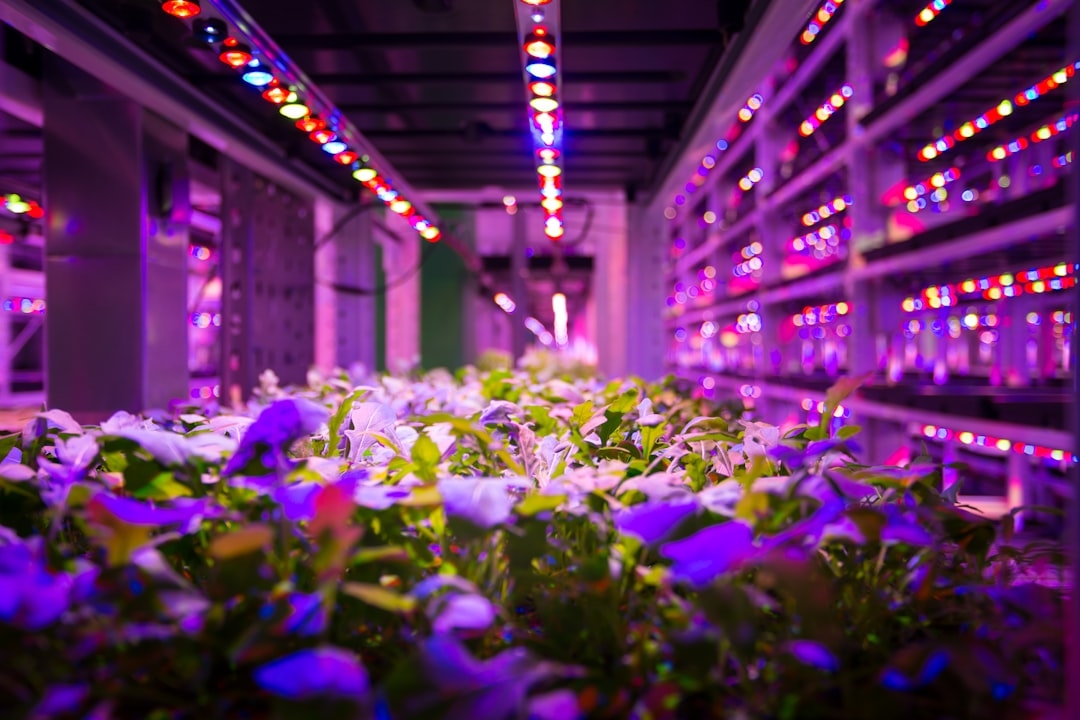
Modern full-spectrum LED grow lights cover both blue and red wavelengths, along with green, which helps you actually see the true color of your plants (important for spotting problems early). For most home gardeners starting flower seeds, a full-spectrum LED panel rated at 4000K to 6500K color temperature hits the sweet spot. You don’t need to obsess over specific nanometer readings — a reputable full-spectrum LED will handle the rest.
Types of Grow Lights: Which One Should You Choose?
Walk into any hydroponics store or search online and you’ll find fluorescent tubes, T5 fixtures, LED bars, quantum board LEDs, and high-intensity discharge (HID) lights. Here’s how they stack up for starting flower seeds at home.
T5 Fluorescent Fixtures
T5 fluorescents have been the standard for seed starting for decades — and they still work well. A 4-foot, 4-tube T5 fixture runs around $50 to $80 and produces a broad, even light spread ideal for flat trays. The downside is energy consumption: a 4-tube T5 draws about 216 watts and generates heat, which can dry out seedling trays faster. Bulbs also degrade over time and need replacement every 1 to 2 growing seasons.
LED Grow Lights (Recommended for Most Gardeners)
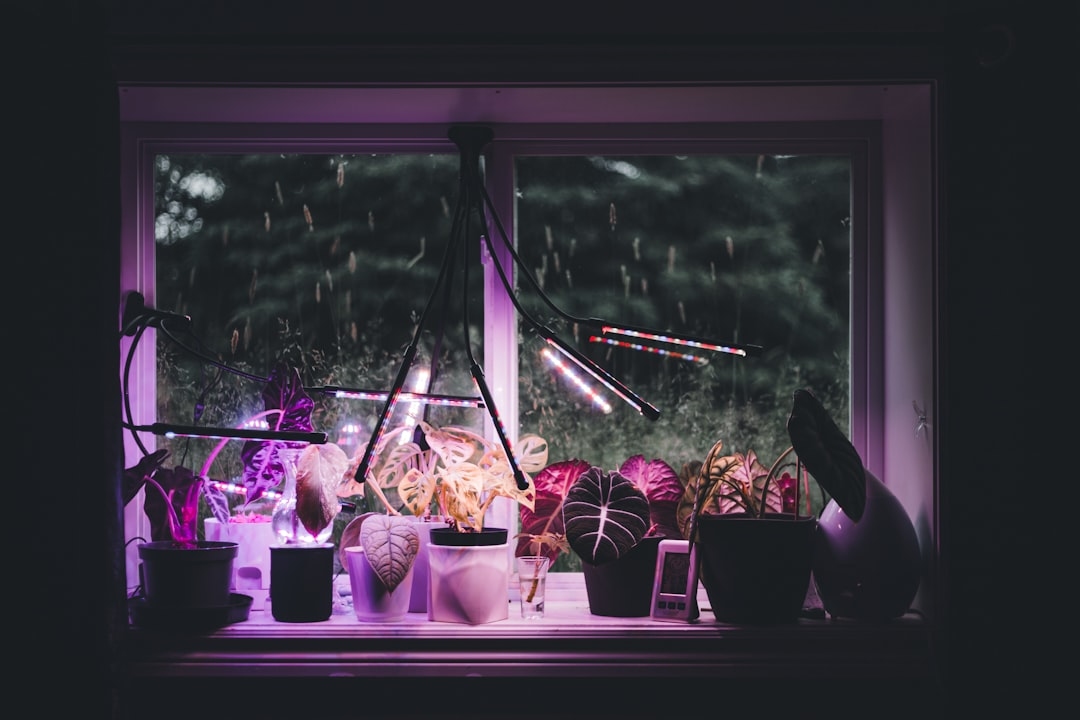
LED technology has transformed home seed starting over the past decade. A quality LED bar or panel uses 30 to 50 percent less electricity than equivalent fluorescents, runs cooler, and lasts 50,000 hours or more. For starting flower seeds, look for full-spectrum LED bars (the kind that mount under wire shelving) or a small quantum board panel. Budget around $40 to $120 for a solid home setup. Brands like Spider Farmer, Mars Hydro, and Barrina consistently perform well for seed starting at this price point.
HID Lights (Overkill for Seed Starting)
High-intensity discharge lights — metal halide and high-pressure sodium — produce enormous amounts of light and heat. They’re designed for commercial operations and larger grow rooms. For a home seed-starting setup covering a few trays of flowers, they’re expensive, energy-hungry, and generate more heat than your seedlings need. Skip them.
Incandescent and Regular LED Bulbs (Don’t Bother)
Standard household LED bulbs aren’t calibrated for plant growth. They lack sufficient blue spectrum and intensity. Incandescent bulbs produce mostly heat with very little usable plant light. Neither will grow strong flower seedlings. This is one of the most common (and disappointing) mistakes beginners make.
Grow Lights vs. Windowsills: A Direct Comparison
People often ask whether they really need grow lights if they have a great south-facing window. It’s a fair question — windows are free, after all. Here’s an honest side-by-side look.
- Light intensity: A south-facing window in January delivers roughly 500–2,000 lux. A T5 fixture or LED bar at the correct distance delivers 5,000–15,000 lux consistently.
- Light duration: Winter days in USDA Hardiness Zones 4 through 6 offer 9 to 10 hours of daylight — not enough for most seedlings. Grow lights run on a timer for exactly 14 to 16 hours.
- Light angle: Window light comes from one direction, causing seedlings to lean and grow unevenly. Grow lights positioned directly overhead produce straight, symmetrical growth.
- Consistency: Cloud cover, weather, and seasonal shifts make windowsill light unreliable week to week. Grow lights are identical every day.
- Cost: A windowsill costs nothing upfront but typically produces inferior seedlings that need more care at transplant time. A basic LED setup costs $40 to $100 and pays for itself in one season of avoided transplant purchases.
The verdict? For gardeners in Zones 3 through 7 starting seeds more than 6 weeks before their last frost date, grow lights are not optional — they’re the difference between success and frustration. Zone 8 and warmer gardeners starting seeds in late winter may have better luck with bright windows, but even there, supplemental light makes a noticeable difference.
Setting Up Your Seed-Starting Light System Step by Step
Ready to build your setup? This doesn’t need to be complicated or expensive. Here’s a practical, proven approach that works in a basement, garage, spare bedroom, or utility room.
Step 1: Choose Your Shelving
A standard wire metro-style shelving unit (48 inches wide by 18 inches deep) holds four standard 1020 seed trays per shelf and costs $60 to $100. Three shelves give you space for 12 trays — enough to start hundreds of flower seedlings. The open wire design allows lights to be mounted underneath each shelf, illuminating the tray below.
Step 2: Mount Your Lights
Attach LED bars or a T5 fixture to the underside of each shelf using zip ties, S-hooks, or adjustable rope ratchets. Rope ratchets are worth the $10 investment — they let you raise and lower lights easily as seedlings grow, which you’ll do often. Position lights to illuminate the entire tray surface evenly, with no dark corners.
Step 3: Set Your Timer
Plug your lights into a digital outlet timer set for 14 to 16 hours of light per day. A consistent schedule matters — plants respond to photoperiod, and irregular hours stress seedlings. A simple $10 mechanical outlet timer works perfectly. Run lights during the day (or whenever it’s most convenient) and give seedlings 8 to 10 hours of darkness each night.
Step 4: Adjust Light Height
This is where most beginners go wrong. See the next section for exact distances by light type.
Step 5: Monitor Temperature
LED lights generate minimal heat, but enclosed spaces can still warm up. Most flower seedlings grow best at 65°F to 72°F. A $12 digital thermometer/hygrometer on your shelf lets you monitor both temperature and humidity at a glance.
Light Distance: The Most Critical Variable Nobody Talks About
Getting the light distance right is the single biggest factor in producing compact, healthy flower seedlings. Too far away and seedlings stretch toward the light (etiolation). Too close and you risk light burn or heat stress.
Recommended Distances by Light Type
- T5 Fluorescent (4-tube): 2 to 4 inches above seedlings. These lights aren’t intense enough to burn at close range, and closer is almost always better.
- LED Bar Lights (low-wattage, 20–40W): 4 to 6 inches above seedlings. Check manufacturer specs — LED intensity varies significantly by model.
- Quantum Board LEDs (100W+): 18 to 24 inches above seedlings at lower power settings (40–60%). These lights are powerful enough to cause light stress if positioned too close at full intensity.
As seedlings grow, adjust the light upward to maintain the correct distance to the canopy — not to the bottom of the tray. Check distance every 3 to 4 days during the first month. A simple ruler or even a yardstick marked with tape at the target distance makes this quick and consistent.
🌿 What the Pros Know
Commercial greenhouse growers measure light output in PPFD (Photosynthetic Photon Flux Density), expressed in micromoles per square meter per second (µmol/m²/s). For flower seedlings, target 150 to 250 µmol/m²/s during the first 4 weeks, then bump to 250 to 400 µmol/m²/s as plants mature. Many newer LED grow lights list PPFD values in their specs — or you can pick up an affordable PAR meter app for your smartphone to measure it yourself. It sounds technical, but once you check your setup once, you’ll always know your lights are dialed in correctly.
Best Flowers to Start Under Grow Lights
Not every flower benefits equally from an early indoor start. Here’s a breakdown of popular choices that reward the effort, organized by how far ahead of your last frost date to start them.
Start 10 to 12 Weeks Before Last Frost
- Petunias: Tiny seeds that need light to germinate; surface-sow and keep moist. Slow-growing, so an early start is essential.
- Snapdragons: Cold-tolerant and worth starting early; they can handle light frost at transplant time.
- Impatiens: Need warmth and consistent moisture; slow from seed but gorgeous in shade beds.
- Begonias: Extremely fine seeds; mix with sand for even distribution. Allow 12 weeks minimum.
Start 6 to 8 Weeks Before Last Frost
- Zinnias: Fast germinators (5 to 7 days) that grow quickly; don’t start too early or they’ll outgrow your trays.
- Marigolds: Reliable, vigorous seedlings that respond extremely well to grow lights.
- Cosmos: Very easy from seed; 6 weeks is plenty.
- Celosia: Loves warmth; start 6 to 8 weeks out and provide bottom heat for germination.
Start 4 to 6 Weeks Before Last Frost
- Sunflowers: Fast-growing and often better direct-sown, but starting indoors 4 weeks early gives cut flower growers a jump on the season.
- Nasturtiums: Direct sow is preferred, but indoor starts work if handled carefully (they hate root disturbance).
Solving Common Problems with Seedlings Under Grow Lights
Even with the right setup, things can go sideways. Here are the most frequent issues and exactly how to fix them.
Leggy, Stretched Seedlings
The most common problem. Leggy seedlings have long, weak stems with large gaps between leaf sets. This is almost always caused by insufficient light — either the intensity is too low or the light is too far away. Move the light closer (refer to the distance guidelines above) and increase your photoperiod to 16 hours if you’re running fewer than 14. If the seedlings are already leggy, you can bury the stem deeper at transplant time for most species; tomatoes are famous for this trick, but it also works for many flowers like marigolds and zinnias.
Yellowing Leaves
Yellow leaves on seedlings usually indicate one of three things: overwatering (the most common cause), nitrogen deficiency, or insufficient light. Check soil moisture first — seedling mix should feel like a wrung-out sponge, not soggy. If moisture isn’t the issue, consider switching to a diluted liquid fertilizer (half-strength balanced fertilizer like 10-10-10) once the first true leaves appear.
Damping Off
Damping off is a fungal disease that causes seedlings to collapse at the soil line, seemingly overnight. It thrives in cool, wet, stagnant air. Prevention is everything: use sterile seed-starting mix (never garden soil), water from below by filling the tray reservoir, ensure good airflow with a small fan running on low for 2 to 4 hours daily, and avoid overwatering. There is no effective cure once damping off strikes — affected trays should be discarded and the container sterilized.
Uneven Growth Across the Tray
If seedlings in the center of your tray are growing faster than those at the edges, your light isn’t covering the full tray area. Try rotating the tray 180 degrees every 3 to 4 days, or reposition your light to center it more precisely over the tray. A light with a wider beam angle (120 degrees or more) helps prevent hot spots.
Pale, Bleached Leaves
Paradoxically, light can also cause problems when it’s too intense. Pale, bleached, or white patches on leaves — especially on seedlings directly under a powerful quantum board — indicate light stress. Raise the light by 4 to 6 inches or reduce intensity (if your fixture has a dimmer) until new growth comes in with normal coloration.
Fertilizing Seedlings Under Grow Lights
Seed-starting mix contains little to no fertilizer — it’s designed for germination, not long-term growth. Once seedlings develop their first set of true leaves (the second set of leaves, after the initial cotyledons), they need nutrients.
Start with a half-strength liquid fertilizer applied once per week. A balanced formula like 10-10-10 or a purpose-made seedling fertilizer like FoxFarm Grow Big works well for most flower seedlings. Avoid high-nitrogen fertilizers at this stage — too much nitrogen produces lush, dark green leaves but delays flowering and can create overly soft tissue susceptible to pests.
By weeks 4 to 5 indoors, you can step up to full-strength fertilizer applied every 5 to 7 days. Watch the leaves: deep, uniform green color with no yellowing or browning at the edges is the sign of a well-fed seedling.
Hardening Off: Transitioning from Grow Lights to Sunlight
This step is skipped more often than any other — and it consistently causes transplant shock, leaf scorch, and setbacks that undo weeks of careful indoor growing. Hardening off is the gradual process of introducing your grow-light-raised seedlings to outdoor conditions.
Start 7 to 10 days before your planned outdoor planting date. On day one, set seedlings outdoors in a sheltered spot with indirect light for just 1 to 2 hours, then bring them back inside. Add 1 to 2 hours of outdoor exposure each day, gradually including some direct sun by days 5 through 7. By day 10, they can stay outside all day.
Why does this matter? Indoor seedlings grown under grow lights — even powerful ones — haven’t developed the waxy cuticle layer that protects outdoor leaves from wind, UV radiation, and temperature swings. Moving them directly from a climate-controlled indoor setup to full sun can scorch leaves within hours. Take the extra week. It’s worth it every time.
Building a Budget-Friendly Seed-Starting Setup
You don’t need to spend hundreds of dollars to get excellent results. Here’s a complete setup that works for starting 6 to 8 trays of flower seedlings for under $150.
- Wire shelving unit (3-shelf, 48″): $60 to $80 at hardware stores or warehouse clubs
- LED grow light bars (2 per shelf): Barrina T8 LED Grow Lights, 4-pack — around $40 to $50
- Digital outlet timer: $10 to $15
- 1020 seed trays with cell inserts: $15 to $25 for a starting set of 6
- Seed-starting mix (2 cubic feet): $12 to $18
- Small clip fan for airflow: $15 to $20
Total: approximately $152 to $193 at the high end, and you’ll reuse most of it for years. Compare that to buying a flat of 36 petunia transplants at $18 to $25 at a garden center, and you start to see why dedicated seed starters rarely go back.
Practical Tips for Better Results This Season
These are the small adjustments that consistently separate thriving seed-starting setups from frustrating ones.
- Label everything immediately. Flower seedlings look nearly identical in their first few weeks. A label maker or waterproof marker on plastic stakes saves endless confusion at transplant time.
- Use bottom heat for warm-season flowers. Zinnias, celosia, impatiens, and begonias germinate significantly faster with soil temperatures of 70°F to 75°F. A seedling heat mat ($20 to $30) under your trays speeds germination by 2 to 5 days and improves germination rates, especially for finicky seeds.
- Water from below. Fill the reservoir tray under your seed cells and let the growing mix absorb moisture from the bottom up. This keeps the soil surface drier, which dramatically reduces damping off.
- Thin ruthlessly. It’s hard to do, but leaving two seedlings per cell creates competition for light, water, and nutrients. Snip the weaker seedling at soil level with scissors — don’t pull, which disturbs roots.
- Run a fan on low for 2 to 4 hours daily. Gentle air movement triggers thigmomorphogenesis — the plant’s natural response to physical stimulus that produces thicker, stronger stems. It also prevents the humid, stagnant conditions that invite fungal disease.
- Keep a simple grow log. Note planting dates, germination dates, first true leaf dates, and any issues you notice. After one season, you’ll have a customized reference that’s more useful than any generic planting calendar.
Frequently Asked Questions
How many hours of grow light do flower seedlings need per day?
Most flower seedlings thrive with 14 to 16 hours of grow light per day, followed by 8 to 10 hours of darkness. A consistent schedule managed by an outlet timer is the easiest way to maintain this photoperiod. Seedlings left under lights for 24 hours continuously often show stress and produce poor results — plants need a dark period for proper physiological development.
How far should grow lights be from flower seedlings?
Distance depends on the light type. T5 fluorescent fixtures should be positioned 2 to 4 inches above the seedling canopy. Low-wattage LED bars perform best at 4 to 6 inches. High-power quantum board LEDs (100W+) should start at 18 to 24 inches at reduced intensity and be lowered gradually as seedlings acclimate. Always adjust distance to the top of the plants, not the bottom of the tray.
Can I use regular LED bulbs to start flower seeds?
No. Standard household LED bulbs lack the spectrum and intensity required for healthy seedling development. They produce insufficient blue wavelengths and won’t deliver the 3,000 to 7,000+ lux that most flower seedlings need. Purpose-built grow lights — even inexpensive LED bars — perform dramatically better and are worth the investment.
What’s the best grow light for starting flower seeds on a budget?
LED bar lights designed for shelving systems offer the best value for home seed starters. The Barrina T8 LED Grow Light bars (available in 4-packs for $40 to $50) consistently perform well for a wide range of flower seedlings and fit standard wire shelving units. For a step up in quality and coverage, the Spider Farmer SF-1000 quantum board ($90 to $110) covers a 2×2-foot area with excellent PPFD output and a built-in dimmer.
Why are my flower seedlings pale and leggy under grow lights?
Pale, elongated seedlings under grow lights almost always indicate that the light is too far away, the daily photoperiod is too short, or the light isn’t powerful enough for the coverage area. Start by moving the light 2 to 3 inches closer. If growth doesn’t improve within 5 to 7 days, increase the photoperiod to 16 hours. Check that your light’s actual wattage (not equivalent wattage) matches the coverage area specified by the manufacturer.
Your Next Step: Start Small, Scale Up
The best seeds grow lights flowers guide is one you actually use — and the best grow light setup is the one you build this week, not the perfect one you plan indefinitely. Start with one shelf, two LED bars, and a timer. Pick three or four flower varieties you genuinely love. Follow the distances, run the timer, water from below, and adjust as you go.
By week three, you’ll have a shelf full of seedlings that look better than anything you’ve grown near a window. By week eight, you’ll be hardening off plants that are stockier, healthier, and more likely to thrive than store-bought transplants. And by next January, you’ll be adding a second shelf without a second thought.
The garden you want this summer starts under a light in your basement right now. Set it up this weekend — your future self will thank you in June.
+ There are no comments
Add yours