


Contents:
- Why Flower Garden Fertilization Matters More Than You Think
- Understanding N-P-K: The Language of Fertilizer Labels
- What Each Number Does for Your Flowers
- Granular vs. Liquid Fertilizers
- Building a Flower Garden Fertilization Schedule by Season
- Early Spring: Waking Up the Soil (March–April)
- Late Spring: Priming for Bloom (May–June)
- Midsummer: Maintenance Mode (July)
- Late Summer to Early Fall: Winding Down (August–September)
- Winter: Let the Garden Rest
- Fertilization by Flower Type: Not All Plants Are Created Equal
- Annuals: Feed Frequently, Feed Well
- Perennials: Moderate Feeding, Long-Term Results
- Roses: The Heavy Feeders
- Bulbs: It’s All About the Aftermath
- A Reader’s Story: Learning the Hard Way
- Common Fertilization Mistakes and How to Avoid Them
- Applying Fertilizer to Dry Soil
- Fertilizing in the Heat of the Day
- Ignoring Soil pH
- Over-Fertilizing
- Organic vs. Synthetic Fertilizers: What’s Right for Your Garden?
- Practical Tips for Fertilizing Flower Beds Like a Pro
- Recommended Products for Each Stage
- Frequently Asked Questions
- How often should I fertilize my flower garden?
- What is the best fertilizer for flower gardens?
- Can you over-fertilize a flower garden?
- When should I stop fertilizing my flower garden in fall?
- Do perennial flowers need as much fertilizer as annuals?
- Building Your First Fertilization Calendar
Most flowers don’t fail because of bad soil, bad seeds, or bad weather. They fail because of bad timing. A beautiful garden lives and dies by when you feed it — and most gardening beginners never learn this until the damage is already done.
Fertilizing isn’t complicated, but it is specific. The difference between a garden that looks “fine” and one that stops neighbors in their tracks often comes down to understanding a flower garden fertilization schedule — knowing not just what to feed your plants, but when, how much, and why. This guide covers all of that, from the science behind plant nutrition to a month-by-month plan you can actually follow.
Why Flower Garden Fertilization Matters More Than You Think
Plants make their own food through photosynthesis, but that process requires raw materials. Nitrogen, phosphorus, and potassium — the three numbers you’ll see on every fertilizer bag — are the foundation. Nitrogen fuels leafy green growth. Phosphorus drives root development and flower production. Potassium supports overall plant health and disease resistance.
Garden soil, even good garden soil, doesn’t always supply these nutrients in the right amounts at the right times. Rain leaches nutrients downward and away from root zones. Competing plants deplete reserves. Organic matter breaks down slowly. This is where a deliberate fertilization plan steps in.
A University of Minnesota Extension study found that flowering annuals receiving regular fertilizer applications produced up to 40% more blooms than unfed control plants grown in the same soil. That’s not a minor difference. That’s the gap between a sparse patch of color and a dense, showstopping display.
There’s also the question of timing. Feeding a plant the wrong nutrient at the wrong growth stage can actively harm it. Applying high-nitrogen fertilizer to roses in August, for example, pushes tender new growth just before frost — growth that will die back and stress the plant heading into winter.
Understanding N-P-K: The Language of Fertilizer Labels
Every fertilizer package displays three numbers separated by hyphens — this is the N-P-K ratio. A bag labeled 10-10-10 contains 10% nitrogen, 10% phosphorus (as phosphate), and 10% potassium (as potash) by weight. The remaining 70% is filler material that helps distribute the nutrients evenly.
What Each Number Does for Your Flowers
- Nitrogen (N): Promotes lush, green foliage. Essential in early spring when plants are establishing. Too much late in the season delays dormancy and weakens cold hardiness.
- Phosphorus (P): The bloom booster. Encourages strong root systems and stimulates flower production. A ratio higher in the middle number (like 5-10-5) is ideal during budding and blooming periods.
- Potassium (K): The plant’s immune system in a bottle. Helps regulate water uptake, strengthens cell walls, and improves resistance to drought and disease.
For most flower gardens, a balanced 10-10-10 fertilizer works well for general maintenance. Shifting to a bloom-specific formula with higher phosphorus — such as Espoma’s Garden-tone (3-4-4) or Miracle-Gro Bloom Booster (10-52-10) — during the budding phase makes a noticeable difference in flower count and color intensity.
Granular vs. Liquid Fertilizers
Granular fertilizers are slow-release and convenient. You spread them around the base of plants, work them lightly into the soil, water them in, and let them do their job over weeks. Products like Osmocote Plus (15-9-12) release nutrients gradually for up to four months, which means less frequent applications.
Liquid fertilizers, such as fish emulsion or water-soluble powders, deliver nutrients immediately. They’re absorbed within 24 hours and show results faster — sometimes within days. They also wash away more quickly and require reapplication every one to two weeks during the growing season. For flowers in containers or raised beds where nutrients deplete faster, liquid feeding is often the better choice.
Building a Flower Garden Fertilization Schedule by Season
The most effective approach to a flower garden fertilization schedule isn’t a rigid calendar date — it’s tied to what your plants are actually doing. Growth stages, not months, are your real guide. That said, most of the US follows a predictable enough pattern that season-by-season guidance holds up well across USDA Hardiness Zones 4 through 8.
Early Spring: Waking Up the Soil (March–April)
As soil temperatures climb above 50°F, roots become active and plants begin pushing new growth. This is the right moment for the first feeding of the year. Apply a balanced granular fertilizer — 10-10-10 works well — at the rate recommended on the package, typically around 1 pound per 100 square feet of garden bed.
For perennials that died back over winter, wait until you see at least 2 to 3 inches of new growth before fertilizing. Feeding dormant root systems accomplishes little; the nutrients just sit in the soil and risk washing away before the plant can use them.
If your soil is heavily clay-based or hasn’t been amended in years, work in compost at this stage too — roughly 2 to 3 inches worked 6 to 8 inches deep. Compost isn’t a fertilizer replacement, but it dramatically improves the soil structure that allows fertilizer to work effectively.
Late Spring: Priming for Bloom (May–June)
This is the most critical feeding window for flowering plants. By late May in most of the US, annuals are establishing, perennials are reaching full height, and the first flower buds are forming. Switch to a phosphorus-forward fertilizer here — something in the 5-10-5 or 10-52-10 range, depending on how aggressively you want to push blooms.
Apply liquid fertilizers every 10 to 14 days during this phase for the most responsive results. For granular slow-release products, a single application in late spring can carry plants through the peak bloom period without additional feeding.
Roses deserve special attention here. Most rosarians use a dedicated rose fertilizer (like Dr. Earth Organics Rose Fertilizer, 4-6-2) at this stage, applied every four to six weeks through the blooming season. Roses are heavy feeders and respond dramatically to consistent nutrition.
Midsummer: Maintenance Mode (July)
By July, the feeding frenzy can ease. Plants in full bloom have established root systems and don’t need aggressive pushing. A half-strength balanced liquid fertilizer every two weeks is sufficient for most beds. Annuals in containers, however, are an exception — they exhaust container soil quickly and often benefit from weekly feeding through summer.
Watch your plants for signs of nutrient deficiency: yellowing leaves (often nitrogen), purple-tinged foliage (phosphorus), or brown leaf edges (potassium). These visual cues are more reliable than any calendar schedule.
Late Summer to Early Fall: Winding Down (August–September)
Stop nitrogen-heavy fertilizers by mid-August for most of the US. Nitrogen at this stage encourages new, soft growth that will be killed by the first frost — and that die-back stresses the entire plant. Instead, if you feed at all in late summer, use a low or zero-nitrogen formula focused on potassium. A 0-10-10 fertilizer helps harden off plants and build root reserves for winter survival.
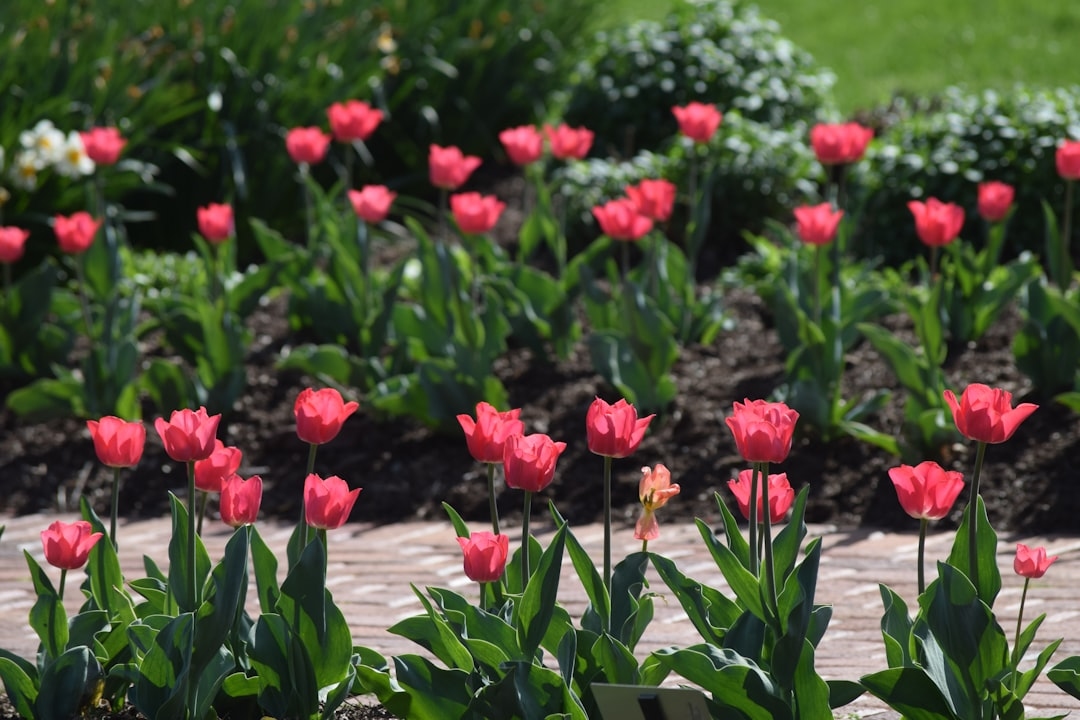
Bulbs are the exception to this fall rule. If you’re planting spring-blooming bulbs (tulips, daffodils, hyacinths) in September or October, add bone meal to the planting hole — roughly 1 tablespoon per bulb. Bone meal is rich in phosphorus and calcium, encouraging strong root development through the fall before the ground freezes.
Winter: Let the Garden Rest
In most US climate zones, winter is fertilizer-free. Plant roots are largely dormant, soil biology slows significantly, and any applied nutrients either leach away or sit unused. The one winter task with long-term payoff: top-dress garden beds with 2 to 3 inches of compost in late fall or early winter. By spring, earthworms and soil microbes will have incorporated much of it, improving soil structure before the growing season begins.
Fertilization by Flower Type: Not All Plants Are Created Equal
A catch-all schedule works well as a foundation, but different types of flowers have different appetites. Customizing your approach by plant category produces noticeably better results.
Annuals: Feed Frequently, Feed Well
Annuals — petunias, marigolds, zinnias, impatiens, begonias — complete their entire life cycle in one growing season. Because they’re focused on producing as many seeds as possible before they die, they bloom heavily and they eat heavily. Annuals in garden beds benefit from fertilizing every three to four weeks. Annuals in containers need feeding every one to two weeks.
A water-soluble fertilizer like Miracle-Gro All Purpose (24-8-16) mixed at half the recommended strength and applied weekly is a common and effective approach for container annuals. The frequent, diluted feeding avoids salt buildup in container soil — a common problem with full-strength applications.
Perennials: Moderate Feeding, Long-Term Results
Perennials — coneflowers, daylilies, hostas, black-eyed Susans, peonies — return year after year. They don’t need the same aggressive feeding as annuals. Over-fertilizing perennials, especially with nitrogen, produces floppy stems, fewer flowers, and plants more vulnerable to aphids and other pests. Two to three applications per season is enough: once in spring, once before peak bloom, and optionally a fall potassium boost.
Roses: The Heavy Feeders
Roses have a well-earned reputation for needing attentive care. A standard feeding schedule for established roses runs from spring through late summer: fertilize every four to six weeks, starting when new growth reaches about 6 inches and stopping around August 15th for most of the country (earlier for Zone 4 and 5 gardeners). Granular rose-specific fertilizers or organic options like alfalfa meal or kelp meal work particularly well.
Bulbs: It’s All About the Aftermath
Spring-blooming bulbs do most of their nutrient gathering after the flowers fade — not before. Fertilizing tulips and daffodils while they’re blooming does little. The critical window is the six to eight weeks after bloom, when the leaves are still green and photosynthesizing. Apply a low-nitrogen, high-phosphorus bulb fertilizer during this period and you’ll build healthier bulbs for next year’s display.
A Reader’s Story: Learning the Hard Way
Maria, a first-time gardener in Columbus, Ohio (Zone 6a), planted a bed of zinnias, cosmos, and rudbeckia in May three years ago. She watered faithfully. She pulled weeds. By July, the bed looked acceptable — some color, decent coverage — but not the explosion of blooms she’d seen in magazine photos.
A neighbor who had gardened for twenty years looked at the bed and asked one question: “Have you fed them at all?” Maria hadn’t. She assumed the garden center’s potting mix was enough.
That July, she started liquid-feeding every two weeks with a bloom-boosting fertilizer. By August, the bed was unrecognizable — dense, vibrant, and drawing compliments from people walking past her house. She didn’t change the plants, the location, or the watering. She only added a consistent feeding schedule. The following spring, she started feeding in May and maintained it through the season. That year’s garden was the best on her block.
This is one of the most common patterns in beginner gardening: good instincts everywhere except fertilization. The soil gives plants a start, but regular nutrition is what carries them to their potential.
Common Fertilization Mistakes and How to Avoid Them
Applying Fertilizer to Dry Soil
This is the single most common cause of fertilizer burn in flower beds. Concentrated nutrients hitting dry roots cause chemical damage — leaves yellow, curl, and the plant declines fast. Always water your garden bed thoroughly before applying granular fertilizer, and water again lightly afterward to work it into the soil. For liquid fertilizers, apply to moist (not waterlogged) soil.
Fertilizing in the Heat of the Day
High midday temperatures increase the rate of nutrient uptake and evaporation, making fertilizer salts more concentrated at the root zone. Apply fertilizer early in the morning or in the evening when temperatures are below 85°F.
Ignoring Soil pH
Fertilizer can’t be absorbed properly if the soil pH is off. Most flowering plants thrive in a pH range of 6.0 to 7.0. Outside that range, nutrients become chemically locked in the soil and unavailable to roots — even if you’re feeding regularly. A basic pH test takes five minutes and costs under $10 at most garden centers. If your soil is acidic (below 6.0), add agricultural lime. If it’s alkaline (above 7.5), sulfur amendments bring it down.
Over-Fertilizing
More is not better. A plant that receives too much nitrogen puts all its energy into leaves and stems, not flowers. Over-fertilized plants also attract more pest insects — particularly aphids, which are drawn to the tender new growth that excess nitrogen produces. If you’re fertilizing regularly and your flowers are all leaves and no blooms, pull back on nitrogen and increase phosphorus instead.
Organic vs. Synthetic Fertilizers: What’s Right for Your Garden?
Both approaches feed plants effectively. The difference is mostly in speed, source, and soil impact over time.
Synthetic fertilizers (Miracle-Gro, Peters, Osmocote) deliver nutrients quickly in a chemically available form. Plants can absorb them within hours. They’re precise, predictable, and widely available. Their downside: with repeated use over years, they can acidify soil and reduce populations of beneficial soil microorganisms.
Organic fertilizers (fish emulsion, bone meal, blood meal, kelp, compost) release nutrients slowly as soil microbes break them down. They feed the soil ecosystem as well as the plants, improve soil texture over time, and rarely cause fertilizer burn. The tradeoff is slower response times — a plant with a nitrogen deficiency may take two to three weeks to show improvement after an organic application versus a few days with synthetic.
Many experienced gardeners use a combination: slow-release organic granulars as a base dressing in spring, with occasional liquid synthetic applications during peak bloom periods for a quick boost. This blended approach supports long-term soil health while still giving plants the responsive nutrition they need during critical growth windows.
Practical Tips for Fertilizing Flower Beds Like a Pro
- Test before you guess. Run a soil test at the start of every growing season. Local cooperative extension offices often offer testing for $15 to $25 with specific amendment recommendations included.
- Keep a garden journal. Note the date, product, and rate of each fertilizer application. Over two to three seasons, patterns emerge and you can fine-tune your schedule based on actual results.
- Read the label every time. Rates vary significantly between products. A “scoop” of one granular fertilizer may be the correct dose while a scoop of another is double what you should apply.
- Deadhead as you feed. Removing spent flowers redirects plant energy from seed production to new bloom formation. Fertilizing and deadheading together produce the best flowering results.
- Use mulch as a partner. A 2- to 3-inch layer of organic mulch over fertilized beds retains moisture, moderates soil temperature, and slows nutrient leaching — making your fertilizer go further.
Recommended Products for Each Stage
The following are widely available at US garden centers and online retailers. Prices are approximate as of 2026.
- General spring feeding: Espoma Garden-Tone (3-4-4), $18–$22 for 8 lbs — slow-release organic, gentle and reliable.
- Bloom boost: Miracle-Gro Bloom Booster (10-52-10), $12–$15 for 1 lb water-soluble — excellent for annuals and roses during budding.
- Slow-release all-season: Osmocote Plus (15-9-12), $25–$35 for 8 lbs — feeds for up to 6 months, ideal for busy gardeners.
- Organic liquid: Neptune’s Harvest Fish & Seaweed Fertilizer (2-3-1), $20–$30 for 36 oz concentrate — gentle, effective, and excellent for soil biology.
- Fall bulb planting: Jobe’s Organics Bulb Fertilizer (3-5-4), $12–$18 for 4 lbs — adds phosphorus and mycorrhizal fungi to the planting zone.
Frequently Asked Questions
How often should I fertilize my flower garden?
Most flower gardens need fertilizing three to four times per year: once in early spring, once in late spring before bloom, optionally once in midsummer at half-strength, and a potassium-focused application in early fall. Annuals in containers need more frequent feeding — every one to two weeks with a diluted liquid fertilizer.
What is the best fertilizer for flower gardens?
A balanced 10-10-10 granular fertilizer works well for general maintenance. For encouraging blooms, switch to a high-phosphorus formula such as 5-10-5 or 10-52-10. Organic options like Espoma Garden-Tone or fish emulsion are excellent for gardeners who want to build soil health over time.
Can you over-fertilize a flower garden?
Yes. Too much nitrogen produces excessive leafy growth at the expense of flowers, and can attract more pest insects. Fertilizer applied to dry soil causes root burn. Always follow package rates and water before and after applying granular products.
When should I stop fertilizing my flower garden in fall?
Stop nitrogen-rich fertilizers by mid-August in most US zones. Continued nitrogen feeding in late summer pushes tender new growth that frost will damage. If you fertilize in fall at all, use a low or zero-nitrogen product (0-10-10) to help harden plants for winter.
Do perennial flowers need as much fertilizer as annuals?
No. Perennials are less demanding than annuals. Two to three applications per season — early spring, pre-bloom, and an optional fall potassium dose — is typically sufficient. Over-fertilizing perennials with nitrogen leads to floppy growth, fewer flowers, and increased pest pressure.
Building Your First Fertilization Calendar
Starting a fertilization calendar doesn’t require complex planning. For most beginners with a mixed flower garden in USDA Zones 5 through 7, this four-entry schedule covers the year:
- March or April: Apply balanced 10-10-10 granular fertilizer at 1 lb per 100 sq ft once soil temps reach 50°F and new growth appears on perennials.
- Late May: Switch to a bloom fertilizer (5-10-5 or similar). Apply granular at package rate, or begin bi-weekly liquid feeding.
- July 4th area: Half-strength liquid feeding for beds; full weekly feeding for containers. Observe plants and adjust based on what you see.
- Early September: Optional 0-10-10 application to harden perennials. Plant fall bulbs with bone meal. No nitrogen after mid-August.
Mark these dates in your calendar now. Come back and adjust them based on what you observe this season — your own garden, in your own soil, in your own climate, will teach you things no guide can. That’s the part of gardening no article can replicate, and it’s the part that makes it worth doing.
+ There are no comments
Add yours