



Contents:
- What Makes a Cutting Garden Different from a Decorative Border
- Planning Your Cutting Garden All Season: Site, Size, and Layout
- Choosing the Right Site
- How Much Space Do You Actually Need?
- Layout and Row Spacing
- The Cutting Garden Calendar: Succession Planting by Season
- Early Spring: Cool-Season Crops (Zones 5–8)
- Late Spring and Early Summer: The Bridge Crops
- Summer: The High-Yield Season
- Fall: Extending the Season
- The Best Flowers for a Cutting Garden All Season
- Focal Flowers (the stars of the bouquet)
- Secondary Flowers (supporting players that add texture and depth)
- Filler and Foliage (the green glue that holds arrangements together)
- Expert Insight: Thinking Like a Flower Farmer
- How to Harvest Cut Flowers for Maximum Vase Life
- Time of Day Matters
- The Right Stage of Development
- Conditioning: The Step Most Home Growers Skip
- Soil, Fertility, and Water: The Foundation of a Productive Cutting Garden
- Building Soil That Produces
- Irrigation
- Mulching and Weed Control
- Pest and Disease Management in the Cutting Garden
- Common Pests
- Common Diseases
- Practical Tips for Getting the Most from Your Cutting Garden
- Pinch Early, Harvest Often
- Keep a Planting Journal
- Don’t Neglect Your Perennial Investment
- Grow Flowers You Can’t Buy
- Think in Arrangements, Not Just Individual Flowers
- A Simple Starter Plan for a 4-by-16 Foot Cutting Bed
- Budget Breakdown: What Does a Cutting Garden Cost?
- Frequently Asked Questions
- What is a cutting garden?
- How do I keep a cutting garden blooming all season?
- What are the best flowers for a beginner cutting garden?
- How often should I cut flowers from my cutting garden?
- How long do homegrown cut flowers last in a vase?
- Start Small, Think Big, Cut Often
Most home gardeners grow flowers to admire from a distance. But here’s a fact that surprises nearly everyone: professional cut flower growers harvest their blooms early in the morning, when stems hold up to 40% more water than they do by midday — a detail that separates limp, short-lived arrangements from bouquets that last 10 to 14 days in a vase. Building a cutting garden all season long isn’t just about planting pretty things. It’s about designing a living flower factory, one that staggers color, fragrance, and form from the last frost in April through the first hard freeze in October.
Whether you have a 10-by-10-foot raised bed or a long border running along a fence, you can engineer a steady supply of stems for your home. This guide covers everything: site selection, succession planting, the best annuals and perennials for continuous bloom, post-harvest care, and the small habits that transform a good cutting garden into a great one.
What Makes a Cutting Garden Different from a Decorative Border
This is one of the most common points of confusion for new flower growers. A decorative border is designed to look beautiful in the ground — it’s planned for visual impact from a distance, with height gradations, color echoes, and year-round structure. A cutting garden is designed to produce stems. That’s a fundamentally different goal, and it shapes every decision you make.
In a decorative border, you’d never cut your peonies to the ground. In a cutting garden, you do exactly that — because cutting encourages the plant to push out more stems. Deadheading, which keeps decorative borders tidy, is actually counterproductive in a cutting garden unless you’re removing spent blooms that won’t produce more. Plants are spaced closer together (often in rows rather than drifts) to maximize yield per square foot. Appearance from outside the bed is secondary to stem production.
The other key distinction is succession planting. A decorative border often relies on perennials that return each year and hold their positions. A cutting garden leans heavily on annuals — zinnias, sunflowers, lisianthus, celosias — that you direct-sow or transplant in waves every 2 to 3 weeks, ensuring you always have something coming into peak bloom as the previous flush winds down.
Planning Your Cutting Garden All Season: Site, Size, and Layout
Choosing the Right Site
Full sun is non-negotiable for the majority of cutting flowers. Aim for at least 6 hours of direct sunlight per day; 8 hours is better. Most high-yield cutting crops — sunflowers, zinnias, dahlias, lisianthus — are light-hungry plants that stretch and weaken in shade. A site with morning sun and afternoon shade is acceptable for a few cool-season crops like sweet peas and snapdragons, but it will limit your choices significantly.
Good drainage matters just as much as light. Roots sitting in wet soil rot quickly, and saturated ground in early spring delays planting by weeks. If your site drains poorly, build raised beds at least 12 inches deep, filled with a blend of topsoil, compost, and perlite. Most cutting flowers thrive in slightly acidic to neutral soil, in the pH range of 6.0 to 6.8.
How Much Space Do You Actually Need?
A 4-by-8-foot bed planted entirely with zinnias will produce roughly 50 to 80 stems over a single season — enough for two or three medium bouquets per week during peak bloom. That’s a useful benchmark. For a household that wants fresh flowers every week from late spring through frost, plan on at least 100 to 150 square feet of growing space dedicated to cutting crops, spread across a few different beds or sections to allow for crop rotation and succession planting.
Don’t try to cram a cutting garden into an existing ornamental border unless you’re willing to ruthlessly sacrifice aesthetics for production. Give your cutting crops their own dedicated space, even if it’s modest.
Layout and Row Spacing
Row planting — as opposed to the clumping style used in ornamental beds — makes harvesting and maintenance far more efficient. Plant in straight rows 12 to 18 inches apart, with in-row spacing matching each crop’s needs (typically 6 inches for sweet peas and snapdragons, 9 to 12 inches for zinnias and cosmos, 18 inches for dahlias and sunflowers). Netting support, installed horizontally at 12 inches above the soil and raised as plants grow, keeps tall stems straight — a crucial detail for market-quality cuts.
The Cutting Garden Calendar: Succession Planting by Season
The secret to a cutting garden all season long is treating your beds like a relay race. One group of flowers finishes; the next takes over. This requires planting in overlapping waves rather than all at once, and choosing varieties that cover different points in the growing calendar.
Early Spring: Cool-Season Crops (Zones 5–8)
Cool-season annuals are your first wave. Direct-sow sweet peas (Lathyrus odoratus) as soon as the soil can be worked — they need cool roots to set buds and will stop flowering once temperatures consistently exceed 75°F. Start snapdragons (Antirrhinum majus) indoors 10 to 12 weeks before your last frost date; they transplant well at 4 inches tall and will bloom prolifically in 50 to 65°F weather. Ranunculus corms planted in early spring (or fall in Zones 8 and above) produce some of the most spectacular cutting flowers of the year — layered, tissue-paper blooms in shades from cream through scarlet.
Other strong early-season performers: bachelor’s button (Centaurea cyanus), larkspur (Consolida ajacis), and Iceland poppies (Papaver nudicaule). These are fast-growing, cold-tolerant, and finished before summer heat sets in — which is exactly the point. Once they fade, pull them and replant with heat-loving annuals.
Late Spring and Early Summer: The Bridge Crops
As cool-season flowers wind down, your perennials take the stage. Peonies are the crown jewel of late May and June — a single established plant can yield 30 to 50 stems per season, and cut just as the buds show color but before they fully open, they’ll last 5 to 7 days in a vase. Plant peonies in fall for blooms the following year; they need at least one full season to establish before producing heavily.
Alliums — ornamental onions — offer architectural interest in late spring with globe-shaped heads in purple, white, and burgundy. Foxglove (Digitalis purpurea) adds towering vertical spikes. Baptisia (false indigo) produces indigo-blue racemes that also dry beautifully. These perennials require an upfront investment of time and money, but they return reliably each year and expand over time.
Summer: The High-Yield Season
Summer is when a cutting garden truly earns its keep. This is the time for heat-loving annuals that flower continuously and respond enthusiastically to cutting. Zinnias are the workhorse: direct-sow after your last frost date, and succession-plant every 3 weeks through early July for continuous bloom until frost. ‘Benary’s Giant’ and ‘Queen’ series are industry favorites for their long, strong stems (12 to 18 inches) and wide color range.
Dahlias deserve their own paragraph. Planted as tubers in late spring (once soil reaches 60°F), dahlias bloom from midsummer through hard frost and become more productive the more you cut them. Dinner-plate varieties produce fewer but spectacular stems; ball and pompom types produce more stems per plant. Plan on one dahlia tuber per 18-inch square of space, and pinch out the central growing tip once the plant reaches 12 inches to force branching and multiply your stem count.
Other essential summer cuts: lisianthus (start indoors 5 months before transplanting — notoriously slow but worth every week), celosia in both plume and cockscomb forms, rudbeckia, gomphrena, and annual statice (Limonium sinuatum) for dried arrangements. For foliage, plant basil, dusty miller, and Japanese millet (‘Purple Majesty’) to add texture and color to bouquets without needing another flowering stem.
Fall: Extending the Season
Many gardeners abandon their cutting gardens in September. Don’t. Dahlias peak in cool fall weather, producing their most richly colored blooms as nights dip below 60°F. Anemones planted in mid-August will bloom in September and October in Zones 6 and warmer. Amaranth (Amaranthus cruentus) puts on a spectacular late-season show with long, cascading plumes in deep burgundy and gold. Mexican sage (Salvia leucantha) and ornamental grasses like Panicum ‘Shenandoah’ add movement and structure to fall arrangements.
In Zones 7 and warmer, a second planting of cool-season annuals — snapdragons, sweet alyssum, scabiosa — in late August will often bloom through November and even December. This is the equivalent of a second spring flush, and it extends your cutting season by 6 to 8 additional weeks.
The Best Flowers for a Cutting Garden All Season
Not every pretty flower makes a good cut. The qualities you’re looking for are: long stems (at least 12 inches), strong vase life (5 days minimum), good bud-to-open ratio, and ideally, the ability to produce more stems when cut. Here are the top performers organized by role in an arrangement.
Focal Flowers (the stars of the bouquet)
- Dahlia — vase life 5–7 days; peak bloom midsummer to frost
- Lisianthus — vase life 10–14 days; slow to grow but extraordinary in arrangements
- Peony — vase life 5–7 days; irreplaceable for late spring bouquets
- Sunflower (single-stem varieties like ‘Procut’ series) — vase life 7–10 days; direct-sow every 2 weeks for continuous harvest
- Ranunculus — vase life 7–10 days; cool-season; plant corms in fall (Zone 8+) or early spring
- Zinnia (‘Benary’s Giant’, ‘Queen Lime’) — vase life 7–10 days; heat-loving, cut-and-come-again
Secondary Flowers (supporting players that add texture and depth)
- Snapdragon — vertical spikes; excellent vase life; cool-season
- Sweet pea — delicate, fragrant; short vase life (3–5 days) but unmatched charm
- Scabiosa (pincushion flower) — airy, long-stemmed; blooms spring through fall
- Cosmos — feathery foliage; effortlessly romantic; direct-sow after frost
- Bachelor’s button — true blue is rare; excellent for early-season filler
- Gomphrena — clover-like heads; extreme heat tolerance; dries well on the stem
Filler and Foliage (the green glue that holds arrangements together)
- Eucalyptus (if you have space for a shrub) — vase life 2+ weeks
- Dusty miller — silver foliage; pairs with nearly everything
- Basil — fragrant, lush; particularly beautiful with zinnias and dahlias
- Statice (Limonium) — papery, long-lasting; doubles as a dried flower
- Ammi majus (false Queen Anne’s lace) — the best white airy filler in a cutting garden; far superior to actual Queen Anne’s lace for vase life
- Bupleurum — chartreuse bracts; extends the vase life of other flowers when mixed in arrangements
Expert Insight: Thinking Like a Flower Farmer
“The biggest mistake home growers make is treating their cutting garden like a display garden. They feel guilty cutting. But the more you harvest, the more you get — especially with annuals like zinnias, cosmos, and sweet peas. If you’re not cutting, you’re robbing yourself of both the blooms and the plant’s full potential.”
— Miriam Holt, Certified Professional Horticulturist and founder of Stonefield Cut Flower Farm in rural Vermont, with over 20 years growing specialty cuts for New England florists.
Holt’s point is backed by plant physiology. When a flower is cut before it fully opens, the plant redirects energy toward producing more lateral buds. Zinnias cut at the “wiggle test” stage — where the stem holds firm when you gently shake it, rather than flopping — will typically produce 3 to 5 additional stems from lateral branches within 2 weeks.
How to Harvest Cut Flowers for Maximum Vase Life
Harvesting correctly is just as important as growing correctly. A flower cut at the wrong time or in the wrong way can lose half its potential vase life before it ever reaches your kitchen table.
Time of Day Matters
Always harvest in the early morning, ideally before 9 a.m. Stems are fully turgid after the overnight cool, and the plant hasn’t yet begun transpiring heavily. Evening is the second-best option. Midday harvesting, when plants are under heat stress, produces the shortest-lived cuts.
The Right Stage of Development
Different flowers have different ideal cutting stages:
- Dahlias: Fully open. Unlike many flowers, dahlias do not continue opening after harvest. Cut when the bloom is at its peak, not in bud.
- Peonies: Cut in “marshmallow” bud stage — when the bud is soft and shows color but is not yet open. They’ll open beautifully in a vase.
- Sunflowers: Cut when the petals are just beginning to reflex but the center disk is still tight.
- Lisianthus: Cut when 1 to 2 buds on the stem are open; the rest will continue to open over 10+ days.
- Zinnias: Perform the wiggle test. Shake the stem gently; if the flower head wobbles, it’s not ready. If it holds firm, cut it.
Conditioning: The Step Most Home Growers Skip
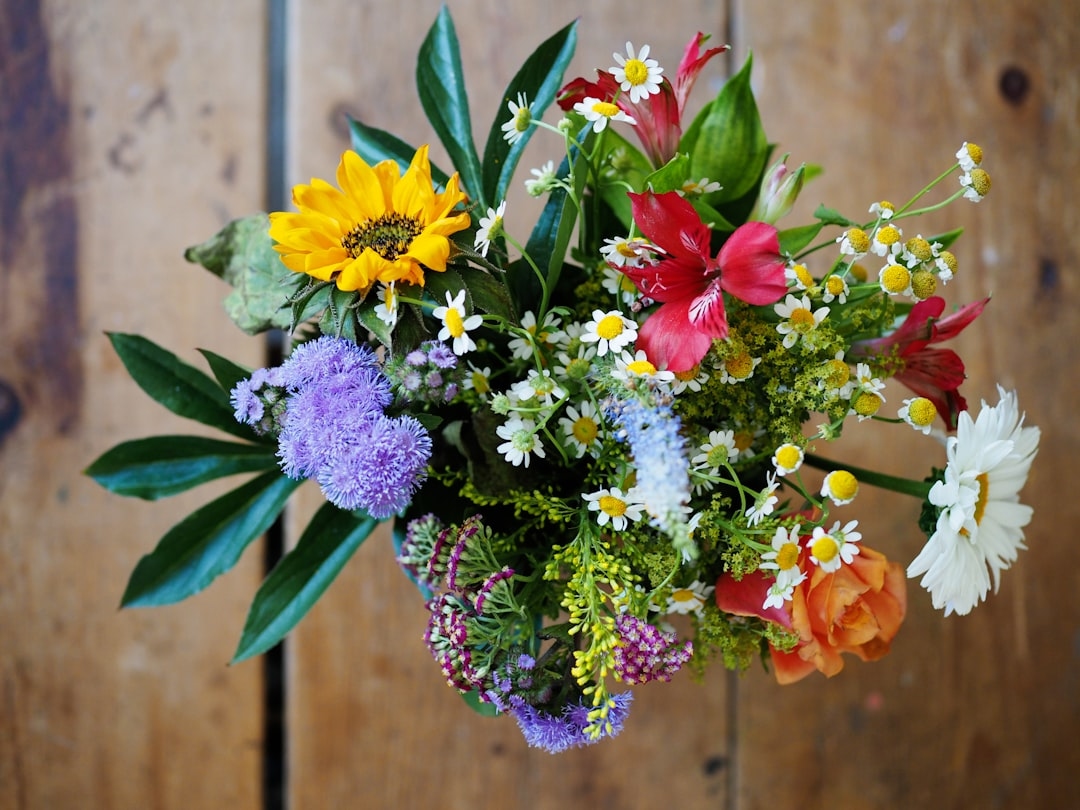
Immediately after cutting, place stems in a bucket of cool water and move them to a cool, dark location for 4 to 8 hours before arranging. This process — called conditioning or hardening off — allows stems to rehydrate fully and dramatically extends vase life. Use a clean bucket with a drop of bleach (¼ teaspoon per quart of water) and a packet of floral preservative to inhibit bacterial growth and provide a small carbohydrate boost to the flowers.
Soil, Fertility, and Water: The Foundation of a Productive Cutting Garden
Building Soil That Produces
High-yielding cutting crops are heavy feeders. Before planting each season, incorporate 2 to 3 inches of finished compost into the top 8 inches of soil. A balanced granular fertilizer — 10-10-10 or an organic equivalent — worked in at planting gives plants a strong start. Once flowers begin to bud, switch to a low-nitrogen, higher-phosphorus feed (something in the range of 5-10-10) to encourage bloom production over leafy growth. Too much nitrogen at this stage produces lush foliage with fewer flowers.
Irrigation
Most cutting crops need 1 to 1.5 inches of water per week during the growing season. Drip irrigation is strongly preferred over overhead watering: wet foliage invites powdery mildew, botrytis, and other fungal diseases that spread rapidly through densely planted cutting beds. If you hand-water, water at the base of plants in the morning so foliage dries before nightfall. Mulching with 2 inches of straw or shredded wood keeps moisture in, soil temperature stable, and weeds suppressed.
Mulching and Weed Control
Weeds compete aggressively with young transplants and seedlings for water and nutrients. A landscape fabric or thick straw mulch applied before planting is one of the highest-return investments in a cutting garden. Many flower farmers use pre-punched landscape fabric for their row plantings — it suppresses weeds almost entirely while allowing water to penetrate. For home growers without fabric, a 3-inch straw mulch applied after seedlings reach 4 inches tall works nearly as well.
Pest and Disease Management in the Cutting Garden
The concentrated planting style of a cutting garden — rows of a single species planted densely — creates conditions that can favor pest and disease outbreaks. Prevention is far more effective than treatment.
Common Pests
- Aphids target sweet peas, dahlias, and zinnias. A hard spray of water knocks them off; insecticidal soap handles heavier infestations. Introduce or encourage parasitic wasps and ladybugs, which are effective natural controls.
- Japanese beetles are devastating to zinnias, dahlias, and roses in Zones 4–9. Hand-pick early in the morning when beetles are sluggish. Row covers protect young plants; neem oil is a useful organic deterrent.
- Thrips damage dahlia petals and lisianthus buds. Spinosad, an organic insecticide derived from soil bacteria, is highly effective.
Common Diseases
- Powdery mildew is the bane of zinnias and dahlias in humid summers. Improve air circulation by thinning crowded stems, and apply a diluted potassium bicarbonate spray at the first sign of white powder on leaves.
- Botrytis (gray mold) attacks peony buds and other dense flowers in wet, cool conditions. Remove affected plant material immediately and avoid overhead watering.
- Crown gall and stem rot in dahlias are often soil-borne. Rotate dahlia beds every 3 to 4 years and store tubers in dry, cool conditions over winter to prevent fungal colonization.
Practical Tips for Getting the Most from Your Cutting Garden
Pinch Early, Harvest Often
Pinching — removing the central growing tip of young annual transplants when they reach 8 to 12 inches — is one of the highest-yield techniques available to the home flower grower. A pinched zinnia, for example, will produce 4 to 6 lateral stems instead of the single central stem of an unpinched plant. That single act can triple your stem count per square foot. Pinch dahlias, zinnias, lisianthus, and basil. Do not pinch sunflowers if you want the classic large-headed single stem (though branching varieties like ‘Autumn Beauty’ should be pinched).
Keep a Planting Journal
Track what you planted, when, and how it performed. Note first bloom dates, yield per row foot, vase life, and any pest or disease issues. This data is invaluable when you’re planning next year’s garden. The difference between a good cutting garden and a great one is almost always accumulated knowledge rather than raw gardening skill.
Don’t Neglect Your Perennial Investment
Perennials are slow to establish but deliver compounding returns. A three-year-old peony plant can yield 40 to 60 stems in a single season. A clump of Siberian iris established over 2 to 3 years produces dozens of elegant, long-stemmed blooms with zero replanting effort. Budget for 20 to 30% of your cutting garden space to go to perennials — they’ll become your most cost-efficient stems year over year.
Grow Flowers You Can’t Buy
One of the great rewards of a home cutting garden is access to varieties that are unavailable at grocery stores and even most florists. ‘Café au Lait’ dahlias — a blush-and-bronze dinner plate dahlia that’s become a wedding florist obsession — are virtually impossible to buy as cut flowers and retail for $4 to $8 per stem when available. A single tuber costs $8 to $15 and produces 20 to 40 stems per season. Heirloom sweet peas in ‘Painted Lady’ or Spencer varieties, chocolate cosmos (Cosmos atrosanguineus), and ‘Dara’ ammi are other examples of varieties your garden can produce that no supermarket ever will.
Think in Arrangements, Not Just Individual Flowers
Before you finalize your plant list, build a mental bouquet. Every arrangement needs focal flowers, secondary flowers, and filler. If you grow only zinnias, you’ll have buckets of beautiful stems but nothing to pair them with. Aim for a minimum of one reliable foliage plant (dusty miller, basil, or eucalyptus), one airy filler (ammi, bupleurum, or statice), and two or three focal flowers from different seasons. That mix produces cohesive, professional-looking arrangements rather than single-flower bunches.
A Simple Starter Plan for a 4-by-16 Foot Cutting Bed
If you’re starting from scratch, here is a starter plan for a single 4-by-16-foot bed that will produce cutting flowers from late May through October in USDA Zones 5 to 7:
- Row 1 (4 feet): Snapdragons — transplant in early spring; succession-plant again in late July for fall bloom
- Row 2 (4 feet): Zinnias (‘Benary’s Giant Mix’) — direct-sow after last frost; replant once in late June
- Row 3 (4 feet): Dahlias (4 tubers, 12-inch spacing) — plant when soil reaches 60°F; will bloom July through frost
- Row 4 (4 feet): Ammi majus + basil — direct-sow ammi in early spring; transplant basil after frost
This simple four-row plan covers cool-season, warm-season, and foliage needs, produces stems continuously from late spring through October, and requires no specialized equipment beyond a trowel, some support netting, and basic irrigation.
Budget Breakdown: What Does a Cutting Garden Cost?
Many gardeners assume a productive cutting garden requires a significant investment. The reality is more encouraging. Here’s a rough breakdown for establishing the 4-by-16-foot starter bed described above:
- Seeds (snapdragons, zinnias, ammi, basil): $20 to $35 total
- Dahlia tubers (4 tubers, mid-range varieties): $30 to $60
- Compost and amendments: $25 to $50 (one-time soil improvement)
- Support netting: $15 to $25 for a basic horizontal grid
- Floral supplies (buckets, preservative packets, snips): $25 to $40
Total first-year investment: roughly $115 to $210. Compare that to buying fresh bouquets from a florist at $15 to $30 each, and the payback math becomes obvious quickly — especially once your dahlias return year after year and your seed costs drop by 60 to 70% when you save seed from zinnias, ammi, and cosmos.
Frequently Asked Questions
What is a cutting garden?
A cutting garden is a dedicated planting area grown specifically to produce flowers for indoor arrangements rather than for ornamental display in the landscape. It prioritizes stem yield, vase life, and succession planting over aesthetic appearance from outside the bed.
How do I keep a cutting garden blooming all season?
The key is succession planting — sowing or transplanting new crops every 2 to 3 weeks throughout spring and summer so something is always coming into peak bloom. Combine cool-season annuals (snapdragons, sweet peas) with warm-season annuals (zinnias, dahlias) and perennials (peonies, scabiosa) for continuous bloom from spring through frost.
What are the best flowers for a beginner cutting garden?
Zinnias, sunflowers, and cosmos are the best starting points for beginners. All three are direct-sown after the last frost, require minimal maintenance, respond well to cutting, and produce abundantly. Add one or two dahlia tubers for midsummer through fall stems, and ammi majus as filler.
How often should I cut flowers from my cutting garden?
Harvest as frequently as possible — ideally every 2 to 3 days during peak bloom. Regular cutting stimulates most annuals, especially zinnias, cosmos, and sweet peas, to produce more lateral stems. A bed left unharvested for a week will produce fewer flowers over the following weeks than one cut consistently.
How long do homegrown cut flowers last in a vase?
Properly conditioned homegrown flowers last 5 to 14 days depending on the variety. Lisianthus and sunflowers last 7 to 14 days. Zinnias and dahlias average 5 to 10 days. Peonies last 5 to 7 days. Conditioning (placing freshly cut stems in cool water in a dark location for several hours before arranging) and using floral preservative extends vase life by 2 to 4 days regardless of variety.
Start Small, Think Big, Cut Often
A cutting garden rewards momentum. Your first season will teach you which varieties thrive in your soil and climate, which bloom windows overlap, and where the gaps are. Your second season, you’ll succession-plant more precisely, add a perennial or two, and start saving seed. By your third season, you’ll have a system — a living calendar of blooms that requires less planning because you’ve internalized the rhythm.
Start with one 4-by-8 or 4-by-16-foot bed. Choose five crops: two focal flowers, one secondary, one filler, one foliage. Harvest relentlessly. Take notes. Then expand. A cutting garden all season long isn’t built in a single spring — it’s built over two or three years of attention, adjustment, and the simple pleasure of walking out your back door with snips in hand, ready to fill another vase.
+ There are no comments
Add yours