
Contents:
- Seasonal Bloom Calendar: When to Plant and What to Expect
- 25 Types of Annual Flowers That Bloom All Summer
- Zinnia (Zinnia elegans)
- Petunia (Petunia × hybrida)
- Marigold (Tagetes spp.)
- Impatiens (Impatiens walleriana)
- Cosmos (Cosmos bipinnatus)
- Calibrachoa (Calibrachoa spp.)
- Lantana (Lantana camara)
- Celosia (Celosia argentea)
- Salvia (Salvia splendens and S. farinacea)
- Portulaca (Portulaca grandiflora)
- Bacopa (Sutera cordata)
- Verbena (Verbena × hybrida)
- Vinca / Periwinkle (Catharanthus roseus)
- Torenia (Torenia fournieri)
- Angelonia (Angelonia angustifolia)
- Lobularia / Sweet Alyssum (Lobularia maritima)
- Gazania (Gazania rigens)
- Cleome / Spider Flower (Cleome hassleriana)
- Snapdragon (Antirrhinum majus)
- Gomphrena / Globe Amaranth (Gomphrena globosa)
- Lobelia (Lobelia erinus)
- Nemesia (Nemesia spp.)
- Scaevola / Fan Flower (Scaevola aemula)
- Osteospermum / African Daisy (Osteospermum spp.)
- Moss Verbena (Verbena tenuisecta)
- Quick Comparison: 25 Summer Annuals at a Glance
- How to Choose the Right Summer Annual Flowers for Your Space
- Match Light to Plant, Not Plant to Wish
- Think in Thrillers, Fillers, and Spillers
- Consider Your Watering Reality
- An Expert’s Take on Container Annuals
- Building a Full-Summer Annual Flowers Bloom Plan
- Frequently Asked Questions
- What annual flowers bloom the longest in summer?
- Which annual flowers are best for containers and small spaces?
- What annual flowers grow in shade and bloom all summer?
- How do I keep annual flowers blooming all summer?
- When should I plant summer annual flowers in the US?
The scent hits you first. Standing on a sun-warmed balcony in late June, surrounded by cascading petunias and electric-orange zinnias, you realize that a few well-chosen pots have completely transformed a concrete rectangle into something alive. You don’t need a sprawling backyard to experience that. You need the right flowers — specifically, annuals that commit to blooming from the last frost straight through to fall.
Unlike perennials, which take a season or two to establish, annuals go all-in from day one. They germinate, flower, seed, and finish their entire life cycle in a single growing season. That urgency is visible in their blooms — relentless, vivid, and often fragrant. For apartment dwellers and small-space gardeners, they’re the highest-return investment in any container garden.
This guide covers 25 of the best annual flowers bloom summer types for US gardeners, including bloom duration, container suitability, light requirements, and honest size expectations. A seasonal calendar, expert insight, and a comparison table are included to help you plan from seed to first frost.
Seasonal Bloom Calendar: When to Plant and What to Expect
Timing matters more than most beginners realize. The general rule for most of these annuals is to start seeds indoors 6–8 weeks before your last frost date, or direct sow once nighttime temperatures stay consistently above 50°F. In USDA Hardiness Zones 6–8 (covering most of the continental US), that means an indoor start in mid-March and an outdoor transplant in mid-May.
Here’s a simplified timeline for small-space summer bloomers:
- February–March: Start petunias, snapdragons, lobelia, and impatiens indoors.
- March–April: Start zinnias, marigolds, cosmos, and nasturtiums indoors or wait for direct sow.
- After last frost (May–June): Transplant or direct sow all warm-season annuals outdoors.
- June–September: Peak bloom period for the majority of summer annuals.
- September–October: Deadhead aggressively to extend bloom into fall; collect seeds for next year.
Most annuals listed here bloom for 10–16 weeks when deadheaded regularly — that’s a full summer of color from a single planting.
25 Types of Annual Flowers That Bloom All Summer
1. Zinnia (Zinnia elegans)
Zinnias are the workhorses of the summer container garden. Available in single, semi-double, and fully double forms, they bloom in nearly every color except blue. ‘Profusion’ series plants top out at 12–18 inches — perfect for a 10-inch pot. Plant in full sun with well-draining soil and deadhead weekly. Zinnias attract monarch butterflies and are heat-tolerant down to USDA Zone 3. Expect continuous blooms from late June until the first hard frost, roughly 14–16 weeks of color. Seed packets run $2–$5 at most garden centers.
2. Petunia (Petunia × hybrida)
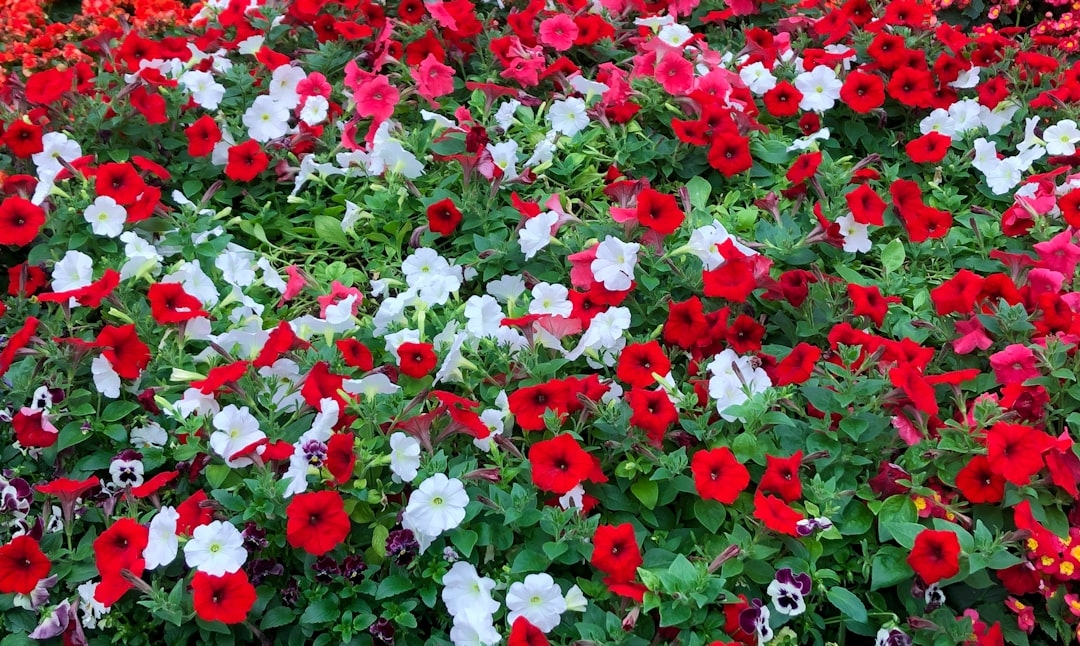
No annual does more work in a hanging basket than a petunia. Wave and Supertunia series varieties trail 2–3 feet and produce blooms every 1–2 inches along each stem. They thrive in full sun and require feeding every 7–10 days with a balanced liquid fertilizer (10-10-10) to sustain that output. Without feeding, bloom production drops noticeably within three weeks. Colors range from pure white to near-black burgundy. In Zones 9–11, they’ll even overwinter. A 4-inch starter plant costs $3–$5 at most nurseries.
3. Marigold (Tagetes spp.)
French marigolds (Tagetes patula) stay compact at 6–12 inches, making them ideal for window boxes and the edges of container arrangements. They bloom from late May until frost — often 18+ weeks — and their pungent foliage is a genuine pest deterrent. Plant them alongside tomatoes or herbs in a mixed planter to reduce aphid pressure. African marigold varieties grow taller (18–36 inches) and are better suited to ground-level containers with room to spread. Both types are drought-tolerant once established, needing water only when the top inch of soil feels dry.
4. Impatiens (Impatiens walleriana)
If your balcony or patio faces north or gets filtered light for most of the day, impatiens are your best friend. They’re one of the few true shade-tolerant annuals that bloom continuously all summer without any deadheading. Plants grow 8–18 inches tall and wide, working well in 8–10 inch pots. The 2012–2014 downy mildew epidemic devastated impatiens crops in the US, but modern varieties like the Beacon and Imara series are fully resistant. Expect blooms in pink, coral, white, red, and bicolor from June through October.
5. Cosmos (Cosmos bipinnatus)
Cosmos bring an airy, cottage-garden quality to any space. Their feathery foliage and daisy-like blooms in pink, white, and magenta sit atop stems that reach 2–4 feet — tall for a container, so use a 12-inch pot with a bamboo stake or plant the dwarf ‘Sonata’ series that maxes out at 24 inches. They bloom from July through frost, perform in poor soil, and actually bloom less in rich fertilized mixes (excess nitrogen pushes foliage over flowers). One of the easiest annuals to direct sow; germination occurs in 7–10 days.
6. Calibrachoa (Calibrachoa spp.)
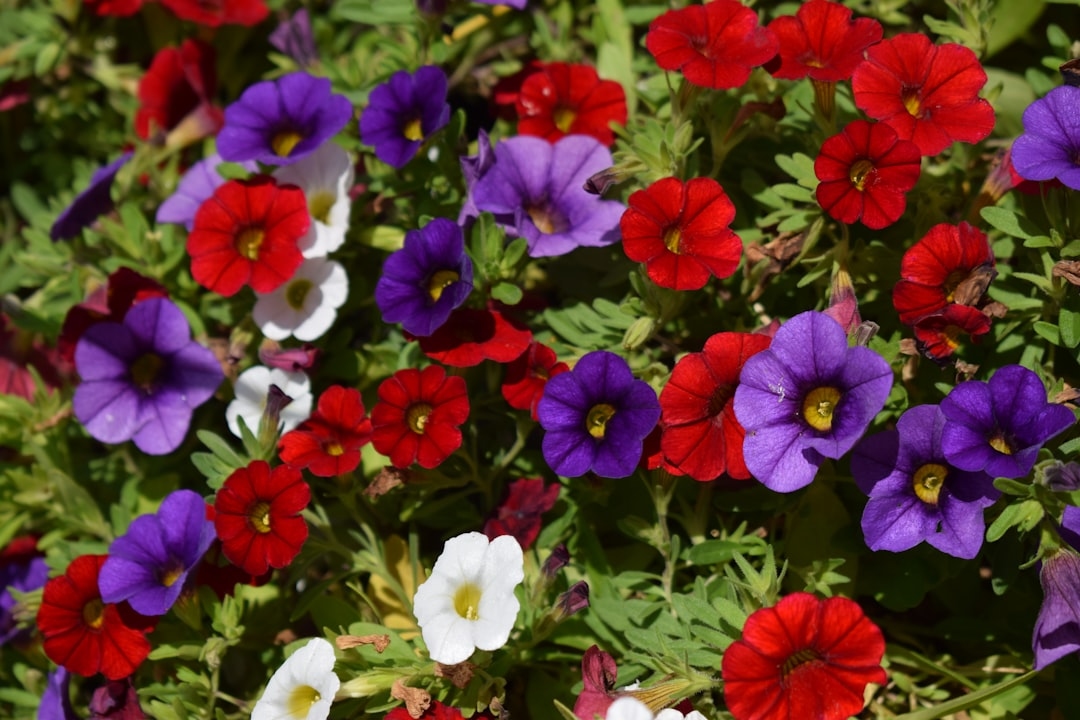
Often called million bells, calibrachoa looks like a miniature petunia but doesn’t need deadheading — spent blooms drop on their own. Plants trail 6–12 inches and produce hundreds of ¾-inch flowers in jewel-box shades: copper, magenta, yellow, and bi-tones. They’re heavy feeders; without weekly fertilization, chlorosis (yellowing between leaf veins) sets in fast. Use an acidic fertilizer formulated for petunias or calibrachoa. A single 4-inch plant in a hanging basket will cascade over the edges within six weeks of planting.
7. Lantana (Lantana camara)
Lantana blooms in clustered domes of color that shift as they age — a single flower head might show yellow, orange, and red simultaneously. It’s remarkably heat and drought tolerant, performing in full sun even during stretches above 95°F where other annuals falter. Trailing varieties like ‘Trailing Lavender’ work in hanging baskets; upright forms grow 18–24 inches for containers. Note: lantana berries are toxic to pets and children. Grown as an annual in Zones 1–8, it overwinters as a perennial in Zones 9–11.
8. Celosia (Celosia argentea)
Celosia earns its place through sheer architectural drama. Plumed varieties (C. argentea var. plumosa) produce feathery spikes in deep crimson, gold, and orange. Crested cockscomb types look like velvet brain coral. Both bloom from midsummer through frost and hold their color even as they dry — cut and hang them upside down to preserve for winter arrangements. Plants grow 6–18 inches depending on variety. They need heat to perform well, so don’t rush them outdoors; wait until soil temperatures reach at least 60°F.
9. Salvia (Salvia splendens and S. farinacea)
Scarlet salvia (S. splendens) is the classic red spike you see in municipal planters, and for good reason — it blooms continuously in full sun without deadheading and tolerates heat well. ‘Vista Red’ grows to just 12 inches, making it container-appropriate. Blue salvia (S. farinacea), including the popular ‘Victoria Blue’ cultivar, adds vertical interest with cool indigo spikes that hummingbirds adore. Both types bloom from June through frost and pair beautifully together for a patriotic red-white-blue container combo with white petunias.
10. Portulaca (Portulaca grandiflora)
For a hot, south-facing balcony with no shade, portulaca is practically indestructible. Also called moss rose, it thrives in dry, poor soil and full sun — the conditions that kill most other annuals. Blooms open in the morning and close at night; some newer varieties stay open longer under cloud cover. Plants spread 6–12 inches wide and stay under 6 inches tall, making them excellent for shallow planters or the front edge of a window box. Colors include magenta, yellow, white, and orange, often with a silky, crepe-paper texture.
11. Bacopa (Sutera cordata)
Bacopa is the subtle beauty of the container world — tiny white or lavender flowers that spill over pot edges in a delicate cascade. It blooms from spring through fall and tolerates light shade better than many trailers. Heat above 90°F can cause temporary blooming pauses, but plants resume once temperatures drop. The key to consistent performance is never letting bacopa dry out completely; it’s more moisture-sensitive than other trailers. Pair it with bolder bloomers like calibrachoa or verbena for contrast in a mixed hanging basket.
12. Verbena (Verbena × hybrida)
Verbena produces flat-topped clusters of small flowers in brilliant shades of red, purple, pink, and white, often with a white eye at the center. It’s heat-tolerant, blooms from May through frost, and attracts butterflies in large numbers — a meaningful feature even on a small balcony. Trailing types like ‘Superbena’ spread 18–24 inches and work beautifully spilling from elevated containers. Water at the base rather than overhead to prevent powdery mildew, which is verbena’s primary weakness in humid climates.
13. Vinca / Periwinkle (Catharanthus roseus)
Vinca is one of the most heat and humidity tolerant annuals available. It requires almost no attention once established — no deadheading, minimal fertilizing, and modest watering. The ‘Titan’ and ‘Cora’ series produce 2-inch blooms on compact 12–18 inch plants in shades of coral, red, white, and lavender. Vinca thrives in USDA Zones 3–11 as an annual and is an excellent choice for beginners who want reliable color with low maintenance. It blooms from late spring through the first frost.
14. Torenia (Torenia fournieri)
Often called wishbone flower, torenia is a shade-lover with unusual tubular blooms that resemble tiny snapdragons in purple, pink, white, and yellow combinations. It blooms steadily from late spring to fall and performs in partial to full shade — making it valuable on east- or north-facing balconies. Plants grow 6–12 inches tall and wide, fitting neatly in 6-inch pots. Unlike impatiens, torenia also tolerates some morning sun, giving it more placement flexibility in mixed container arrangements.
15. Angelonia (Angelonia angustifolia)
Angelonia is sometimes called summer snapdragon, and the comparison is apt — upright spikes of orchid-like blooms in purple, pink, and white rise 12–24 inches above clean, narrow foliage. Unlike true snapdragons, angelonia is heat-loving, not cool-season. It blooms from June through October with no deadheading required and carries a light grape-like fragrance. The ‘Serena’ series stays under 14 inches, fitting well in 10-inch containers. Drought-tolerant once established, it’s ideal for gardeners who travel and can’t water daily.
16. Lobularia / Sweet Alyssum (Lobularia maritima)
Sweet alyssum produces clusters of tiny white or purple flowers with a distinctive honey-vanilla scent that intensifies in the evening. Plants grow just 3–6 inches tall and spread 6–12 inches, making them perfect filler at the base of taller container plants. They bloom from late spring, may pause during peak summer heat, then rebloom vigorously in fall. A single 4-inch pot costs under $3 and will fill a 12-inch window box edge within a month. Shear plants back by one-third mid-summer to reinvigorate blooming after a heat pause.
17. Gazania (Gazania rigens)
Gazanias are bold, daisy-like flowers with striped petals in orange, yellow, bronze, and pink — they look like they belong in a Mediterranean courtyard. They bloom from June through frost in full sun and are extraordinarily drought-tolerant. The catch: blooms close at night and on cloudy days, so they’re best suited to sunny south- or west-facing spots. ‘Big Kiss’ series plants grow 8–10 inches tall and wide, performing well in terra cotta pots that allow excellent drainage. Their compact form makes them excellent solo plants in 6-inch containers.
18. Cleome / Spider Flower (Cleome hassleriana)
Cleome is dramatic — stalks grow 3–5 feet tall and produce spidery, globe-shaped flowers in pink, white, and purple atop airy foliage. For small spaces, use the dwarf ‘Senorita Rosalita’ or ‘Señorita Blanca’ series, which top out at 2–3 feet and are sterile (no reseeding). Full sun, minimal watering, and they bloom from July through frost. Their height makes them a natural “thriller” element in large 14–16 inch containers paired with shorter trailing companions. Butterflies and hummingbirds visit consistently once plants mature.
19. Snapdragon (Antirrhinum majus)
Snapdragons are cool-season annuals that bloom heavily in spring and again in fall, but select heat-tolerant cultivars like the ‘Twinny’ or ‘Chantilly’ series bridge the summer gap. They bloom in virtually every color, including bi-colors, and add strong vertical spikes — 12–24 inches tall — to container compositions. For small spaces, dwarf varieties stay under 12 inches. Pinch the center stem when transplanting to encourage bushier growth and more flower spikes. In Zones 7–10, a fall planting will often overwinter and rebloom the following spring.
20. Gomphrena / Globe Amaranth (Gomphrena globosa)
Gomphrena produces clover-like papery blooms in magenta, pink, white, orange, and purple that hold their color when dried. Plants bloom from June through October, tolerate heat and humidity, and rarely need deadheading. ‘Qis’ series plants grow 18–24 inches — useful as a mid-height element in container arrangements. Like celosia, gomphrena is a heat-seeker; planting too early in cool soil stunts growth. It’s an excellent cut flower and a reliable butterfly attractant, with blooms that last 2–3 weeks in a vase without conditioning.
21. Lobelia (Lobelia erinus)
Trailing lobelia is prized for its intense cobalt-blue color — a shade that’s genuinely rare in the annual world. Compact varieties cascade 6–12 inches and bloom prolifically from late spring through early summer, often pausing in intense heat above 85°F before reblooming in September. Shear plants back by half in mid-July to trigger fall rebloom. ‘Laguna Sky Blue’ and ‘Regatta Blue Splash’ are heat-tolerant selections worth seeking out. Pair with yellow or orange calibrachoa for a high-contrast hanging basket that earns double-takes.
22. Nemesia (Nemesia spp.)
Nemesia produces small, two-lipped flowers in complex color combinations — yellow and burgundy, pink and white, purple and gold — with a light sweet fragrance. Like lobelia, it prefers cooler temperatures and blooms best in spring and fall, but newer heat-tolerant varieties like the ‘Sunsatia’ series extend summer performance. Plants grow 8–12 inches and work well in 6–8 inch containers or as a front-row filler in larger mixed plantings. In the Pacific Northwest and Northeast, where summers stay mild, nemesia delivers nearly continuous summer-long color.
23. Scaevola / Fan Flower (Scaevola aemula)
Scaevola’s distinctive fan-shaped blooms in lavender-blue, pink, or white cascade beautifully from hanging baskets. Native to Australia, it’s exceptionally heat and salt tolerant — an important trait for coastal apartment gardeners. Plants bloom from late spring through frost with no deadheading required. Trailing stems reach 18–24 inches, making a single plant enough to fill a 10-inch basket. ‘Bombay Dark Blue’ is the most commonly available cultivar; its color is closer to true blue than almost any other annual, making it a sought-after contrast plant.
24. Osteospermum / African Daisy (Osteospermum spp.)
African daisies bring sophisticated, spoon-shaped petals in lavender, pink, yellow, and white to the summer container garden. They bloom heavily in cool weather and may slow in peak summer heat, but the ‘Astra’ and ‘4D’ series handle temperatures up to 90°F better than older cultivars. Plants grow 10–14 inches tall and wide. Like gazania, blooms close at night. Full sun is essential — plants in partial shade stretch leggy and produce fewer flowers. Deadhead regularly; African daisies that go to seed stop producing new buds quickly.
25. Moss Verbena (Verbena tenuisecta)
Moss verbena is the fine-textured, lower-maintenance cousin of hybrid verbena. Its deeply cut, ferny foliage creates a delicate mat 6–10 inches tall that spreads 18–24 inches and produces clusters of small purple, lavender, or white flowers from May through frost. It tolerates drought and heat beautifully, self-cleans without deadheading, and rarely suffers from the powdery mildew issues that plague hybrid verbena. In Zones 8–11 it will often overwinter. An underused gem that deserves more space in American container gardens.
Quick Comparison: 25 Summer Annuals at a Glance
| Flower | Light | Container Size | Deadheading? | Heat Tolerance |
|---|---|---|---|---|
| Zinnia | Full sun | 10″+ | Yes | High |
| Petunia | Full sun | 8″+ | Yes | Medium |
| Marigold | Full sun | 6″+ | Optional | High |
| Impatiens | Shade/Part | 8″+ | No | Low |
| Cosmos | Full sun | 12″+ | Yes | Medium |
| Calibrachoa | Full sun | 8″+ | No | Medium |
| Lantana | Full sun | 10″+ | Optional | Very High |
| Celosia | Full sun | 8″+ | No | High |
| Salvia | Full sun | 8″+ | Optional | High |
| Portulaca | Full sun | 6″+ | No | Very High |
| Bacopa | Part shade | 6″+ | No | Low |
| Verbena | Full sun | 10″+ | Yes | High |
| Vinca | Full sun | 8″+ | No | Very High |
| Torenia | Shade/Part | 6″+ | No | Medium |
| Angelonia | Full sun | 10″+ | No | High |
| Sweet Alyssum | Full/Part | 4″+ | Optional | Low |
| Gazania | Full sun | 6″+ | Yes | Very High |
| Cleome | Full sun | 14″+ | No | High |
| Snapdragon | Full/Part | 8″+ | Yes | Low–Medium |
| Gomphrena | Full sun | 8″+ | No | High |
| Lobelia | Part shade | 6″+ | Shear | Low |
| Nemesia | Full/Part | 6″+ | Yes | Low–Medium |
| Scaevola | Full sun | 10″+ | No | High |
| Osteospermum | Full sun | 8″+ | Yes | Medium |
| Moss Verbena | Full sun | 8″+ | No | High |
How to Choose the Right Summer Annual Flowers for Your Space
Before you buy a single plant, answer three questions: How much direct sun does your space get? How often are you realistically able to water? And how large is your largest container?
Match Light to Plant, Not Plant to Wish
This is where most small-space gardeners go wrong. A balcony that gets four hours of morning sun is not a full-sun location — it’s part shade. Petunias planted there will stretch, fade, and underperform. Impatiens, torenia, or bacopa will thrive. Count actual hours of direct sunlight before purchasing. Six or more hours of direct sun = full sun. Three to five hours = part shade. Fewer than three hours = full shade (lobelia, impatiens, and torenia are your options).
Think in Thrillers, Fillers, and Spillers
The classic container design formula works because it creates visual interest at three levels. A “thriller” is a tall, dramatic plant — angelonia, celosia, or cleome. A “filler” rounds out the middle: zinnias, marigolds, or vinca. A “spiller” trails over the edge: calibrachoa, bacopa, or scaevola. For a 12-inch pot, one thriller + two fillers + one spiller creates a full, professional-looking arrangement for around $15–$20 in starter plants.
Consider Your Watering Reality
Container gardens dry out faster than in-ground beds — a 10-inch terra cotta pot in full sun can need watering twice daily in July. If you travel or work long hours, build your container around drought-tolerant choices: lantana, portulaca, gazania, vinca, and angelonia can survive 48–72 hours without water once established. Moisture-sensitive plants like bacopa, lobelia, and nemesia are better suited to gardeners who are home daily.
An Expert’s Take on Container Annuals
“The biggest mistake I see with small-space gardeners is overcrowding pots at planting time and underfertilizing two months in,” says Dana Hirsch, Certified Professional Horticulturist (CPH) and owner of Rooftop Roots Nursery in Portland, Oregon. “Most annuals are bred for high output — they’ll exhaust the nutrients in a container within six weeks. Switch to a slow-release granular fertilizer at planting, then supplement with liquid feed every 10 days from July onward. That one change extends peak bloom by four to six weeks.”
Building a Full-Summer Annual Flowers Bloom Plan
The goal for any small-space gardener is unbroken color from Memorial Day through the first frost — roughly 18–22 weeks depending on your zone. That’s achievable with smart plant selection, not a large budget. A $60–$80 investment in starter plants, a quality potting mix (not garden soil — it compacts in containers), and a slow-release fertilizer will deliver a full season of continuous blooms on a 6-foot balcony.
Start with two to three anchor plants that bloom reliably from June through October: zinnias, vinca, and lantana are excellent choices across most of the US. Layer in a texture contrast (celosia or cosmos) and at least one trailer for visual depth (calibrachoa or scaevola). Reassess in late July — this is when most beginners abandon their containers. Instead of giving up, shear back any leggy plants, apply liquid fertilizer, and within two weeks you’ll see fresh growth and new buds forming.
The annuals listed here represent the most reliable, widely available, and container-appropriate annual flowers that bloom all summer for American gardeners. Pick four or five that match your conditions, commit to a basic feeding routine, and your balcony or patio will do the rest.
Frequently Asked Questions
What annual flowers bloom the longest in summer?
Zinnias, marigolds, vinca, lantana, and calibrachoa are among the longest-blooming summer annuals, typically flowering for 14–20 weeks from late May or June until the first fall frost. Regular deadheading and consistent fertilizing extend bloom periods significantly.
Which annual flowers are best for containers and small spaces?
The best annuals for containers include calibrachoa, petunia, vinca, impatiens (for shade), portulaca, and French marigolds. Look for varieties labeled “dwarf,” “compact,” or “trailing” to ensure they fit containers 8–12 inches in diameter without overcrowding.
What annual flowers grow in shade and bloom all summer?
Impatiens (particularly the mildew-resistant Beacon and Imara series), torenia, and lobelia are the top shade-tolerant annuals for summer-long bloom. Bacopa performs well in partial shade. True full-shade options are limited; most annuals require at least 3–4 hours of light daily.
How do I keep annual flowers blooming all summer?
Deadhead spent blooms weekly to prevent seed set, which signals the plant to stop flowering. Fertilize every 7–10 days with a balanced liquid fertilizer (10-10-10) or apply a slow-release granular at planting. Water consistently — container annuals in full sun may need daily watering in midsummer. Shear back leggy plants by one-third in mid-July to trigger fresh growth.
When should I plant summer annual flowers in the US?
Plant summer annuals outdoors after your last frost date — typically mid-April to mid-May in Zones 6–8. Start seeds indoors 6–8 weeks before that date. In Zone 9 and warmer, many annuals can go in the ground as early as March. Check your specific last frost date at the USDA Plant Hardiness Zone Map website for precision timing.
+ There are no comments
Add yours