


Contents:
- Why Perennial Borders Outperform Annual Beds in the Long Run
- Step 1 — Assess Your Site Before Buying a Single Plant
- Soil Testing: The Non-Negotiable First Step
- Mapping Microclimates and Problem Spots
- Step 2 — Define the Shape and Scale of Your Border
- The Rule of Minimum Depth
- Choosing a Backdrop
- Step 3 — Design for Succession Bloom (The Real Secret)
- Building a Bloom Sequence by Season
- Don’t Forget Foliage
- Step 4 — Master the Height Hierarchy
- General Height Guidelines
- Step 5 — Color Theory for Flower Borders
- Hot vs. Cool Palettes
- Your Seasonal Planning Calendar
- Spacing, Density, and the Patience Problem
- Planting in Drifts, Not Dots
- Common Mistakes to Avoid
- Soil Preparation and Ongoing Maintenance
- Fertilizing Perennials Correctly
- Mulching: The Single Best Maintenance Investment
- Plant Spotlight: 10 Reliable Perennials for a US Border
- Bringing Your Perennial Border Design Together on Paper
- Budgeting for Your First Perennial Border
- Frequently Asked Questions
- What is the best time of year to plant a perennial border?
- How many plants do I need for a 10×6 foot perennial border?
- How do I keep a perennial border looking good all season?
- Which perennials are best for beginners?
- How long does it take for a perennial border to look established?
- Your Next Step: From Plan to Planted
What separates a perennial border that stops people in their tracks from one that just… exists? It’s rarely the plants themselves. It’s the planning behind them. A thoughtfully designed perennial border can bloom from April through October, require minimal replanting year after year, and become the defining feature of your entire yard. Yet most gardeners jump in with a cart full of impulse buys and a vague idea of “something colorful.” The result? A patchy, overcrowded mess that peaks for two weeks in June and disappoints for the other five months.
This perennial border planning guide is for the gardener who’s ready to do it properly. Whether you’re working with a narrow 3-foot strip along a fence or a sweeping 20-foot border backed by a stone wall, the principles are the same. You’re building a living system — one that rewards foresight, punishes impatience, and pays you back in beauty for decades.
Why Perennial Borders Outperform Annual Beds in the Long Run
Annuals are seductive. They bloom hard, look uniform, and deliver instant gratification. But they also demand replanting every single year, and the cost adds up fast — a typical 100-square-foot annual bed can run $150–$300 per season in plants alone. Perennials, by contrast, are a one-time investment that multiplies over time. Many clump-forming perennials like Phlox paniculata or ornamental grasses double in size every two to three years, meaning you can divide them and fill in gaps for free.
There’s also the ecological argument. Deep-rooted perennials improve soil structure, support pollinators with consistent food sources across seasons, and require far less water once established — typically after their first full growing season. A well-designed border functions almost like a mini-ecosystem, with each plant supporting the ones around it.
The catch? Perennials require upfront planning that annuals don’t. You need to think in three dimensions (height, spread, and time), understand your site conditions honestly, and commit to a design before a single trowel breaks soil.
Step 1 — Assess Your Site Before Buying a Single Plant
This is the step most gardeners skip, and it’s the one that causes the most failures. Spend a full week observing your intended border site at different times of day before you do anything else. Track how many hours of direct sunlight it receives. Six or more hours is full sun. Three to six is part shade. Fewer than three is shade. These aren’t suggestions — they’re the difference between a thriving border and a graveyard of expensive plants.
Soil Testing: The Non-Negotiable First Step
Buy a basic soil test kit from any garden center, or send a sample to your local cooperative extension service for around $15–$25. You need to know two things: pH and texture. Most popular perennials prefer a pH between 6.0 and 7.0. Soil that’s too acidic (below 5.5) or too alkaline (above 7.5) locks out nutrients even when they’re physically present in the ground. Amending with garden lime raises pH; sulfur lowers it — but neither works overnight. Plan to amend in fall for spring planting, or allow at least six to eight weeks for changes to take effect.
Soil texture matters just as much. Heavy clay drains poorly and suffocates roots. Sandy soil drains too fast and starves plants of moisture. Both are fixable with organic matter — specifically, 3–4 inches of compost tilled 12 inches deep before planting. This single amendment does more for long-term plant health than any fertilizer program.
Mapping Microclimates and Problem Spots
Every yard has microclimates — spots that are hotter, colder, wetter, or windier than the surrounding area. A south-facing border backed by a brick wall might be a full USDA hardiness zone warmer than the rest of your garden. A low-lying area near a downspout might stay wet for days after rain. Note these quirks on a rough sketch. They’ll inform which plants go where just as much as the overall sun exposure will.
Step 2 — Define the Shape and Scale of Your Border
Borders don’t have to be rectangular. In fact, they rarely should be. Curved edges soften a landscape, create visual interest, and make mowing easier (no awkward corners to navigate). Use a garden hose to lay out your proposed edge before committing to anything. Photograph it from multiple angles, including from upstairs windows if you have them. What looks dramatic at ground level often looks timid from above.
The Rule of Minimum Depth
This is where amateur borders most often fall short: depth. A border needs to be at least 5 feet deep to accommodate three tiers of planting — front, middle, and back. Six to eight feet gives you genuine design flexibility. Anything under 4 feet tends to look like a single row of plants pushed against a fence, with no sense of layering or depth. If your space is narrow, consider working with just two tiers (front and back) and choosing plants with strong architectural forms to compensate.
Choosing a Backdrop
The best perennial borders have a strong backdrop — a hedge, a fence, a wall, or a row of ornamental grasses — that acts as a visual anchor and makes the flowering plants pop against it. A 6-foot privacy fence painted a deep charcoal or forest green is one of the most underrated backdrops in residential gardening. It’s neutral, it recedes visually, and it makes every flower color look more saturated. Yew hedges (Taxus spp.) serve the same purpose and provide winter structure, though they take four to six years to reach useful height from transplants.
Step 3 — Design for Succession Bloom (The Real Secret)
A rookie border peaks in one season. A great border is always doing something. The goal of succession planting is to have at least three to four species at peak bloom at any given point from early spring through late fall. This requires deliberate sequencing — not just grabbing “pretty perennials” and hoping they overlap.
Building a Bloom Sequence by Season
Start by listing plants in four seasonal buckets: early spring (April–May), late spring/early summer (June), midsummer (July–August), and late season (September–October). Aim for roughly equal representation in each bucket, with some overlap between seasons. Here’s a working example for a full-sun border in USDA Zones 5–7:
- Early spring: Siberian iris (Iris sibirica), bleeding heart (Dicentra spectabilis), catmint (Nepeta ‘Walker’s Low’)
- Late spring/early summer: Salvia nemorosa ‘Caradonna’, allium ‘Purple Sensation’, geranium ‘Rozanne’
- Midsummer: Echinacea purpurea, Rudbeckia fulgida ‘Goldsturm’, Agastache ‘Blue Fortune’
- Late season: Sedum ‘Autumn Joy’ (now reclassified as Hylotelephium), aster ‘Raydon’s Favorite’, ornamental grasses like Panicum virgatum ‘Shenandoah’
Notice that some plants, like geranium ‘Rozanne’, bloom for four months straight with deadheading. These workhorses are invaluable in a border design — they bridge the gaps between your seasonal stars.
Don’t Forget Foliage
At least 20–25% of your border should be plants chosen primarily for foliage rather than flowers. Hostas, ornamental grasses, heucheras, and ferns provide texture, color contrast, and visual stability when nothing is blooming nearby. A single large clump of blue-leaved hosta can anchor an entire section of border and make the surrounding flowers look intentional rather than accidental.
🌿 What the Pros Know: Professional garden designers always plan for “the ugly gap.” When early-blooming plants like bleeding heart die back in summer heat, they leave bare patches. The pro move is to position medium-sized perennials — like hostas or lady’s mantle (Alchemilla mollis) — directly in front of early bloomers so their foliage expands to fill the void naturally. No mulch patch ever needs to show.
Step 4 — Master the Height Hierarchy
The classic rule is simple: tall plants at the back, medium in the middle, short at the front. But applied rigidly, this produces a staircase effect that looks formal and stiff. Modern border design breaks the rule strategically — allowing occasional tall plants to drift toward the middle of the border, creating depth and the illusion that you’re looking into the planting rather than just at it.
General Height Guidelines
- Back of border (5+ feet): Joe Pye weed (Eutrochium purpureum), tall ornamental grasses, Veronicastrum virginicum, hollyhocks
- Middle (2–4 feet): Echinacea, phlox, salvia, rudbeckia, most daylilies
- Front edge (under 18 inches): Catmint, sedums, geraniums, dianthus, Stachys byzantina (lamb’s ear)
A useful design trick: place one or two bold, tall specimens — like a 5-foot Joe Pye weed or a clump of Miscanthus sinensis ‘Gracillimus’ — approximately one-third of the way from the back rather than flush against it. This creates a sense of layering that a pure stair-step arrangement never achieves.
Step 5 — Color Theory for Flower Borders
Color is where most gardeners overthink and under-execute. The simplest approach that works every time: choose a dominant color family, a secondary accent color, and a neutral (white, cream, or silver) to separate and refresh the palette. A border built around cool blues and purples (salvia, nepeta, agastache, veronica) with warm yellow accents (rudbeckia, helenium) and white fillers (phlox ‘David’, shasta daisy) will look sophisticated in any season.
Hot vs. Cool Palettes
Hot-colored borders — reds, oranges, deep yellows — energize a space and read powerfully from a distance. They work brilliantly in large, sunny gardens viewed from a patio or deck. Cool-colored borders — blues, purples, pinks, whites — feel more intimate, appear to recede visually (making a small space feel larger), and perform better in partial shade where hot colors look muddy.
One practical note: pure red perennials are surprisingly rare. Most “red” perennials are actually deep pink or magenta. True red-flowering perennials that perform reliably in the US include Crocosmia ‘Lucifer’, cardinal flower (Lobelia cardinalis), and Hemerocallis ‘Anzac’ — but all have specific site requirements (cardinal flower, for instance, needs consistently moist soil).
Your Seasonal Planning Calendar
Timing your planning and planting activities correctly is just as important as the design itself. Use this calendar as a framework — adjust by two to four weeks based on your USDA zone (earlier for Zones 8–9, later for Zones 3–4).
- January–February: Finalize your design on paper. Order bare-root perennials and specialty plants online — selections are best before March. Browse nursery catalogs and cross-reference plants with your hardiness zone.
- March–April: Soil preparation begins as soon as the ground is workable. Till in compost, adjust pH if needed. Early bare-root plants (hostas, daylilies, peonies) can go in the ground once soil temperatures hit 40°F.
- May: Prime planting month for most perennials in Zones 5–7. Nurseries are at peak stock. Plant on overcast days or in late afternoon to reduce transplant stress.
- June–August: Deadhead spent blooms to extend flowering. Watch for pest pressure. Water deeply but infrequently — 1 inch per week is the general target, delivered at soil level, not overhead.
- September–October: Plant spring-blooming perennials and divide overcrowded clumps. Note gaps in the bloom sequence for next year’s additions. Leave seed heads standing for birds and overwintering beneficial insects.
- November–December: Apply 2–3 inches of mulch after the ground cools but before it freezes. Cut back only frost-damaged stems; leave ornamental grass clumps intact until early spring.
Spacing, Density, and the Patience Problem
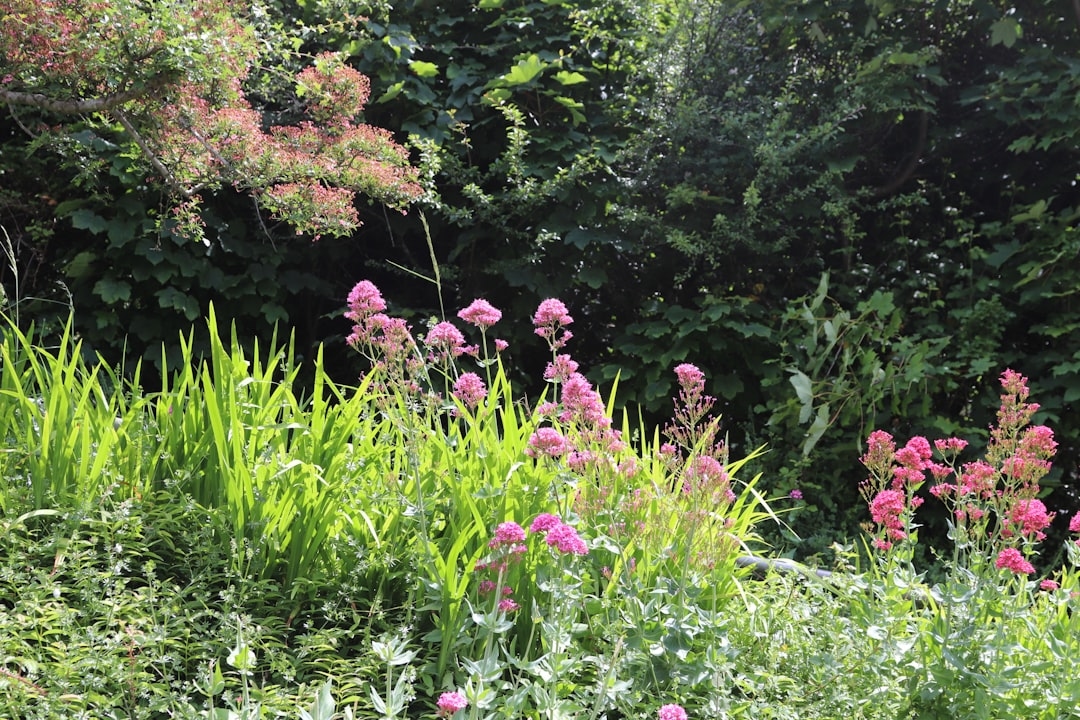
New gardeners consistently make one of two spacing mistakes: planting too close together (because the plants look small at installation) or planting too far apart (because the tag says 24 inches and that feels polite). The right approach is to plant at the recommended spacing but fill the gaps temporarily with fast-growing annuals like zinnias or cosmos for the first season or two. By year three, your perennials will have filled in and the annuals become unnecessary.
As a general density guide: a 100-square-foot border typically needs 30–50 perennial plants, depending on the species’ mature spread. Large structural plants like peonies or ornamental grasses count as anchor points (one per 9–12 square feet), while smaller edging plants like catmint or dianthus can be spaced as close as 12–15 inches apart in drifts of three to five.
Planting in Drifts, Not Dots
Plant each species in groups of three, five, or seven — never one or two. Odd numbers look natural; even numbers look planted. A single echinacea surrounded by different plants just looks lost. Five echinaceas planted in a loose, irregular drift look intentional and bold. This is one of the most impactful design decisions you can make and it costs nothing.
Common Mistakes to Avoid
Even experienced gardeners stumble into predictable traps with perennial borders. Here are the most costly ones — and how to sidestep them:
- Ignoring mature size: That adorable 4-inch pot of Rudbeckia maxima will be 6 feet tall and 3 feet wide in two years. Always check the mature dimensions, not the nursery pot size.
- Choosing all spring bloomers: It’s tempting to load up on irises and peonies because they’re what’s in stock when you’re most excited about planting. Force yourself to buy at least 40% of your plants during summer and fall nursery visits, when you can actually see what’s blooming.
- Skipping the edging: Without a clean, defined edge — whether steel, stone, or a sharp spade cut — grass will infiltrate your border within one season. A metal landscape edging installed 4–6 inches deep pays for itself in saved weeding hours.
- Overwatering newly planted perennials: The most common reason newly planted perennials rot is excess moisture, not drought. Water deeply once at planting, then hold off for five to seven days unless there’s been no rain and the foliage is wilting.
- Planting too many species: A border with 40 different species looks like a botanical collection, not a garden. Repeat five to eight core species throughout the border for cohesion, then add accent species sparingly.
Soil Preparation and Ongoing Maintenance
The most beautiful perennial border in America was built on good soil preparation. No amount of plant selection genius compensates for compacted, nutrient-poor, or waterlogged ground. Before planting, excavate the border to a depth of 12–18 inches (yes, this is significant labor) and incorporate 4 inches of compost throughout. For heavy clay soils, also add horticultural grit or pea gravel at a ratio of roughly one part grit to three parts existing soil to improve drainage.
Fertilizing Perennials Correctly
Most established perennials need very little supplemental fertilization if the soil was properly prepared. An annual top-dressing of 1–2 inches of compost in spring feeds the soil food web, which in turn feeds your plants. If you want to use a granular fertilizer, choose a balanced, slow-release formula like 10-10-10 at the rate specified on the label — typically 1 pound per 100 square feet. Avoid high-nitrogen fertilizers, which push lush foliage at the expense of flowers and make plants more susceptible to pests.
Mulching: The Single Best Maintenance Investment
A 2–3 inch layer of shredded bark or wood chip mulch applied each spring suppresses weeds, retains soil moisture, moderates soil temperature, and slowly decomposes to improve soil structure. Keep mulch 2–3 inches away from plant crowns to prevent crown rot. Budget approximately $50–$80 per cubic yard for premium shredded hardwood mulch, or source wood chips free from local tree services and arborists — the “Back to Eden” composted wood chip method works exceptionally well for perennial borders.
Plant Spotlight: 10 Reliable Perennials for a US Border
These species are widely available at US nurseries, perform reliably across a broad range of zones, and provide the backbone of hundreds of successful borders. Prices reflect typical nursery pot prices in spring 2026.
- Coneflower (Echinacea purpurea): Zones 3–9, full sun, 3–4 feet tall, blooms July–September. Around $8–$14 per gallon pot.
- Black-eyed Susan (Rudbeckia fulgida ‘Goldsturm’): Zones 3–9, full sun, 2 feet tall, blooms July–October. One of the best performers in hot, dry conditions.
- Catmint (Nepeta ‘Walker’s Low’): Zones 4–8, full sun to part shade, 18–24 inches, blooms May–September with cutting back. Around $7–$12 per pot.
- Salvia (Salvia nemorosa ‘Caradonna’): Zones 4–8, full sun, 18–24 inches of upright purple spikes, blooms May–June and reblooms in September.
- Peony (Paeonia lactiflora): Zones 3–8, full sun, 2–3 feet, spectacular May bloom. Plant divisions with “eyes” no more than 1.5 inches below soil surface — any deeper and they won’t bloom.
- Daylily (Hemerocallis hybrids): Zones 3–9, full sun to part shade, 18–36 inches. Choose rebloomers like ‘Stella de Oro’ or ‘Happy Returns’ for multi-season interest.
- Shasta Daisy (Leucanthemum × superbum ‘Becky’): Zones 4–9, full sun, 3–4 feet, prolific white blooms June–September. Needs dividing every three years to stay vigorous.
- Russian Sage (Perovskia atriplicifolia): Zones 4–9, full sun, 3–4 feet of airy silver-blue, blooms July–September. Exceptional drought tolerance once established.
- Autumn Joy Stonecrop (Hylotelephium ‘Herbstfreude’): Zones 3–9, full sun, 18–24 inches, blooms August–October. Provides four-season interest: emerging spring rosettes, summer foliage, fall blooms, and winter seed heads.
- Switch Grass (Panicum virgatum ‘Shenandoah’): Zones 4–9, full sun, 3–4 feet, stunning red fall color. Provides movement, texture, and winter structure that no flowering perennial can match.
Bringing Your Perennial Border Design Together on Paper
Before buying a single plant, draw your border to scale on graph paper — one square equals one square foot works well for borders up to 20 feet long. Mark the location of each plant grouping, noting mature spread. Use colored pencils to indicate bloom color. Then flip to a blank sheet and sketch a timeline: for each month from April through October, which plants will be at peak, which will be transitioning, and which will be dormant or “resting.”
If the timeline reveals a dead zone — say, nothing blooming from mid-July to mid-August — go back and add a midsummer performer. Common fixes for that gap include Agastache ‘Blue Fortune’ (hummingbird magnet, blooms July–frost), Monarda ‘Jacob Cline’ (bee balm, red, 3–4 feet, good mildew resistance), or ornamental oregano (Origanum laevigatum ‘Herrenhausen’) for a softer, textural option.
This paper planning step feels tedious. Do it anyway. Experienced gardeners will tell you that every hour of planning saves three hours of replanting.
Budgeting for Your First Perennial Border
Realistic budgeting prevents the most common border-building failure mode: running out of money halfway through and leaving half the border unplanted. For a 100-square-foot border, plan to spend:
- Soil preparation (compost, amendments): $60–$120
- Plants (35–45 perennials at $8–$18 average): $300–$600
- Mulch (3–4 cubic yards): $80–$150
- Edging and hardscape: $40–$100
- Tools (if starting from scratch): $80–$200
Total first-year investment: roughly $560–$1,170 for a 100-square-foot border. That’s $5.60–$11.70 per square foot — significantly cheaper than professional installation, which typically runs $15–$30 per square foot in the US. And unlike professional installations, you understand every plant and decision in your border.
One budget tip: buy smaller-sized pots (quarts rather than gallons) for species that establish quickly — catmint, rudbeckia, ornamental grasses. Save your gallon-pot budget for slow starters like peonies, baptisia, and hellebores, which genuinely benefit from a head start.
Frequently Asked Questions
What is the best time of year to plant a perennial border?
Spring (April–May) and early fall (September–October) are the two ideal planting windows for perennials in most US climates. Spring planting gives plants a full growing season to establish before winter. Fall planting works especially well for spring bloomers and allows root development during cool months without heat stress. Avoid planting during midsummer heat, particularly in Zones 6 and warmer.
How many plants do I need for a 10×6 foot perennial border?
A 60-square-foot border typically needs 18–30 perennial plants, depending on species. Use three to five larger anchor plants (peonies, ornamental grasses, large salvias) at 9–12 square feet each, then fill with medium-sized perennials spaced 18–24 inches apart. Plan for drifts of at least three plants per species rather than single specimens scattered throughout.
How do I keep a perennial border looking good all season?
Three practices make the biggest difference: deadheading spent flowers to encourage reblooming (or tidy appearance), cutting back any perennial that has finished blooming by one-third to promote fresh foliage, and keeping edges crisp with a half-moon edger every four to six weeks. A 2-inch mulch layer suppresses weeds that would otherwise compete for attention and nutrients.
Which perennials are best for beginners?
The most forgiving, high-performing perennials for beginners in the US are: black-eyed Susan (Rudbeckia fulgida), coneflower (Echinacea purpurea), daylilies (Hemerocallis hybrids), catmint (Nepeta ‘Walker’s Low’), and sedum ‘Autumn Joy.’ All tolerate drought, average soil, and some neglect while still performing reliably across a wide range of USDA zones.
How long does it take for a perennial border to look established?
The gardening maxim “sleep, creep, leap” applies here: perennials spend their first year developing roots (sleep), spread modestly in year two (creep), and hit their stride in year three (leap). A realistically planned perennial border looks presentable in year one, noticeably better in year two, and genuinely impressive from year three onward. Filling year-one gaps with annuals bridges the visual gap without disrupting your permanent plants.
Your Next Step: From Plan to Planted
A great perennial border starts long before a plant goes in the ground. It starts with a soil test, a site observation, a sheet of graph paper, and the willingness to think in seasons rather than single snapshots. The gardeners with the most stunning borders aren’t the ones with the best taste in plants — they’re the ones who did the work of planning first and planting second.
Take your perennial border planning guide off the screen and into your yard this weekend. Walk the space. Measure it. Photograph it at different times of day. Then sit down with that graph paper and start placing your dream plants — not by whim, but with intention. By this time next year, you’ll have a border that earns its own compliments. By year three, you’ll be the neighbor people stop to ask about.
Start small if you need to. A 4×10 foot test border is enough to learn the principles that scale to any size. What matters is starting with a plan — and starting now.

+ There are no comments
Add yours