
Contents:
- The Chemistry Behind Floral Fragrance
- Fragrant Flowers Scent Guide: Species Profiles
- Classic Sweet: Roses (Rosa spp.)
- Intoxicating White: Gardenia (Gardenia jasminoides)
- Herbal Clean: Lavender (Lavandula angustifolia)
- Tropical Sweetness: Jasmine (Jasminum officinale and J. sambac)
- Spicy and Complex: Carnations and Pinks (Dianthus spp.)
- Evening Perfumers: Night-Blooming Flowers
- Designing a Fragrant Garden: Strategy and Layout
- Understanding Scent Corridors
- Planning for Seasonal Succession
- Fragrance Layering by Height
- Soil, Sunlight, and Site Preparation for Scent Optimization
- Common Mistakes to Avoid
- Fragrant Flowers for Specific US Climates and Hardiness Zones
- Cold Climates (Zones 3–5)
- Temperate Climates (Zones 6–7)
- Warm and Hot Climates (Zones 8–11)
- Fragrant Flowers as Cut Flowers: Selecting and Maintaining Scent
- Fragrant Flowering Shrubs and Trees Often Overlooked
- Practical Tips for Getting the Most Scent from Your Garden
- FAQ: Fragrant Flowers Scent Guide
- Which flowers have the strongest fragrance?
- Why do some roses have no smell?
- What is the best time of day to smell fragrant flowers?
- Can I grow fragrant flowers in containers?
- Are fragrant flowers better for pollinators?
- Building Your Scent Calendar: A Year-Round Action Plan
What does your garden smell like at dusk? Most gardeners can answer that question about their food plot or perennial border — but far fewer have deliberately designed for scent. This fragrant flowers scent guide changes that. Fragrance in the garden is not a bonus feature; it is a complex chemical language plants use to attract pollinators, deter herbivores, and respond to their environment. Understanding that language lets you move from accidental aromatics to a purposefully orchestrated sensory experience.
Scent compounds in flowers are produced primarily in specialized epidermal cells on petals, and many volatilize most readily under warmth and low humidity — which is why a rose on a July afternoon smells nothing like the same bloom on a cool spring morning. Knowing this biology gives you real leverage as a gardener.
The Chemistry Behind Floral Fragrance
Floral scent is not a single molecule. It is a cocktail of volatile organic compounds (VOCs), typically including terpenoids, benzenoids, phenylpropanoids, and fatty acid derivatives. A single rose bloom can contain over 400 distinct VOCs. The ratios between these compounds — not just their presence — determine whether a flower smells spicy, sweet, citrusy, or musky.
Three compound classes dominate most garden fragrances:
- Monoterpenes (like linalool and geraniol): Fresh, floral, or citrus-like notes. Common in lavender and roses.
- Benzenoids and phenylpropanoids (like benzyl acetate and eugenol): Sweet, clove-like, or vanilla notes. Dominant in jasmine, gardenia, and carnations.
- Indole: A nitrogenous compound that adds depth and slight animalic warmth to white flowers such as tuberose and gardenia — in small amounts it reads as intensely floral; in high concentrations it becomes fecal, which is why some find tuberose polarizing.
Temperature accelerates volatilization. Most fragrant flowers release peak scent between 65°F and 85°F. Above 90°F, some lighter compounds evaporate so quickly the scent dissipates fast. Below 55°F, few VOCs reach the threshold concentration your nose can detect. This is actionable information: plant fragrant species where afternoon sun warms them, and harvest cut flowers in the early morning before volatile loss begins.
Fragrant Flowers Scent Guide: Species Profiles
Not all fragrant flowers are equal in intensity, seasonality, or cultural requirements. The profiles below cover the species most relevant to US gardeners, organized by scent character rather than bloom season — because scent character is usually what you’re trying to design around.
Classic Sweet: Roses (Rosa spp.)
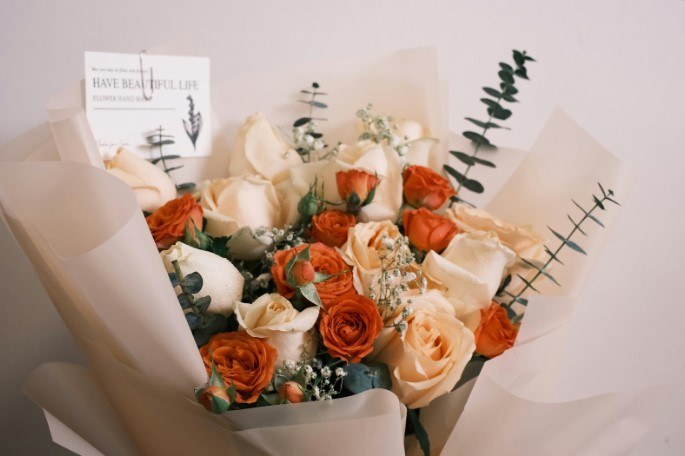
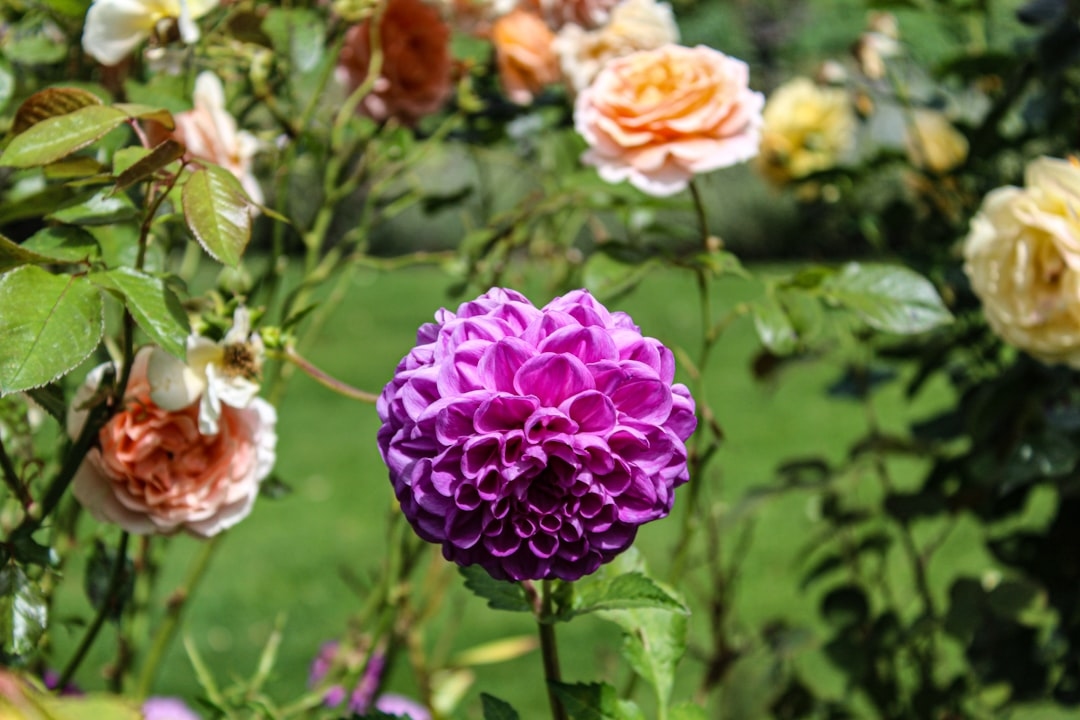
No flower has a longer cultural and horticultural relationship with fragrance than the rose. The problem for modern gardeners is that 20th-century hybridization prioritized disease resistance, repeat-bloom, and color over scent — and many widely sold roses smell of almost nothing.
If fragrance is the goal, target these categories specifically:
- Old Garden Roses (pre-1867 classifications): Damask roses like ‘Madame Hardy’ contain the highest concentrations of geraniol and citronellol. The scent is classic and heavy.
- David Austin English Roses: Bred explicitly to combine old-rose fragrance with modern repeat-bloom. ‘Gertrude Jekyll’ and ‘Munstead Wood’ consistently rank highest in VOC studies among contemporary cultivars.
- Species roses: Rosa rugosa is nearly indestructible in USDA Zones 2–9, blooms repeatedly, and carries a rich, clove-touched scent. Its hips are also edible.
Roses perform best in 6+ hours of direct sun. On a scent-per-square-foot basis in a US garden, a well-sited ‘Gertrude Jekyll’ in Zones 5–9 may be the most cost-effective fragrant investment you can make — bare-root plants typically run $18–$35 and establish in a single season.
Intoxicating White: Gardenia (Gardenia jasminoides)
Gardenia fragrance is dominated by benzyl acetate, linalool, and methyl anthranilate — the same compound that gives Concord grapes their distinctive scent. The combination produces an intensely sweet, slightly fruity fragrance that carries 10 to 15 feet in still evening air.
Gardenias are cold-sensitive. Outdoors they thrive in USDA Zones 8–11. North of Zone 8, they succeed as container plants overwintered indoors. They require acidic soil (pH 5.0–6.0), consistent moisture, and protection from afternoon sun in the deep South where heat bleaches blooms. Yellowing leaves almost always signal iron chlorosis from soil pH drift — treat with chelated iron and recheck your pH before assuming disease.
Herbal Clean: Lavender (Lavandula angustifolia)
Lavender’s signature scent comes from linalool (25–38% of volatile content) and linalyl acetate (25–45%), with smaller contributions from camphor that add a slightly medicinal edge. English lavender varieties like ‘Hidcote’ and ‘Vera’ have the highest linalool ratios and thus the sweetest scent; Spanish lavender (L. stoechas) leans more camphoraceous and is less commonly preferred for fragrance gardens.
For US gardeners, lavender thrives in well-drained alkaline to neutral soil in full sun. It is native to Mediterranean slopes and actively dislikes clay soils and humid summers — which makes it challenging in the Southeast. In humid climates, raise beds by 6–8 inches and amend heavily with coarse grit or decomposed granite. Zones 5–8 are the sweet spot for L. angustifolia; ‘Phenomenal’ is the most humidity-tolerant cultivar currently on the market.
Tropical Sweetness: Jasmine (Jasminum officinale and J. sambac)
True jasmine contains benzyl acetate (up to 65% of VOC profile), which is why jasmine absolute is one of the most expensive raw materials in commercial perfumery — it requires approximately 1,000 pounds of flowers to yield 1 pound of absolute. In the garden, even a small vine can scent a 20-foot radius on a warm evening.
Jasminum officinale (common or poet’s jasmine) is reliably hardy in Zones 7–10. J. sambac (Arabian jasmine, used in tea and leis) is more tender, best in Zones 9–11 or as a container plant. Both prefer full sun to part shade, consistent moisture, and a trellis. Allow them to climb a fence near a patio or bedroom window for the most effective scent deployment.
Spicy and Complex: Carnations and Pinks (Dianthus spp.)
The characteristic spicy-clove scent of carnations derives primarily from eugenol — the same compound responsible for clove oil. Dianthus caryophyllus (florist’s carnation) has been so heavily hybridized for the cut-flower trade that most modern greenhouse varieties have lost their fragrance entirely. Seek out old-fashioned border carnations and cottage pinks instead.
Dianthus plumarius (cottage pink) is particularly valuable: hardy in Zones 3–9, blooms in late spring, and carries strong eugenol-rich scent. It thrives in lean, alkaline soil and is one of the best fragrant plants for rock gardens or gravel borders. ‘Mrs. Sinkins’ and ‘Dad’s Favourite’ are heritage varieties with excellent scent documentation going back centuries.
Evening Perfumers: Night-Blooming Flowers
Several species release scent predominantly after dark, targeting night-flying moths as pollinators. These are essential for any garden used in the evening hours.
- Four o’clocks (Mirabilis jalapa): Opens at 4–6 PM and emits a sweet, slightly citrus scent until morning. Annual in most US zones; perennial from Zone 8 south.
- Night-blooming jasmine (Cestrum nocturnum): Not a true jasmine, but the scent intensity is extraordinary — sometimes overwhelming at close range. Zones 9–11 or container-grown.
- Moonflower (Ipomoea alba): A vigorous annual vine with large white blooms that open at dusk and emit a light, sweet fragrance. Excellent paired with a trellis or arbor.
- Tuberose (Polianthes tuberosa): The most intense night-fragrance plant accessible to US gardeners. The scent peaks after 9 PM and contains methyl benzoate and benzyl benzoate alongside indole. Plant bulbs in Zones 7–10; dig and store north of Zone 7.
Designing a Fragrant Garden: Strategy and Layout
Scent design requires thinking about air movement, bloom succession, and visitor pathways simultaneously — three variables most gardeners never combine. A beautiful fragrant garden doesn’t happen by planting a row of lavender. It requires deliberate spatial and temporal planning.
Understanding Scent Corridors
Fragrant VOCs disperse in air according to molecular weight and local air movement. Lighter compounds (most terpenoids) carry farther but fade quickly. Heavier benzenoid molecules stay closer to the source but linger longer. Practically, this means:
- Plant lavender and roses upwind of seating areas — prevailing summer winds in most of the US come from the southwest.
- Place gardenias and tuberose closer to seating or pathways, within 6–8 feet, to benefit from their shorter-range, longer-lasting scent.
- Use walls, hedges, or fences as scent traps — they slow air movement and concentrate fragrance rather than dispersing it.
Planning for Seasonal Succession
A well-designed fragrant garden has something blooming — and scenting — from April through October in most US climates. Here is a practical succession framework:
- Early Spring (March–April): Hyacinthus orientalis (hyacinth), Narcissus jonquil types, Viburnum carlesii
- Late Spring (May–June): Cottage pinks (Dianthus plumarius), Wisteria spp., sweet peas (Lathyrus odoratus), lilacs (Syringa vulgaris)
- Summer (June–August): Roses, lavender, gardenia, Phlox paniculata, heliotrope (Heliotropium arborescens)
- Late Summer–Fall (August–October): Tuberose, four o’clocks, Hosta (fragrant species like H. plantaginea), sweet autumn clematis (Clematis terniflora)
Gaps in this timeline are design failures. Map your bloom calendar before purchasing, not after.
Fragrance Layering by Height
Vertical diversity amplifies the sensory experience. A scent garden designed on a single plane — all groundcovers or all shrubs — wastes the three-dimensional potential of the space. Layer fragrant plants across three tiers:
- Low (0–18 inches): Creeping thyme (Thymus serpyllum), alyssum (Lobularia maritima), cottage pinks
- Mid (2–4 feet): Lavender, roses (bush types), heliotrope, phlox
- High (5 feet and above): Climbing roses, jasmine, wisteria, honeysuckle (Lonicera spp.)
Soil, Sunlight, and Site Preparation for Scent Optimization
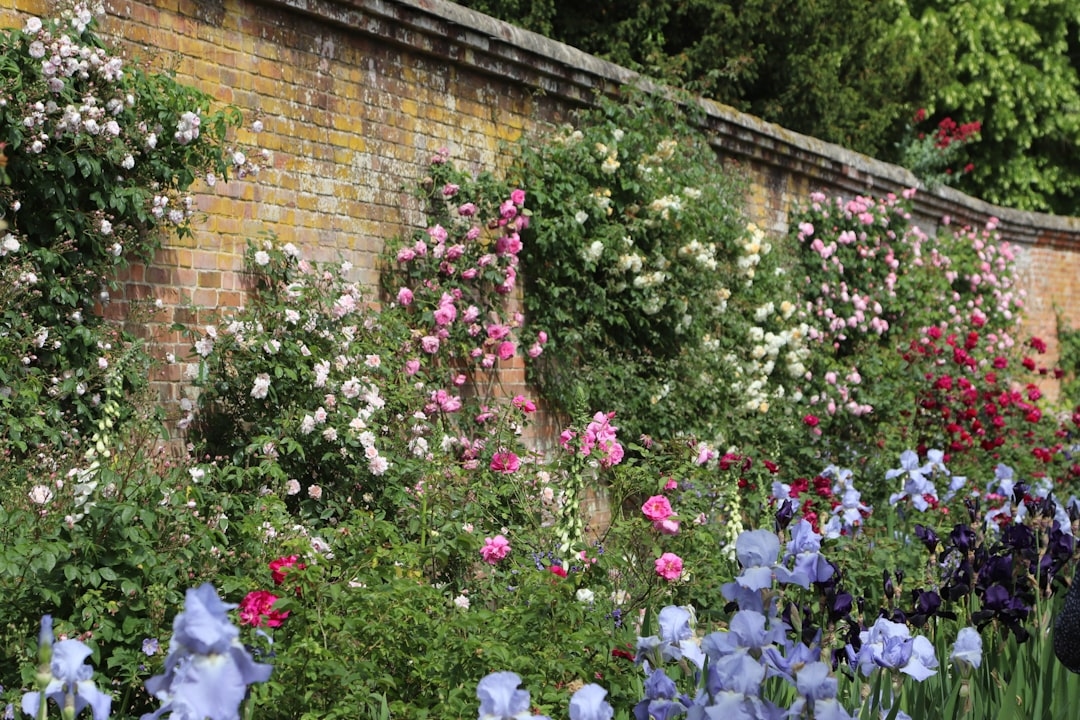
Fragrance intensity in most flowers is directly tied to stress management. Mild nutrient stress — particularly low nitrogen — tends to increase VOC production in many species, because the plant invests resources into secondary metabolites rather than vegetative growth. This is why lavender grown in rich amended soil often smells weaker than lavender in lean gravel.
Specific soil recommendations by species:
- Roses: Rich, loamy soil, pH 6.0–6.5, consistent moisture with good drainage. Heavy clay soils reduce fragrance and increase disease pressure.
- Lavender: Lean, well-drained, pH 6.5–7.5. No organic amendments needed; in fact, compost-rich soil suppresses scent.
- Gardenia: Acidic, humus-rich, consistently moist but not waterlogged, pH 5.0–6.0.
- Dianthus: Alkaline-tolerant, lean, sharply drained. Thrives with a handful of agricultural lime worked into the planting hole.
Sunlight is non-negotiable for almost all fragrant species. Six hours of direct sun is the minimum; 8 hours is better. UV exposure triggers several VOC biosynthesis pathways, meaning a shaded jasmine or rose genuinely produces fewer scent compounds chemically — it’s not just your imagination that shaded plants smell weaker.
Common Mistakes to Avoid
Even experienced gardeners make predictable errors when planting for fragrance. Avoiding these saves money and years of disappointment.
- Buying without smelling: Modern roses and carnations sold at big-box retailers are often scentless hybrids. Always smell before purchasing, or buy from specialist nurseries that provide VOC or scent ratings.
- Overfeeding nitrogen: High-nitrogen fertilizers push vegetative growth at the expense of flower and scent production. For roses and lavender specifically, reduce nitrogen after the first flush of growth and switch to a low-N formula (such as a 4-8-4 or similar).
- Planting too far from use areas: A tuberose planted 40 feet from the patio contributes little to your evening experience. Map human movement paths first, then site fragrant plants along them.
- Ignoring bloom time: Planting only summer bloomers creates a scent-dead garden from September onward. Build your succession calendar in winter before the first seed catalog arrives.
- Confusing common names: “Jasmine” is applied to at least a dozen unrelated species. Trachelospermum jasminoides (Confederate jasmine) and Jasminum officinale both carry the name but differ significantly in hardiness and scent chemistry. Always verify the Latin binomial.
- Deadheading at the wrong time: On once-blooming roses and sweet peas, removing spent blooms immediately after peak fragrance can reduce the next flush. On repeat-bloomers, prompt deadheading encourages re-bloom and continued scent.
Fragrant Flowers for Specific US Climates and Hardiness Zones
The USDA Plant Hardiness Zone Map divides the continental US into zones based on average annual minimum temperatures. Fragrant plants span an enormous hardiness range, so there are excellent options for every US climate — but the right choices differ significantly by region.
Cold Climates (Zones 3–5)
Hardy fragrant options here include Rosa rugosa (to Zone 2), lilacs (Syringa vulgaris, to Zone 3), peonies (Paeonia lactiflora, to Zone 3), and lily-of-the-valley (Convallaria majalis, to Zone 2). Lavender ‘Phenomenal’ or ‘Vera’ can survive to Zone 5 with sharp drainage and winter mulching. Many summer fragrant annuals — sweet peas, four o’clocks, heliotrope — work well in cold climates as seasonal fillers.
Temperate Climates (Zones 6–7)
This is the most versatile band for fragrant gardening in the US. English roses, lavender, dianthus, jasmine (J. officinale), daphne, and sweet box (Sarcococca spp.) all perform reliably. Gardenias can succeed with microclimate selection and root protection. Lonicera periclymenum ‘Belgica’ and ‘Serotina’ (European honeysuckles with genuine fragrance, unlike many North American native species) thrive here.
Warm and Hot Climates (Zones 8–11)
Gardenias, Arabian jasmine, tuberose, night-blooming jasmine, and Plumeria (frangipani) reach their full potential here. The challenge in the deep South and Southwest is summer heat stress, which can bleach blooms and reduce fragrance in roses — choose heat-tolerant varieties like ‘Belinda’s Dream’ (Zone 8–10) or grow the most sensitive species with afternoon shade to moderate temperature spikes above 95°F.
Fragrant Flowers as Cut Flowers: Selecting and Maintaining Scent
Scent longevity in cut flowers is determined by VOC production rate versus evaporation rate. Once cut, flowers lose their connection to biosynthesis pathways in roots and stems; the clock starts on scent depletion. Maximizing vase-life fragrance requires a few specific practices:
- Cut in early morning, when stems are fully hydrated and VOC concentrations are highest before the heat of day drives off volatiles.
- Use sharp, clean cuts at a 45-degree angle and place stems immediately in water. Air in the vascular bundle slows water uptake and accelerates wilt, which ends VOC production entirely.
- Keep vase temperatures cool: A 65°F room extends fragrant life by 20–30% compared to a 75°F room, because lower temperature slows volatilization without shutting down the residual biochemical scent production in the cut flower.
- Avoid refrigeration below 50°F for jasmine and gardenias — cold damages their petals and destroys fragrance compounds irreversibly.
The most fragrant cut flowers with reasonable vase life: ‘Gertrude Jekyll’ rose (7–10 days), tuberose (10–14 days), sweet peas (5–7 days), hyacinth (7–10 days), and stargazer lily (Lilium ‘Stargazer’, 7–10 days, though its indole-heavy scent is divisive).
Fragrant Flowering Shrubs and Trees Often Overlooked
Gardeners focused on perennials and annuals often overlook woody plants as fragrance sources, which is a strategic error. Shrubs and small trees offer structural permanence, earlier-season scent, and often a different scent chemistry than herbaceous flowers.
- Daphne (Daphne odora): Late winter to early spring bloomer with extraordinary spicy-sweet fragrance. Hardy in Zones 7–9. Notoriously finicky but worth the effort — a single established shrub scents 30 feet of garden on a mild February afternoon.
- Korean spice viburnum (Viburnum carlesii): Zones 4–8. Blooms in April with densely clove-scented flower clusters. One of the best cold-hardy fragrant shrubs available.
- Sweet box (Sarcococca hookeriana): Winter-blooming, shade-tolerant, Zones 6–9. Tiny white flowers with a powerful vanilla-honey scent that defies their scale. Excellent under deciduous trees where nothing else performs.
- Fringe tree (Chionanthus virginicus): Native to the eastern US, Zones 3–9. Late spring bloomer with lacy white flowers carrying a subtle, sweet, grape-like fragrance. Pollinator magnet and structurally spectacular.
- Natal plum (Carissa macrocarpa): Zones 9–11. White flowers with a jasmine-adjacent fragrance, followed by edible red fruit. Excellent hedge plant in the Deep South and California.
Practical Tips for Getting the Most Scent from Your Garden
Beyond plant selection and siting, several ongoing management practices significantly affect how much fragrance you experience day to day.
- Water in the morning, not evening. Wet foliage at night promotes fungal disease in roses and lavender, and humid air near the plant suppresses VOC volatilization. Morning watering keeps humidity lower around blooms at peak evening scent time.
- Deadhead strategically. For continuous bloomers, removing spent flowers within 48 hours of peak bloom directs energy to new buds and maintains a continuous wave of fresh, maximally-scented blooms.
- Prune for airflow. Dense, unventilated plant centers trap moisture and fungal spores, forcing the plant to invest in disease response chemistry rather than floral VOC production. Open-center pruning of roses, in particular, increases both health and fragrance.
- Use mulch judiciously. A 2–3 inch layer of organic mulch around roses and gardenias moderates soil temperature, which supports consistent VOC biosynthesis. Avoid piling mulch against stems (volcano mulching), which creates anaerobic conditions and promotes crown rot.
- Keep records. Note in a garden journal which plants smelled strongest on which dates and under which weather conditions. Over two or three seasons, this data reveals your microclimate’s scent peaks and helps you time garden use and guest visits accordingly.
FAQ: Fragrant Flowers Scent Guide
Which flowers have the strongest fragrance?
Tuberose (Polianthes tuberosa), night-blooming jasmine (Cestrum nocturnum), and gardenia (Gardenia jasminoides) are consistently rated highest in scent intensity among common garden flowers. Tuberose and night-blooming jasmine are particularly potent after dark due to moth-pollination strategies. Among daytime bloomers, hyacinth and certain old-garden roses like ‘Madame Isaac Pereire’ produce exceptionally high VOC concentrations.
Why do some roses have no smell?
Most modern hybrid tea and floribunda roses have been bred primarily for visual traits — long stems, large blooms, vibrant colors, disease resistance — with scent as a secondary priority. VOC-producing genes were diluted through decades of hybridization. If fragrance matters to you, buy specifically from fragrance-rated series: David Austin English Roses, old garden roses, and Rosa rugosa hybrids are your best starting points.
What is the best time of day to smell fragrant flowers?
For most daytime-blooming species, mid-morning (9–11 AM) and early evening (6–8 PM) are peak scent windows. Temperatures in the mid-70s°F maximize VOC volatilization without causing rapid dissipation. Night-blooming species like tuberose and four o’clocks peak between 9 PM and midnight. Avoid smelling flowers during the hottest part of the afternoon — above 85°F, lighter scent compounds have often already evaporated.
Can I grow fragrant flowers in containers?
Yes — gardenias, jasmine, heliotrope, sweet peas, and dwarf lavender all perform well in containers. Use terra cotta pots rather than plastic where possible, as their porosity moderates root temperature. Container plants often require more frequent fertilization, but for scent-focused growing, use a low-nitrogen, bloom-promoting formula (phosphorus ratio above 10) to encourage flower production over leaf growth. Most fragrant species need 6+ hours of sun even in containers.
Are fragrant flowers better for pollinators?
Generally yes, with nuance. Flowers with high monoterpene and benzenoid emissions strongly attract bees, butterflies, and moths — these VOCs evolved specifically as pollinator signals. Lavender and phlox are especially well-documented for bee attraction. However, double-flowered cultivars — even fragrant ones — can impede pollinator access to nectaries. Single-flowered fragrant varieties offer the best combination of scent, nectar access, and pollinator benefit.
Building Your Scent Calendar: A Year-Round Action Plan
The gardeners who get the most from fragrant plants are the ones who plan in winter. January and February are the best months to audit your current garden for scent gaps, order bare-root roses and specialty bulbs, and sketch a succession planting plan that keeps something fragrant in bloom from the last frost to the first hard freeze.
Start with three anchor plants: one early-season (a lilac or Korean spice viburnum), one summer workhorse (a repeat-blooming David Austin rose or a lavender hedge), and one evening performer (tuberose or four o’clocks). Around these anchors, layer in annuals and bulbs to fill the calendar gaps. Add a woody plant each year until you have structural fragrance at multiple heights and a scent presence even in late winter from a well-sited daphne or sweet box.
Track your results. Photograph and note dates, weather conditions, and scent impressions. Within three seasons you will have a personalized fragrant flowers scent guide calibrated to your own climate, microclimate, and nose — which no generic plant list can replicate.
+ There are no comments
Add yours